
The Return of Tableside Service
Published:
The whole dining room at Adda watches as a server approaches his table, pushing a cart. On it, a copper pot gleams beside a small tray filled with wood chips — applewood, hickory, or a smoky house blend. Diners lean forward instinctively. “Choose your smoke,” he says. The table debates. Hickory wins.
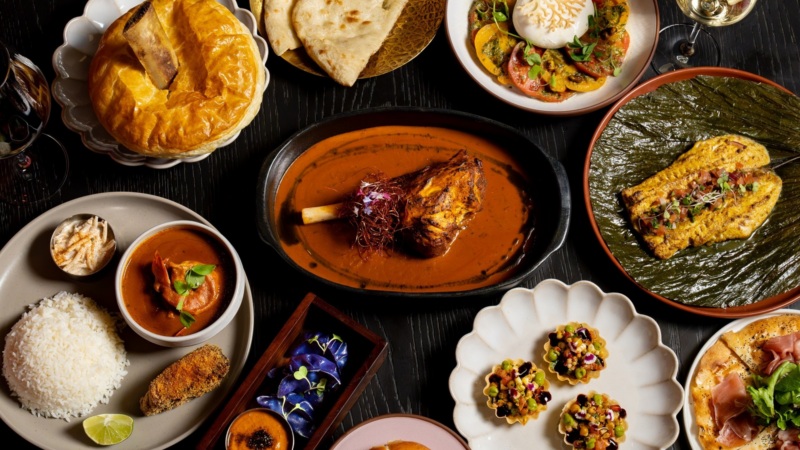
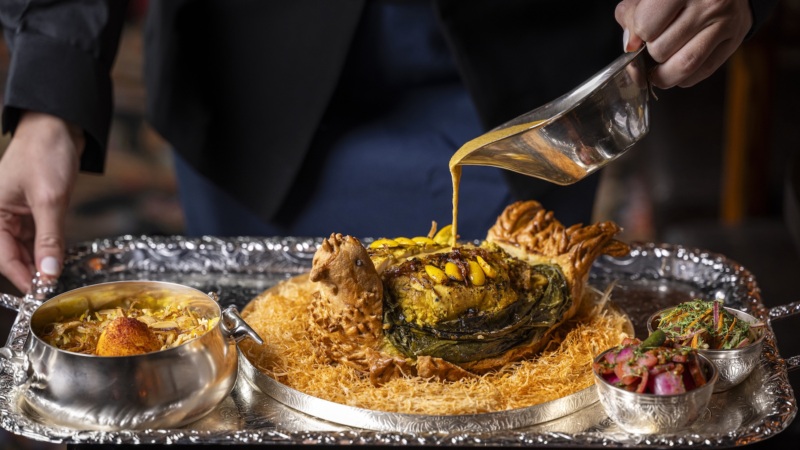
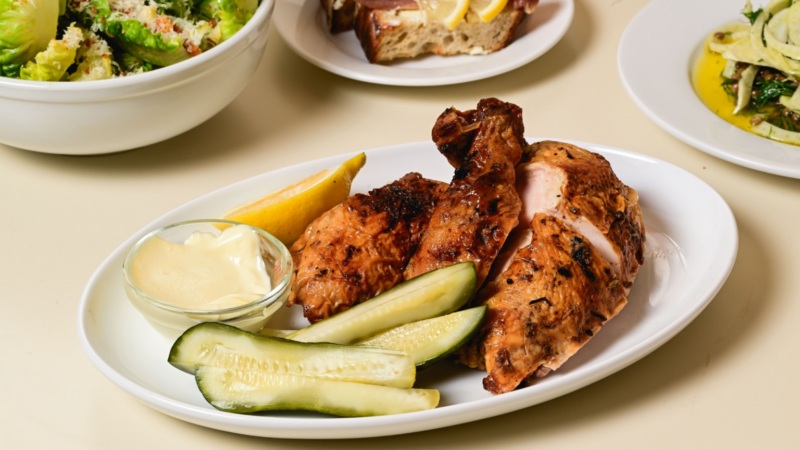
A moment later, a whole chicken emerges, still glistening from the tandoor. Chef Shubham Sharma arrives behind it, grinning like someone who knows he’s about to cause a scene. He asks the table to choose their butter — classic, herb, or chipotle. They pick chipotle. The chef tosses the bird in spicy, melty butter with a practiced flick of his wrist, then lifts the copper pot to reveal a stream of tomato cream sauce that cascades over the chicken. The dining room smells like smoke and fenugreek.
Phones rise. Then, just as quickly, they lower. People want to watch.
The chicken is portioned with reverence. Butter melts into its crevices. Sharma cracks a joke; the table laughs. The interaction is intimate, alive. Dinner is not just delivered, but enacted.
In an era obsessed with speed, from QR codes and frictionless ordering to the constant turning of tables, restaurants are rolling tableside service back into the room — not merely as kitsch, but as ceremony that represents attention, craft, and care. The excitement that follows reveals what diners are really craving: unhurried spectacle and a meaningful, memorable evening.
Here are five restaurants exemplifying the art of tableside service in New York.

The Duck at Francie
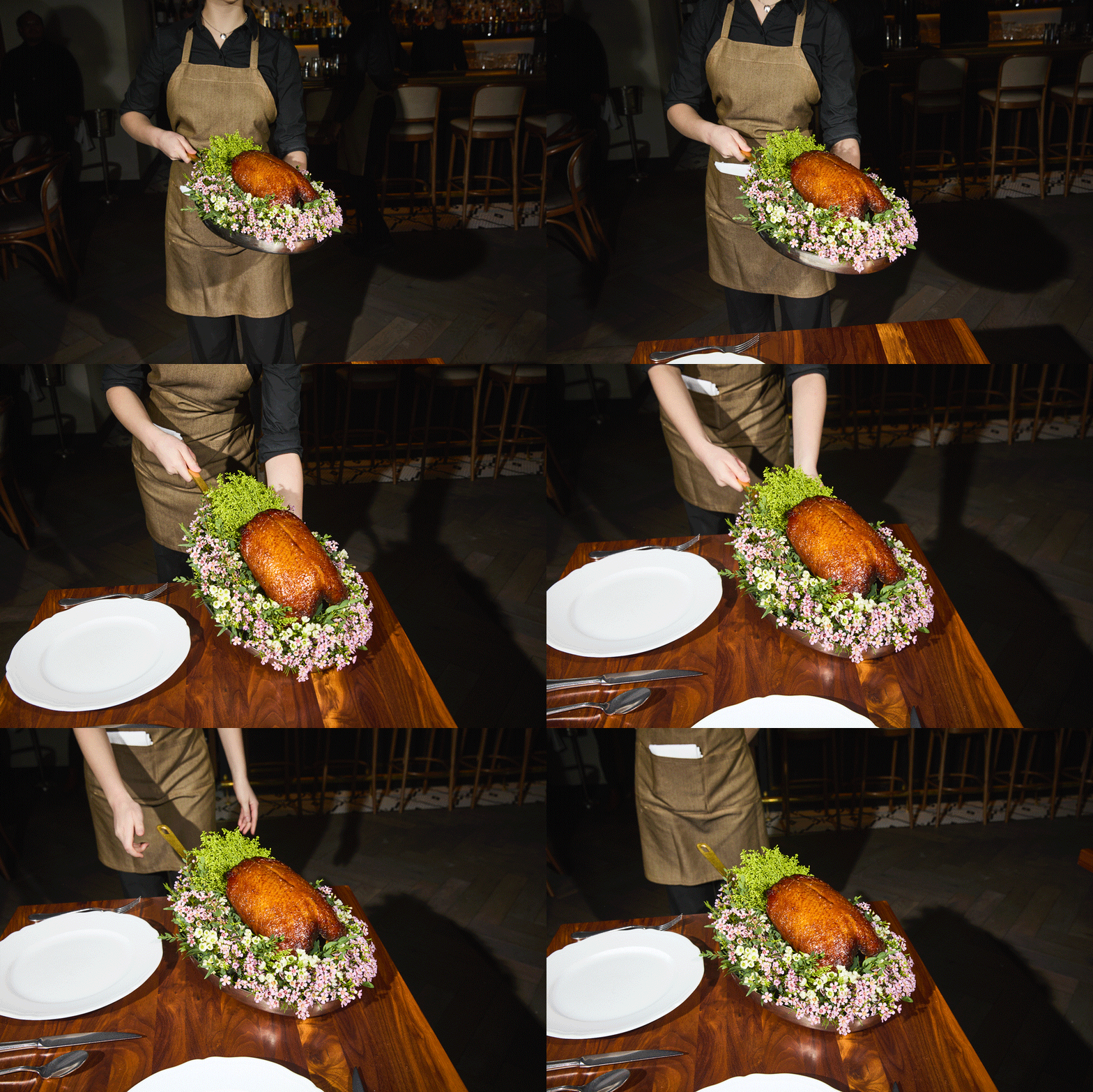
At Francie, owner and operator John Winterman believes that the pause — the collective breath of anticipation that accompanies a dish’s arrival — is what makes the ritual worth doing. “There needs to be a tangible result when you do the tableside presentation,” he says. And the results matter. “If you burn the caramel sauce tableside, then the whole thing is shot,” he adds.
Winterman learned that lesson in the temples of fine dining, where he began his career. At Gary Danko in San Francisco, he loved flambés because the fire mattered; the flame finished the sauce. Later, at Restaurant Daniel in New York, captains honed their carving technique by practicing on “dozens of roast chickens, lined up in a row.” He compared it to filmmaking: “You reset the stage, you reset the mise en place, and you do it again, and you do it again.”
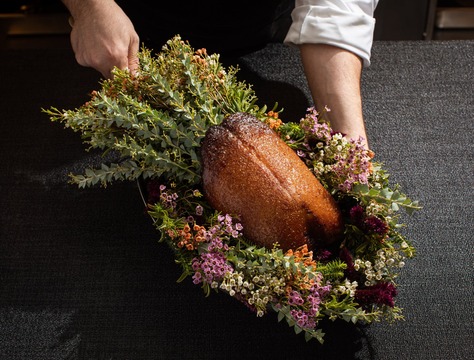
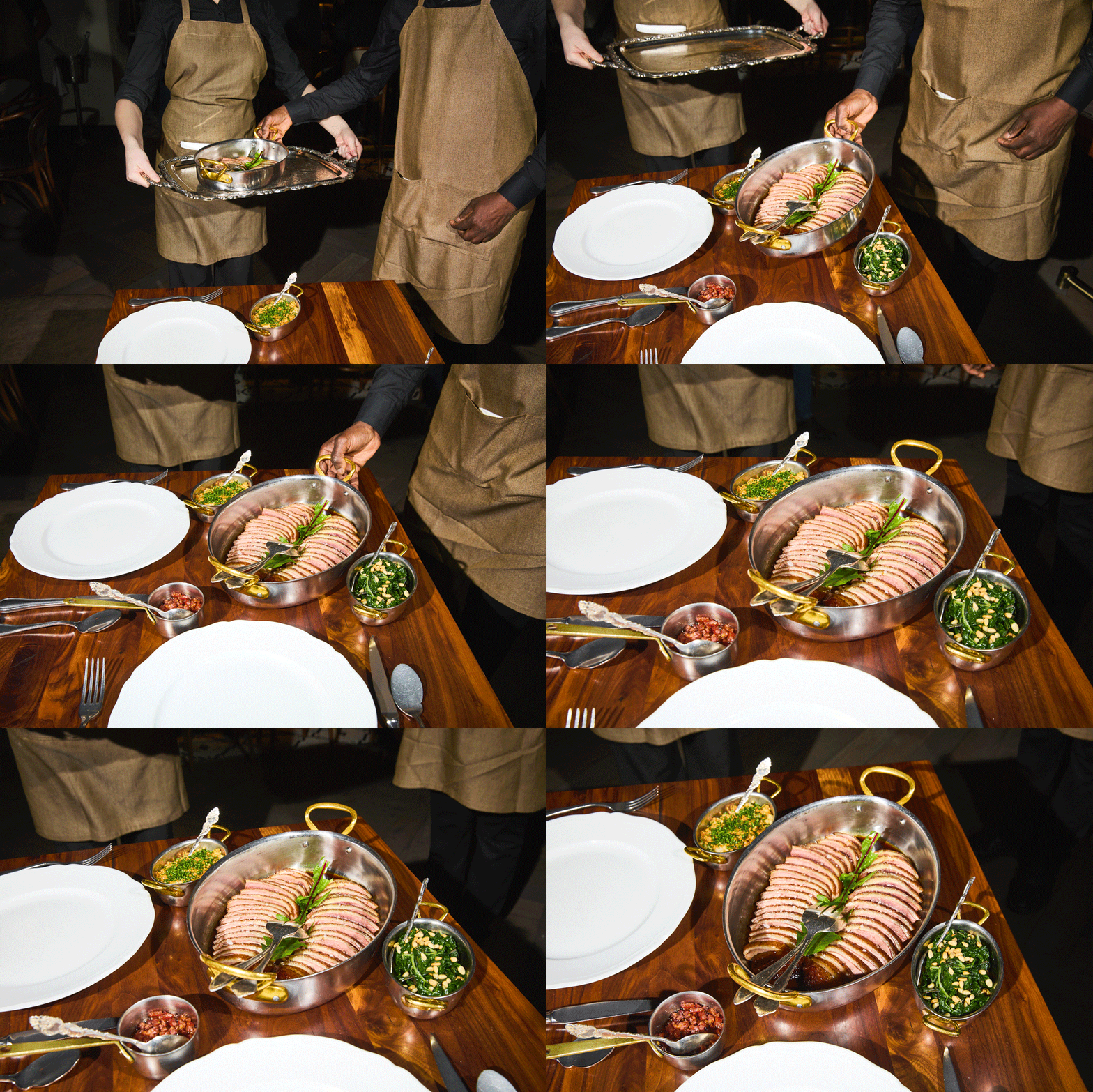
At Francie, that meticulous rehearsal culminates in a performance. The captain presents the duck on its platter, then carves it with a dancer’s precision, plating the first rosy slices as guests lean forward to get a closer look. The process takes minutes, but the impression lingers. “You get a moment of intimacy with your customer,” Winterman says. “That sort of magic that happens between guest and staff.”
Though Winterman initially expected to sell only a handful of ducks per night, they now move 50 during dinner service. The surge forced the restaurant to expand its basement and add refrigeration just to dry-age enough birds. “Almost everything online is from the guests themselves,” he says. “I don’t think we’ve taken a picture of the duck in four-and-a-half years.”
The duck isn’t the only dinner-and-a-show moment at Francie. Later in the meal, a different kind of procession begins. A polished wooden cart appears at the far end of the dining room, wheels gliding almost silently. On it rests a spread of cheeses arranged like a still life: ash-dusted goat, runny bloomy wheels collapsing into themselves, crystals winking from hunks of aged Alpine. Servers offer stories with the wedges — where each cheese comes from, what pasture the cows grazed, how long the cheddar spent in the cave. Guests don’t just order cheese. They choose their adventure.
Francie’s cheese cart provokes the same chain reaction as the duck cart. One table orders it, and five more follow. That’s the paradox of tableside service: Sure, it photographs beautifully, but its power is in experiencing the magic for yourself. When a captain wheels the cart into view, the dining room is transfixed. In a city with a need for speed, this unhurried parade feels almost subversive.
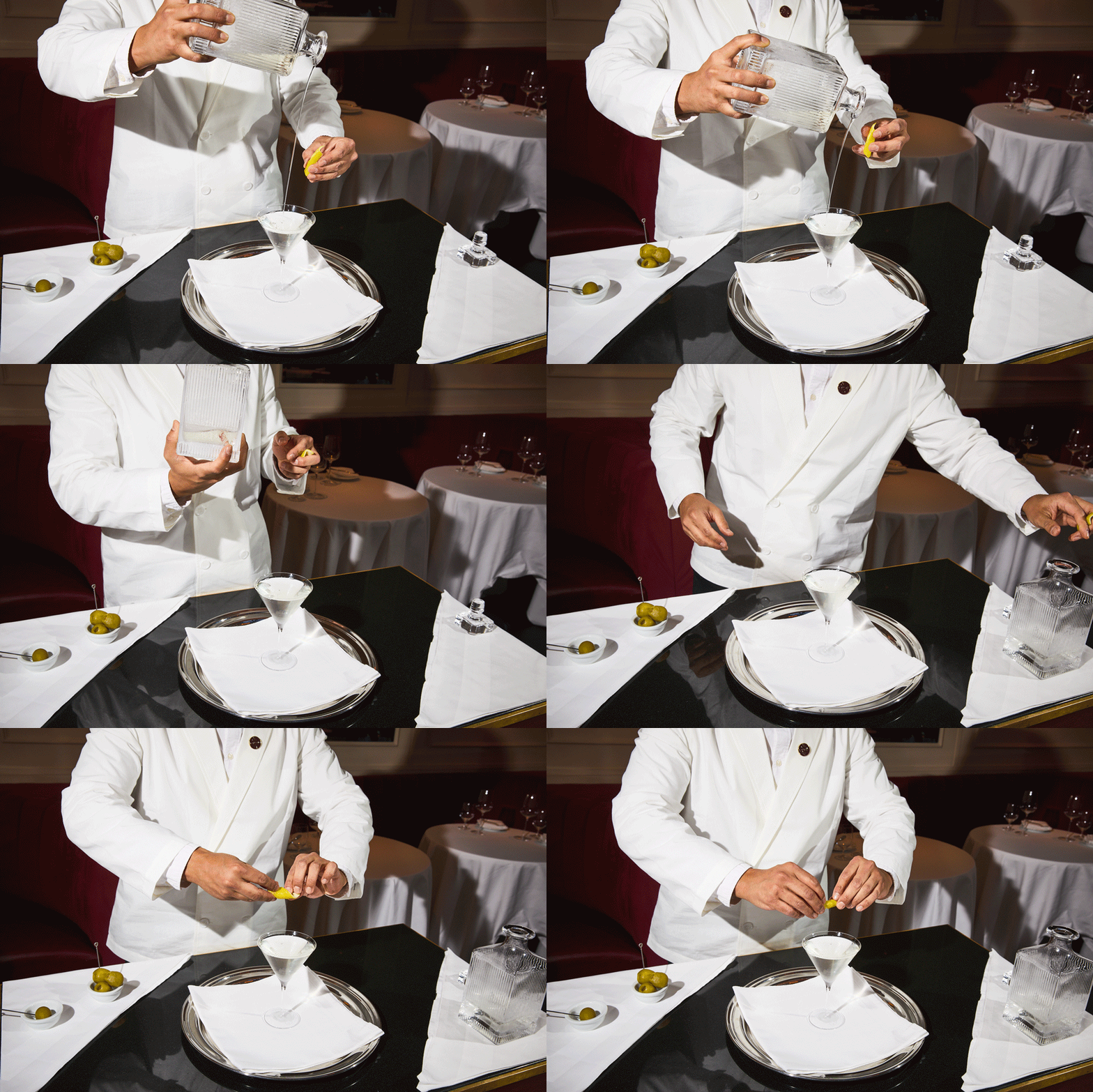

The Martini at Chateau Royale
Across the river in Greenwich Village, Cody Pruitt revives another lost ritual — the tableside martini — for reasons both romantic and practical. His restaurant, The Dining Room at Chateau Royale, has no bar upstairs; cocktails arriving from the basement could be tepid and over-diluted. “The enemy of a proper drink is time,” Pruitt says. “Too much time creates over-dilution or a warm glass of gin — both cardinal cocktail sins.”
His solution is to freezer-batch martinis poured from a bespoke trolley he calls “a tank in evening wear.” The server who commands it, known as the boissonier, glides between tables like a maître d’ with the timing of a stage actor. A polished shaker clinks against glass, frost blooms instantly on the coupe, and a thin ribbon of gin catches the candlelight. The dining room hushes to watch.
“Guests of every demographic and background universally light up when they see the cart approaching,” Pruitt says. The invitation is sensual but also connective: a small act of care that momentarily links server and guest in shared anticipation.
Even this simple service requires choreography. The boissonier is part sommelier, part storyteller — often, Pruitt jokes, “a raconteur as much as a pourer.” Every step is intentional: the pace of the pour, the napkin’s fold, the lift of the coupe. “Too many restaurants are built for the phone rather than the guest,” he says. “If people post it, fine — but the real magic is in the room, not the reel.”
Pruitt sees the deliberate inefficiency as a picture of luxury. The cart ensures a stretch between the order and the first sip. “When that cart rolls out, you feel the temperature of the room change,” he says. “People relax. They know something’s about to be done properly.”
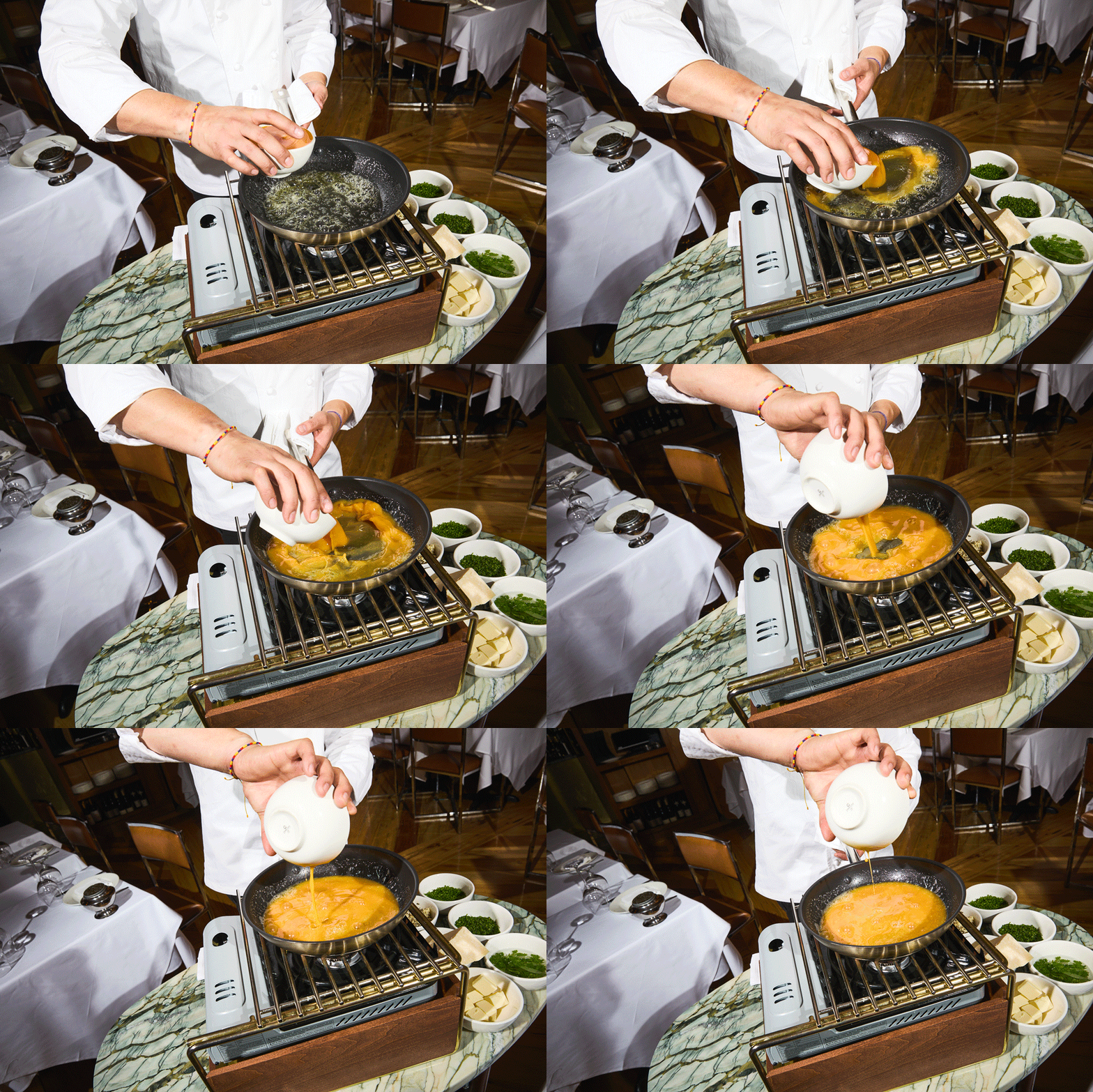

The Specialty Omelets at The Golden Swan
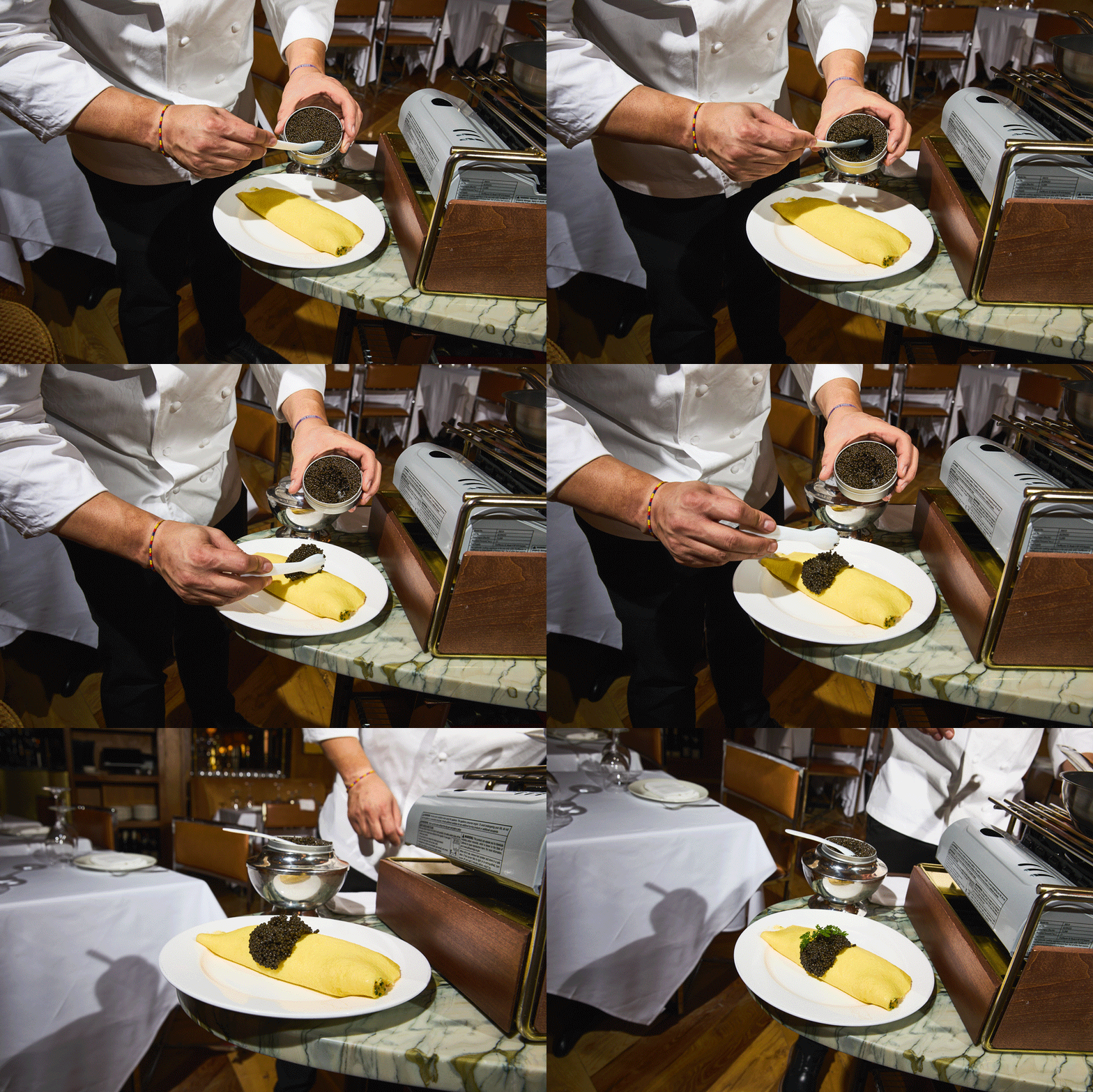
At The Golden Swan in the West Village, restaurateur Matthew Abramcyk and chef Doug Brixton have turned the French omelet into a miniature spectacle that’s part brunch ritual, part act of meditation. “New York brunch can be frenetic,” Abramcyk says. “But when chef Doug sets up the burner and makes a perfect French omelet right in front of you, it forces the room to pay attention.”
The performance begins quietly. Butter foams in a copper pan. Eggs, whisked to a gleaming silk, slide into the heat. The chef stirs in tight, controlled motions until the curds are just set, then folds the omelet into itself, satin-smooth, and finishes it with the diner’s choice of black truffle, caviar, or Maine lobster. Steam and butter perfume the air. The usual clatter of plates and conversation softens to a murmur.
Behind that moment of ease lies a hierarchy of training. “Chef will train every single person until that person is ready,” Abramcyk says. “Only when you’re a certifiable ninja, in his words, do you get to train others.”
The omelet cart may look effortless, but every detail — from the heat of the burner to the angle of the wrist — is choreographed. It’s a return to the craft that fine dining once demanded and a reminder that even a humble egg can carry drama.
For Abramcyk, that’s the point. “People watch, they wait, they savor,” he says. “That moment of slowing down is part of why it works.” The omelet transforms a rushed weekend meal into something special — an edible antidote to the city’s chaos.
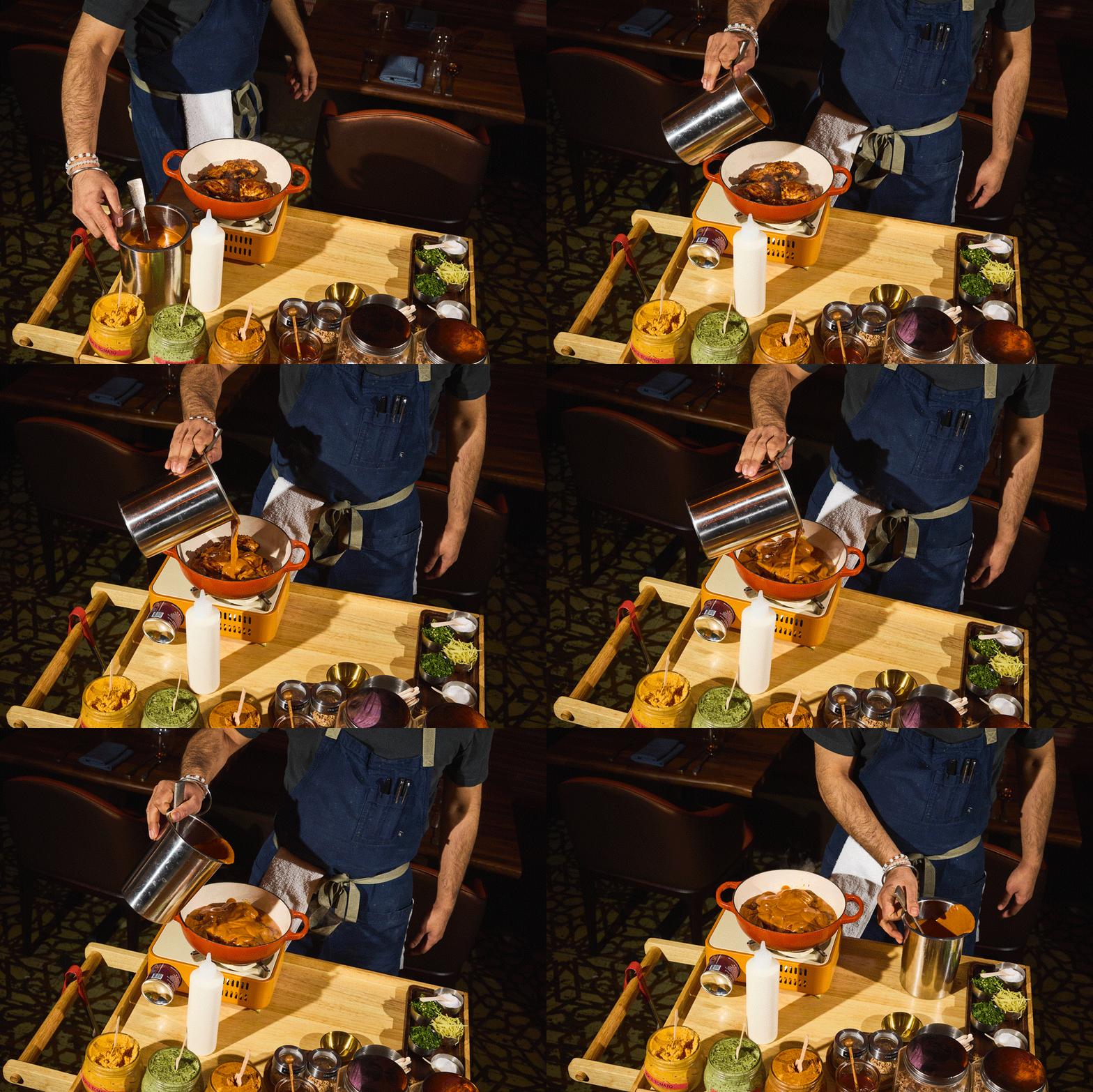

The Butter Chicken at Adda
While Francie and Chateau Royale channel the rituals of European dining, Chintan Pandya, chef and partner of Adda in the East Village, uses tableside presentation to celebrate an Indian dish that’s often taken for granted.
“Butter chicken has always been treated like comfort food, something you order without thinking twice,” Pandya says. “At Adda, we wanted to flip that — put it at the center of the table as a celebration.”
The Butter Chicken Experience begins when the dish arrives whole, steam rising from the copper pot. A server lifts the lid, and the room fills with the aroma of tomato, cream, and spice. The sauce is poured fresh over the bird, its golden surface glistening under the light.
“It’s elevated because it’s honest,” Pandya explains. “Nothing is for show … the spectacle is just us slowing you down long enough to notice it.” Guests often remark that they’ve eaten butter chicken a hundred times, but never like this.
Pandya insists authenticity isn’t compromised. “Butter chicken doesn’t need reinvention — it already has a soul,” he says. “By serving it with intention, we’re saying this dish deserves more than being an afterthought on a menu.”
That philosophy extends beyond one recipe. He imagines giving the same treatment to biryani or kebabs — any dish with the right story. For him, it isn’t about pageantry, it’s about respect. “When something has that kind of soul,” he says, “it deserves a bigger frame.”
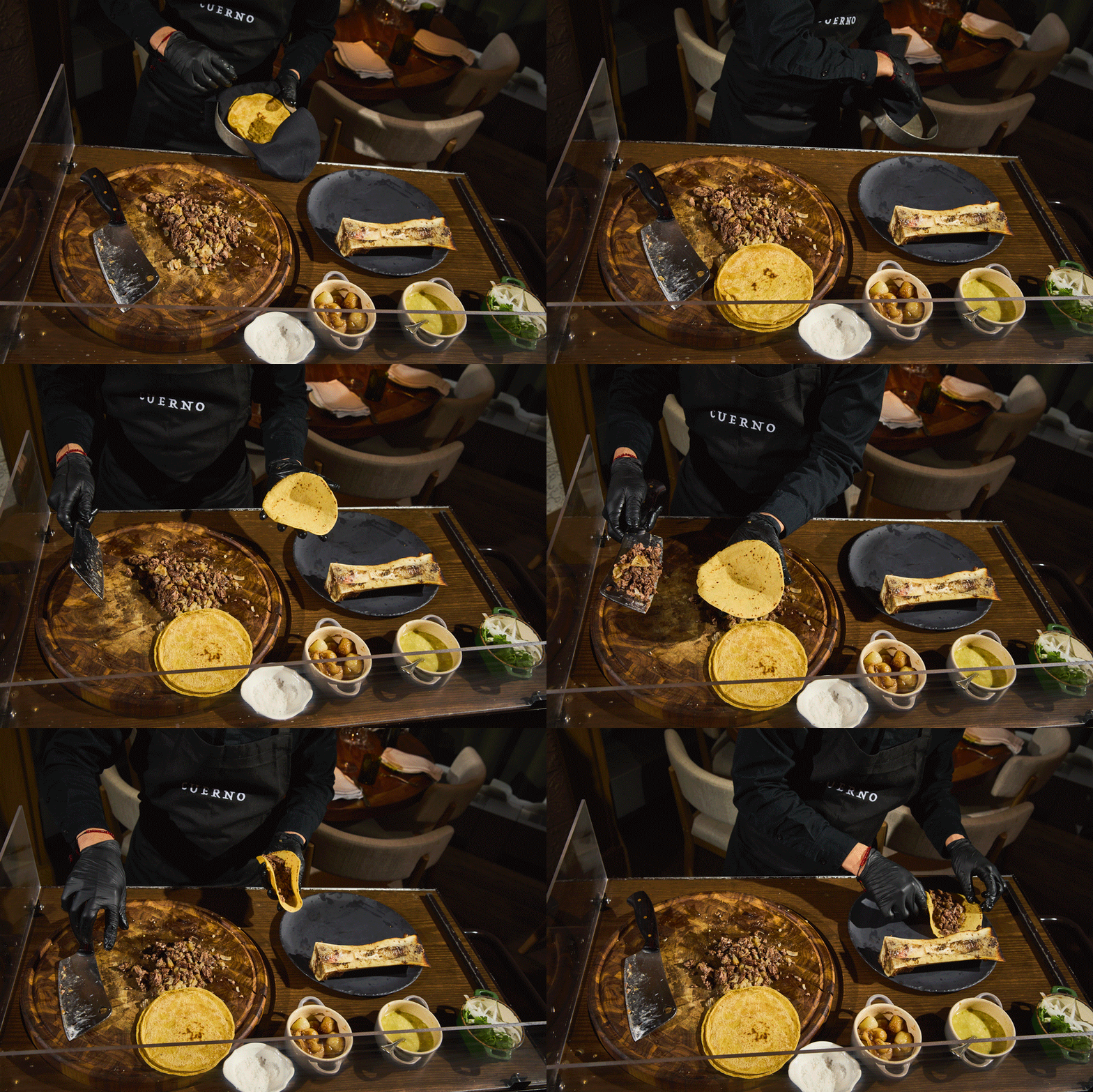

The ‘Taco Taquero’ at Cuerno
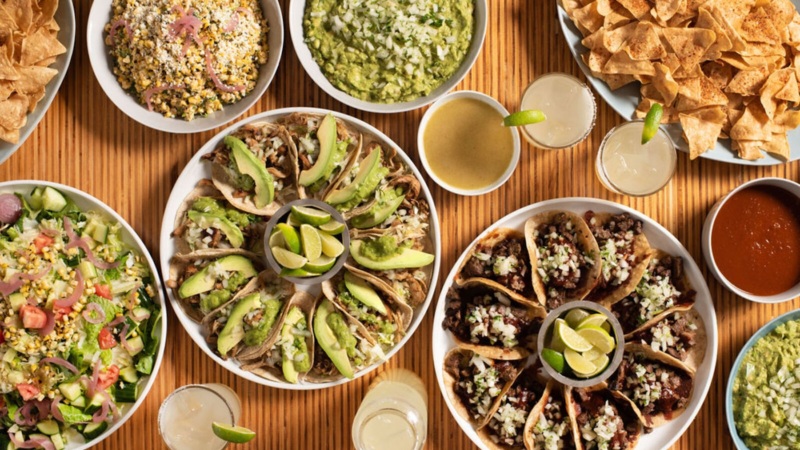
If Adda reframes nostalgia, Cuerno in Midtown embraces full-blown sensory theater. Here, a taquero wheels up with a chopping block and a gleaming cleaver. The sound comes first: a sharp, rhythmic crack of knife on wood. The scent — smoke, charred beef, lime, and roasted onions — follows.
Skirt steak sizzles as molten bone marrow is spooned over warm tortillas, the marrow shimmering like liquid gold. The taquero works with the efficiency of a street vendor and the showmanship of a chef on stage. Guests turn in their seats; conversations halt mid-sentence. Phones rise, but most diners quickly forget to record. They’re watching, entranced, as the tacos come together.
It’s a scene worthy of a flambé, but its roots are humble. The ritual honors the rhythms of Mexican street cooking, where food is assembled inches from the eater. At Cuerno, that immediacy becomes luxury.

The Craft, Reconsidered
All these restaurants share a conviction: Tableside only matters when it completes the dish in a meaningful way. “If it’s just show for show’s sake, it doesn’t do anything,” Winterman says. It’s a lesson from the era when many dining rooms abandoned the practice — the logistics were punishing, the training intense, the risk of awkwardness high.
At Francie, carts can’t block narrow aisles for long or “people can’t get to the restroom, the runners can’t get through,” adds Winterman. At Daniel, Winterman remembers the pressed-duck service requiring two captains for 20 minutes — long enough to stall the room’s rhythm.
Still, the revival suggests that there’s more to dining than efficiency. Watching someone mix a martini or carve a duck reminds us that pleasure takes time. The extra steps — the wipe of a knife, the second stir, the pause before a pour — turn dinner from transaction into encounter.
Restaurants run on hidden labor. Cooks hustle behind-the-scenes, servers ferry plates, and dishwashers work in the steam and clang of the back of house. Tableside service flips that script. It brings the work into the room and acknowledges the hands that make the meal.
If the 2010s gave us the open kitchen, the 2020s are giving us the dining room as stage. Now, the chef doesn’t just stay across the pass; you meet them at your table.
Together, these restaurants are redefining luxury not as excess, but as attention. Maybe that’s why the best seat in the dining room isn’t at the bar or the pass anymore, but right beside the cart, where the omelet folds, the sauce pours, the glass frosts right in front of you, and time moves at an effortless pace.
Hannah Howard is the author of the memoirs Feast: True Love in and out of the Kitchen and Plenty: A Memoir of Food and Family. She writes for Food & Wine, Travel + Leisure, and Bon Appetit. She’s just moved from New York City to Chicago, where she lives with her family. Follow her on Instagram. Follow Resy, too.