How Memory Meets Technique at Little Fish Melrose Hill, in Five Dishes
Published:
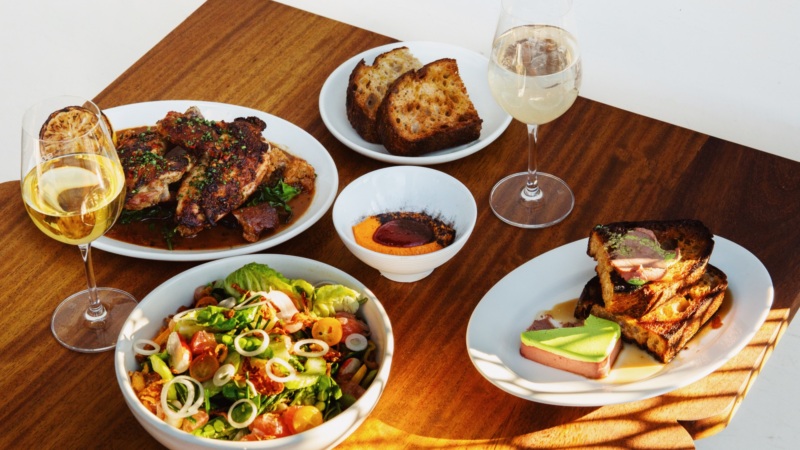
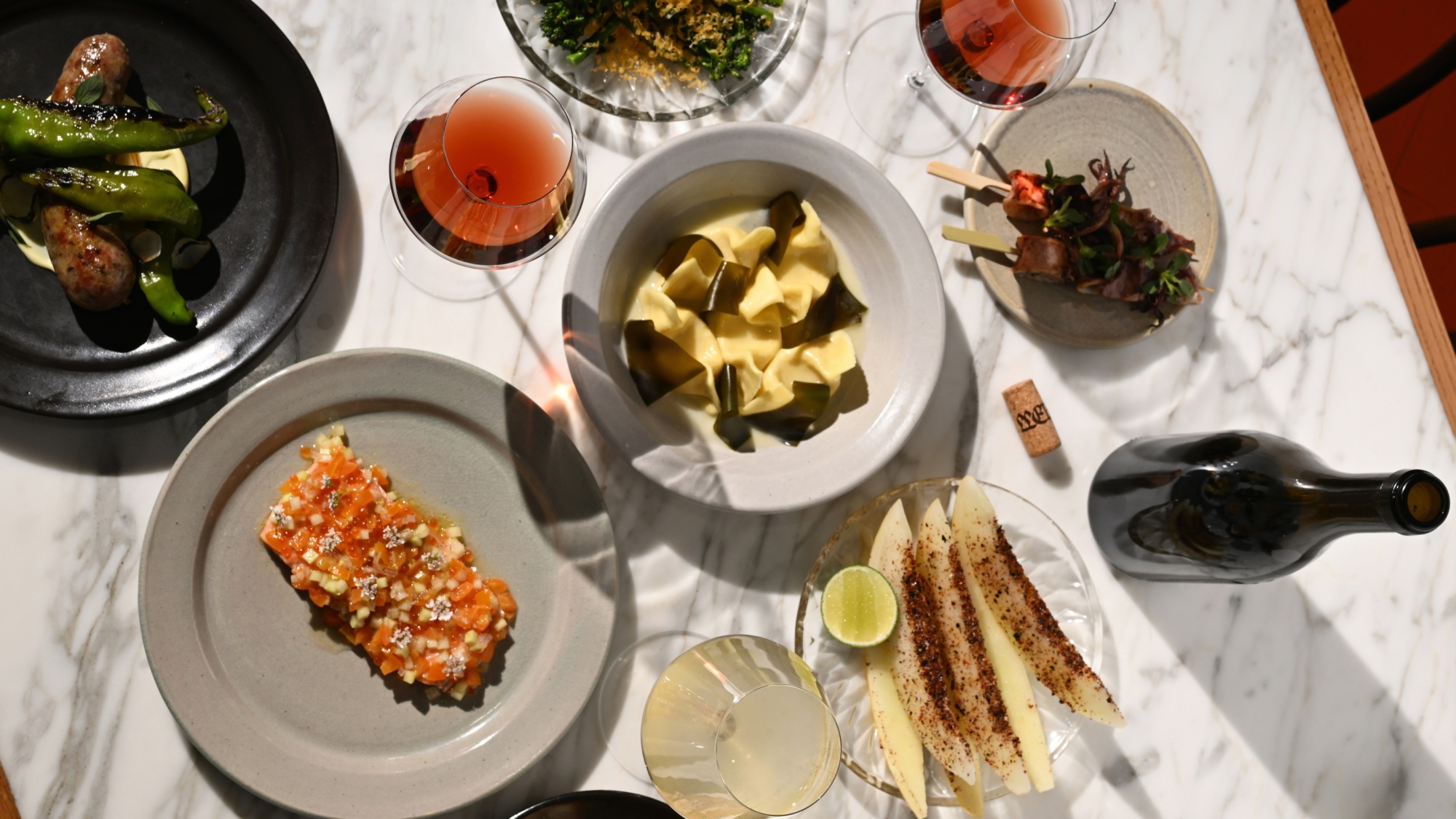
It’s been nearly a year since Little Fish co-owners and married chefs Anna Sonenshein and Niki Vahle opened their much-anticipated Melrose Hill restaurant. Serving lunch, dinner, and a midday apéro menu, Little Fish showcases Sonenshein and Vahle’s imaginations and combined skillsets, well beyond the fried fish sandwich that first brought them fame. Dishes like the rockfish karaage and the charred cucumbers with red miso showcase the culinary throughline that runs through their menu, which combines nostalgia and technique in equal measure.
Nearly every dish, day and night, is rooted in a memory and their endless desire to chase flavor, leveling up on something familiar through the infusion of technical skill. Whether it’s deciding that it was obviously easier to make their grape must mustard in-house when their choice purveyor shut its doors, or dry-aging their own fish in-house, the couple is constantly innovating inside the kitchen and out. We recently sat down with Sonenshein and Vahle to chat about the stories behind five of their menu favorites.
MORE FROM RESY

Beach Sandwich
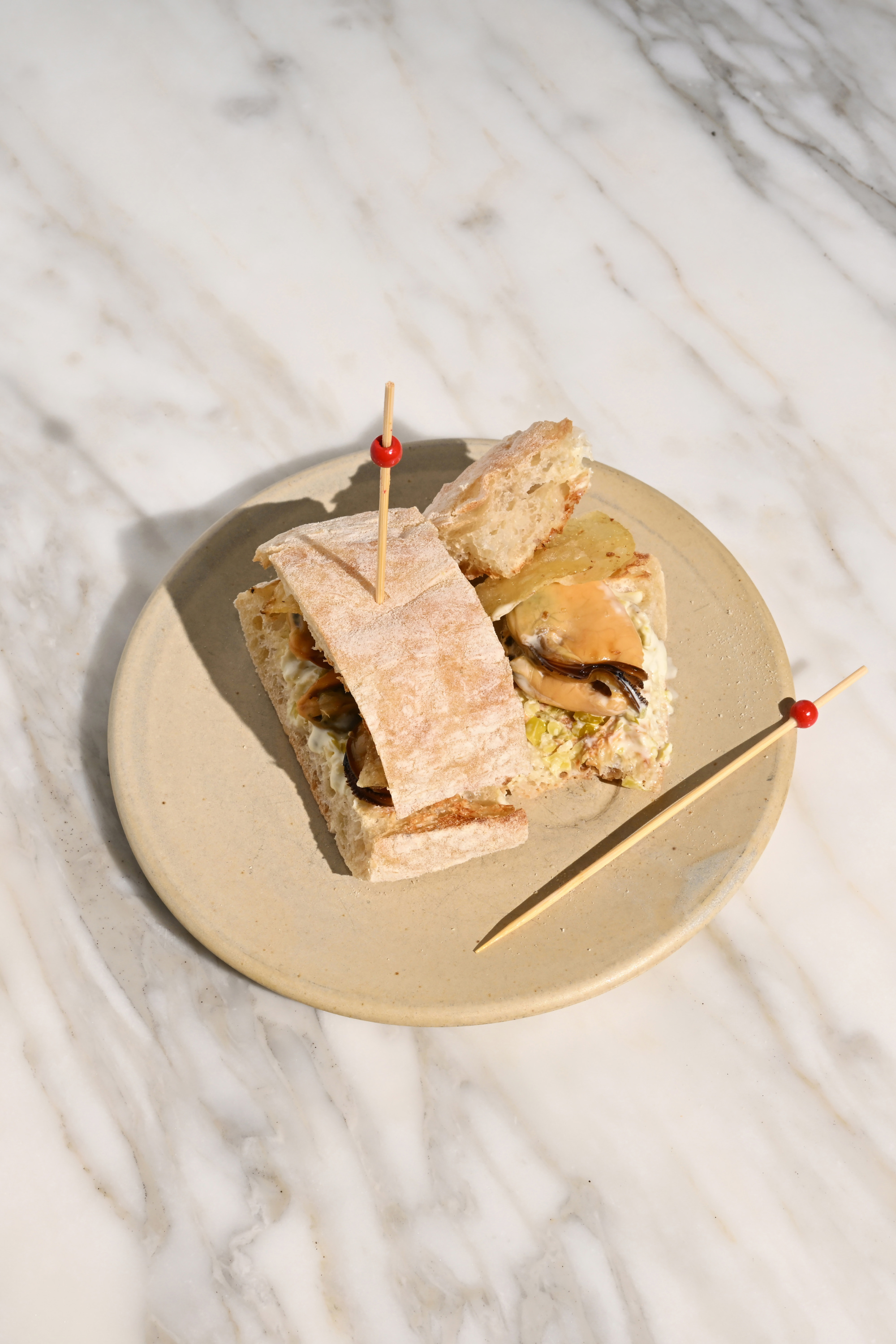
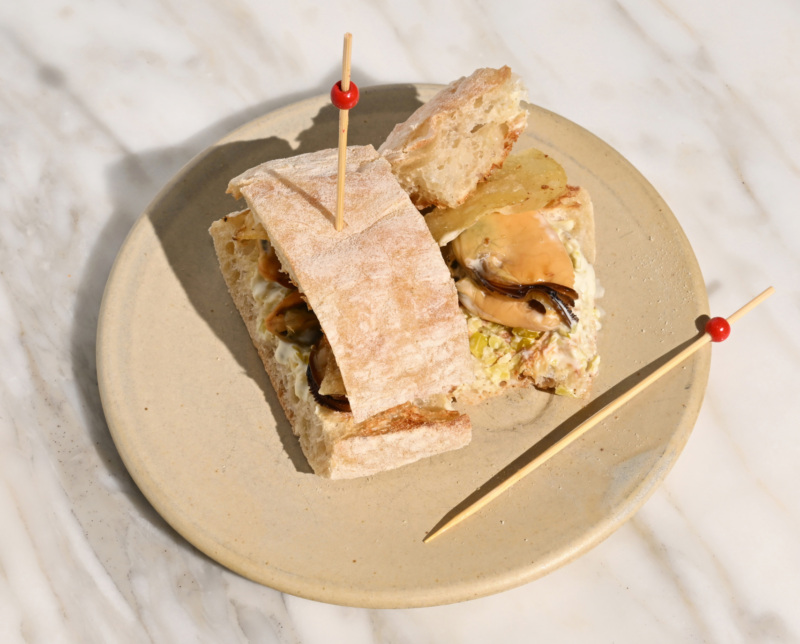
Eating Bay Cities sandwiches on the beach with Kettle brand potato chips was a regular childhood outing for Sonenshein, a Westside native. From this memory, the Beach Sandwich was born, in an ode to chip-stuffing, beach-going sandwich lovers everywhere. The sandwich starts with toasted pan de cristal bread, a light and airy ciabatta-like loaf most frequently used in pan con tomate. Inside, a spread of Basque or guindilla peppers and mayonnaise provides the foundation for housemade soy-cured mussels.
The mussels are steamed over sake, and then marinated with the residual mussel liquid and cooked down with sake, along with white soy, kombu, garlic, ginger, and sugar. The mussels are layered atop the pepper-mayo, which are then topped with the pièce de résistance: a layer of Kettle brand potato chips. “It may seem silly, but we’ve tried other potato chips and they’re not correct,” says Sonenshein. “Texturally, Kettle brand is what I’m looking for. They’re not too hard or thick cut, they’re well salted, and not too oily.” The sandwich is served as two small canapé sized slices because, as Vahle puts it, “nobody wants to eat a full-size sandwich of mussels.”
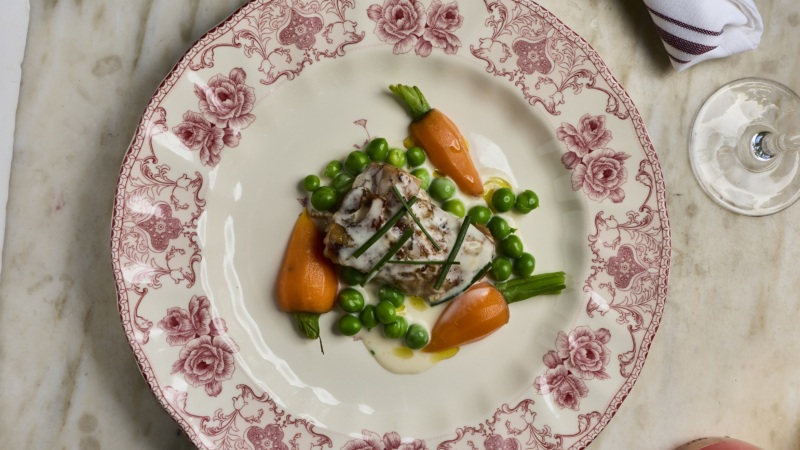
Half Chicken with Ham Jus and Mustard
There was a time when Little Fish’s to-go window in Echo Park offered a ham, egg and cheese sandwich. The star of the show was a Royal Ham from Lowry Hill Provisions in Minneapolis, which was suggested to Sonenshein and Vahle by their beloved Gourmet Imports representative. “The ham is unbelievable, you just cannot stop eating it,” says Vahle. That sandwich, however, left the team with a residual fat cap from the pork that they needed to put to use. Naturally, they decided to stuff it inside of a chicken, Sonenshein’s playful act of rebellion as someone who did not grow up eating ham at home. “I think I just feel drawn to put pork in absolutely everything,” she says.
“It’s so fun to have a chicken dish, but it’s actually a pork dish,” says Vahle. The deboned half chickens are Mary’s Chickens from Cream Co. Meats, and are cooked for five hours in a vacuum-sealed bag with the ham fat. They then make a jus with the chicken bones, ham meat, pork trotters, and a mixture of aromatics, which simmer and reduce over six hours.
The chicken is plated in its jus alongside a side scoop of housemade grape must mustard, which gives a raisin-y sweetness to cut the richness of the dish. The pro move? Chicken with a side of fries—triple-cooked Kennebec potatoes, well-seasoned and served with horseradish aioli.
Tuna Melt
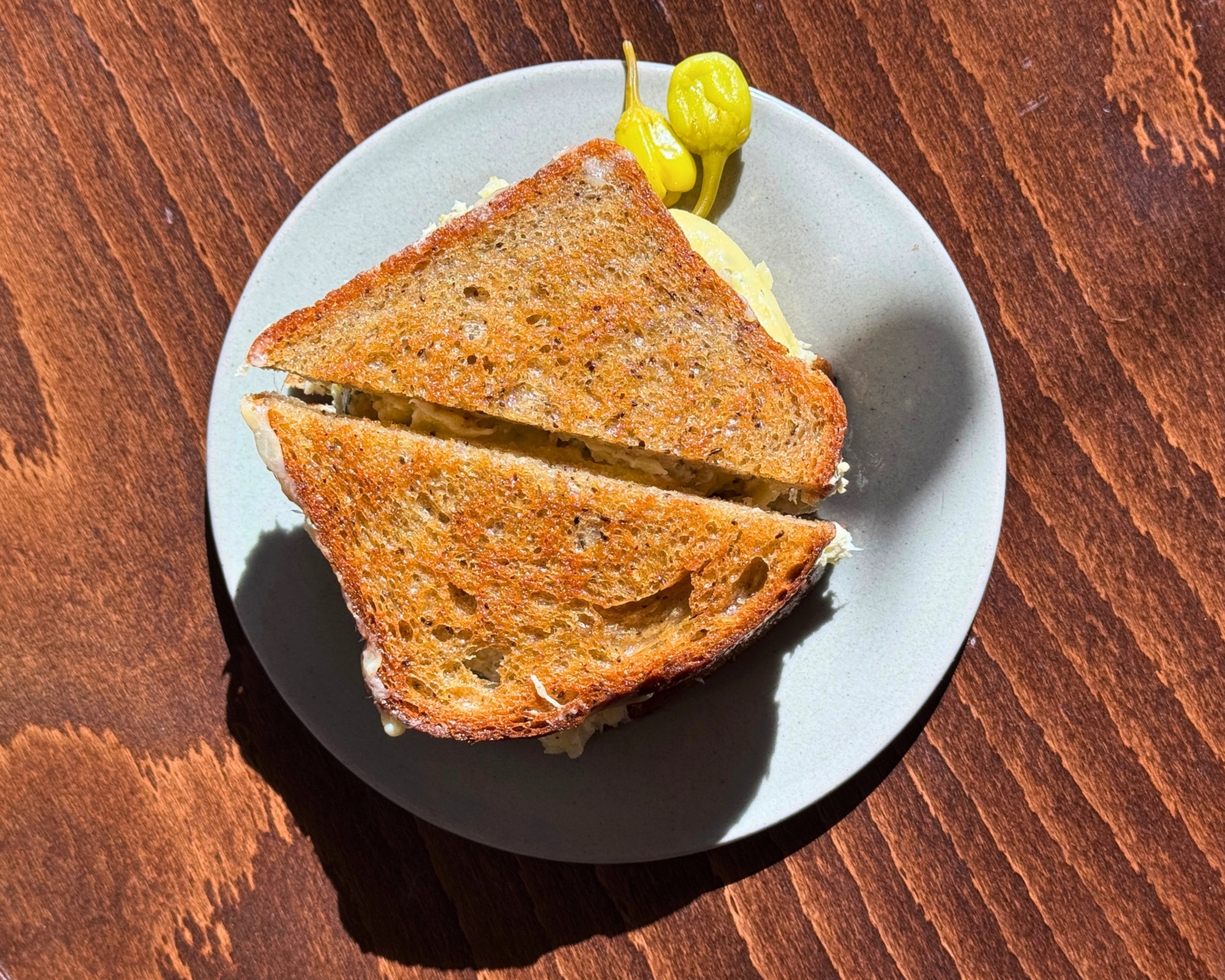
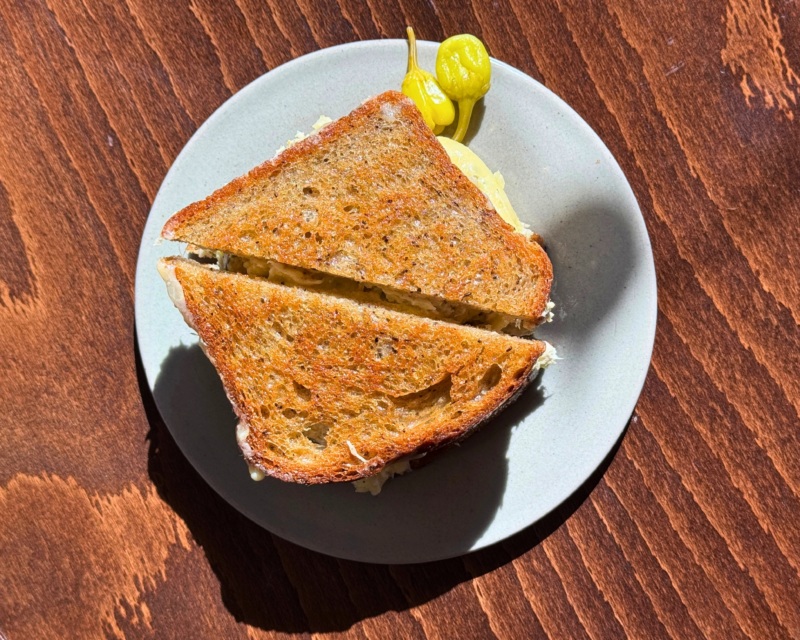
Another sandwich born from nostalgia, Little Fish’s tuna melt starts with fresh albacore they cook in-house to control the texture. The cooked tuna is combined with classic and not-so-classic elements like diced celery, shallots, radish, chopped pepperoncini, mustard, lemon juice, and mayonnaise. While Sonenshein was eager to incorporate the visual effect of a bright orange cheddar slice, the cheese is white because a two-year aged Shelbourne Farms cheddar from Vermont was simply the perfect cheese for the job. All of it is served on Bub and Grandma’s rye that’s gently fried in oil on its exterior sides.
What makes this sandwich more than the sum of its parts are the ratios of bread to cheese to tuna salad—the bread is thin enough to let the tuna shine, but not so thin that it’s irrelevant, and simultaneously, not so thick that the toasted exterior scrapes the roof of your mouth. The tuna is generous without being commandeering, and the cheese, alongside mustard for that acidic balance, brings everything together.
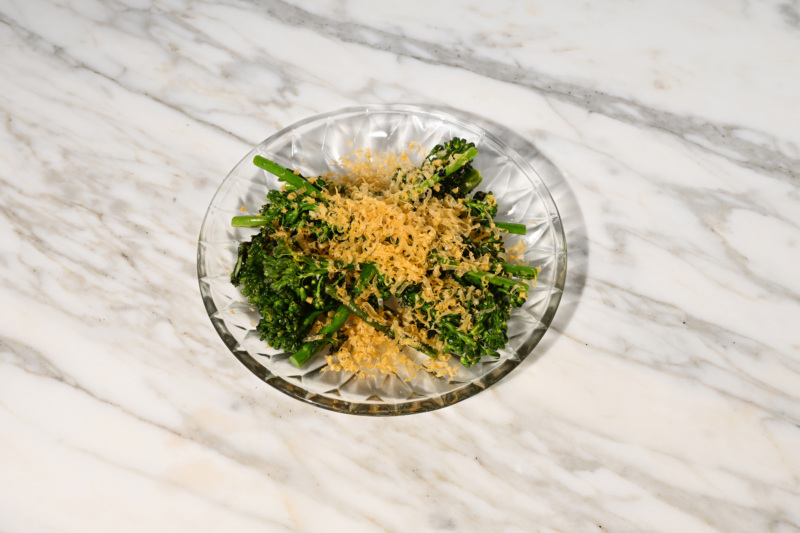
Grilled Broccolini, Brown Butter, Fish Sauce, and Mimolette
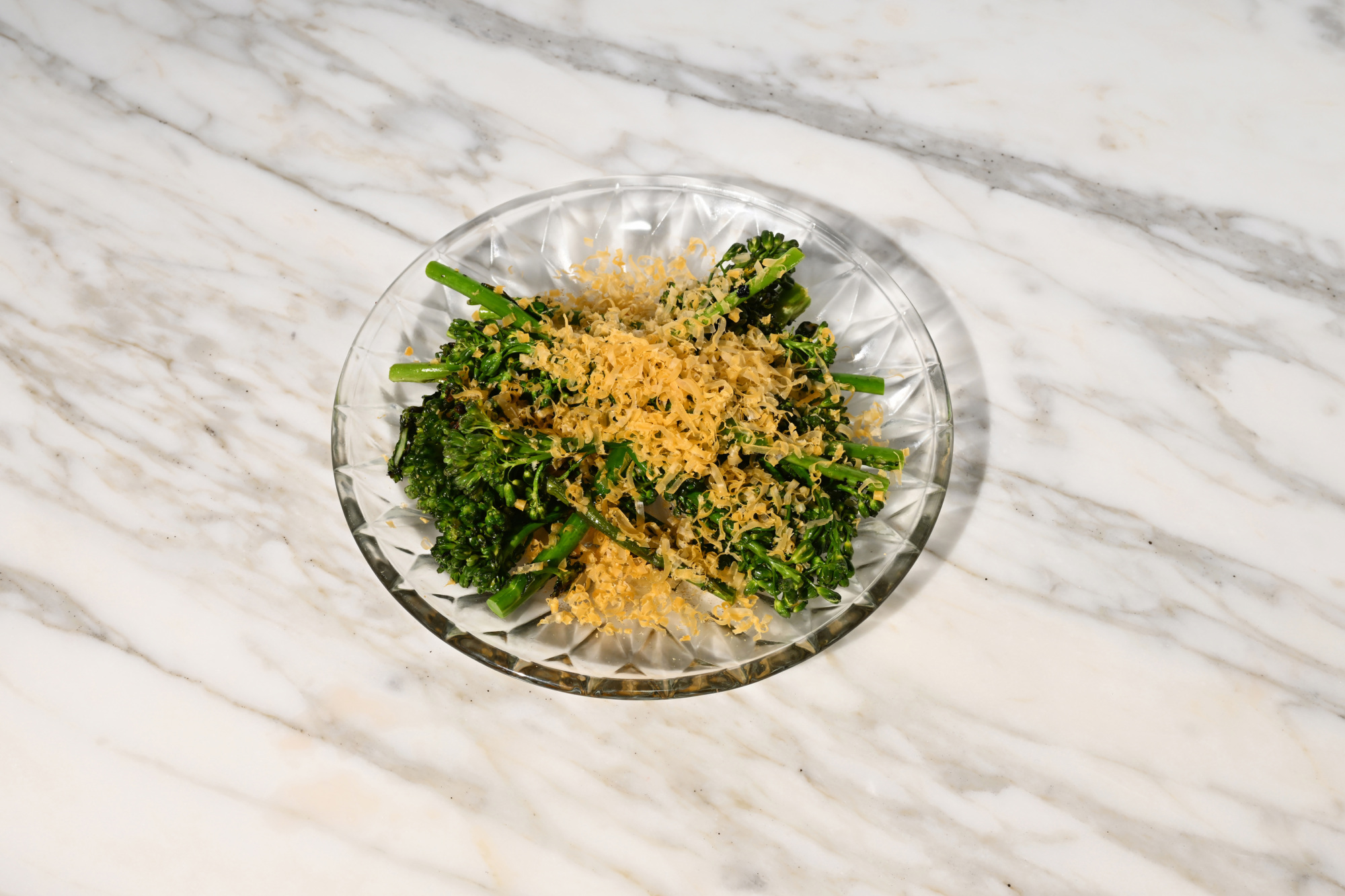
This dish combines several core memories for the couple, turning them into something completely new. When ideating a hot vegetable dish for the menu, Sonenshein immediately thought of another childhood staple, her father’s weeknight specialty: broccoli microwaved with cheddar cheese. More recently, Vahle prepared a potato and mimolette dish that Sonenshein was equally enamored with. And both drew upon a casual dinner at home that stuck with them, which included bread crumbs with fish sauce and brown butter.
“All the cozy elements of those dishes fit together,” says Sonenshein. The restaurant version of the dish is served as an abundant helping of grilled broccolini tossed in brown butter, fish sauce, and lemon juice, with grated mimolette from Rodolphe Le Meunier, one of the most celebrated dairy purveyors in France. “You know their butter—it’s the one wrapped in gold foil that’s sold at a lot of high-end grocery stores, and it’s unbelievable,” says Vahle. “But they make other items too, as we pleasantly discovered.”
Camembert Cheesecake
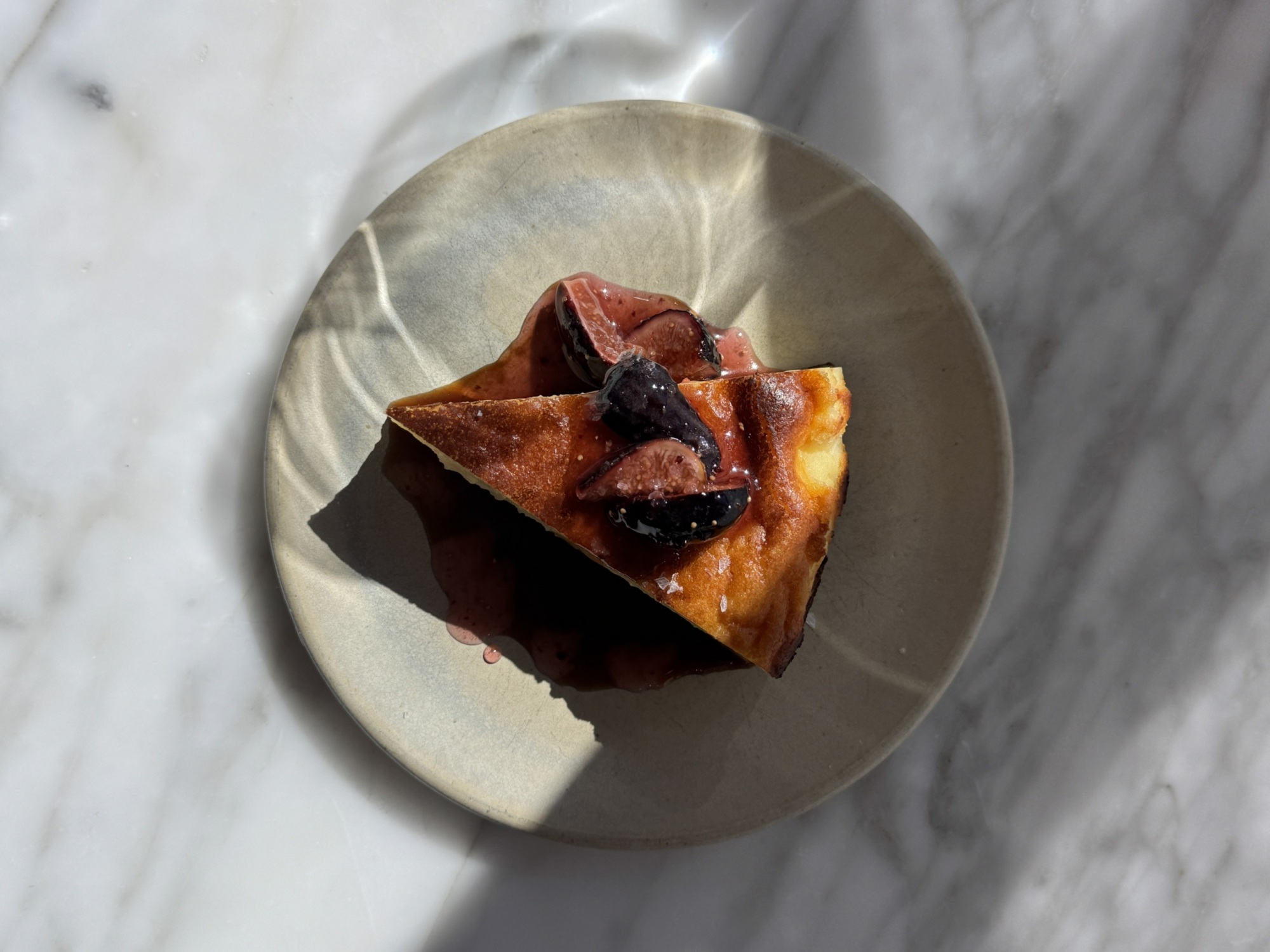
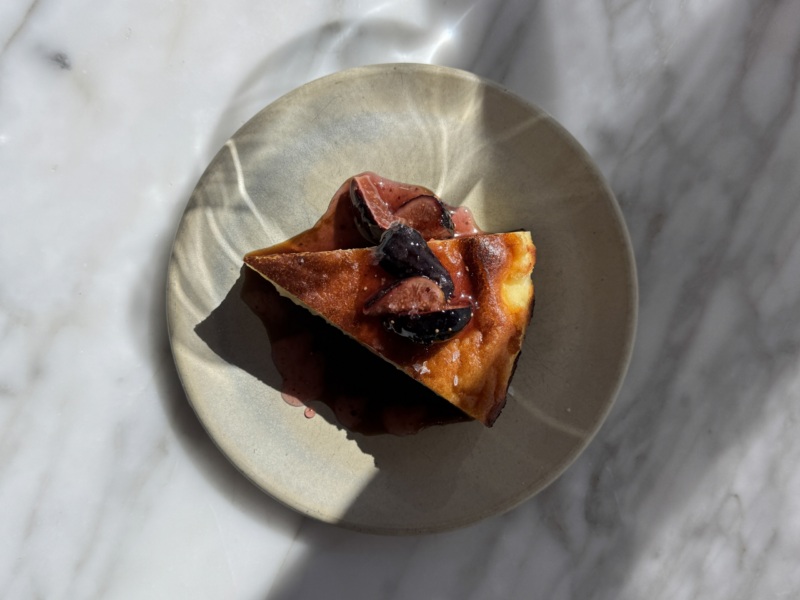
As self-proclaimed “cheeseheads,” Sonenshein and Vahle’s Basque-style cheesecake is distinguishable with their inclusion of Camembert, adding a savory element that bridges the gap between a cheesecake and a cheese course for dessert. They mix Mount Alice Camembert-style cheese from von Trapp Farmstead in Vermont with classic Philadelphia cream cheese, eggs, cream, a small amount of mochi flour for stability, plus a touch of Shiro White Miso from Rokko Miso in Japan. The cake is preciously and specifically baked in an older oven that yields a more consistent bake than the kitchen’s newer, fancier equipment. The final cake has a deep brown—but not necessarily burned black—exterior, with the interior the jiggle serving as the most important visual cue. “It should collapse in the center just slightly and appear almost underbaked to yield a final texture that’s sliceable and scoopable,” says Vahle.
The cheesecake is topped with seasonal fruit (in early summer, it was apricots cooked in syrup, dehydrated, and then returned to the syrup), and a syrup made with high-mineral Okinawan brown sugar that adds depth and complexity. A splash of gluten-free tamari from Nitto Jozo provides a savory umami element to the dish. As Sonenshein says, “it’s basically a cheese plate, masquerading as a cheesecake.”
Sharon Brenner is an L.A.-based food writer, home cook, and immigration lawyer. Follow her @recordsintheden, and follow @Resy, too.