Philly’s Double Knot Sails North to New York City
Published:
Philadelphia’s major restaurateurs have been making their way up the New Jersey Turnpike to New York City in recent years: Michael Solomonov and Steve Cook operate outposts of Laser Wolf and K’Far at the The Hoxton Hotel in Brooklyn, while Stephen Starr continues to make his presence known in downtown Manhattan — most recently with the reopening of Babbo Ristorante.
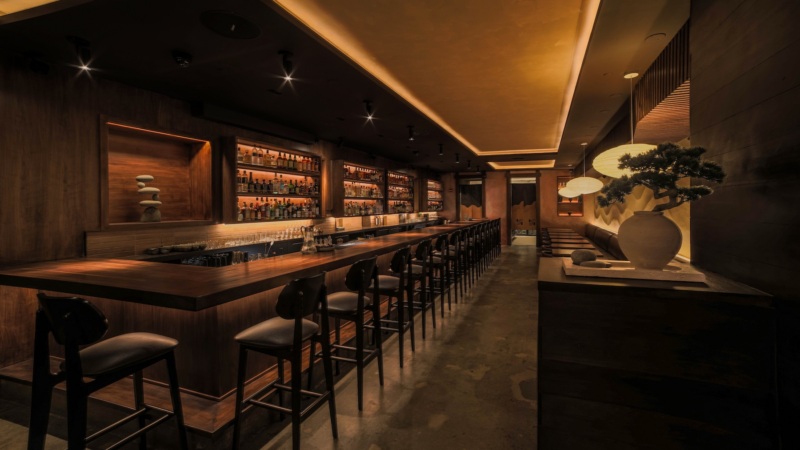
The latest Philly import arrived from chef Michael Schulson, who debuted a New York location of his popular sushi and izakaya spot Double Knot on Feb. 18, just a block from Rockefeller Center. While the food menu is the same as you’ll find in Philadelphia — including the signature edamame dumpling — the 12,000-square-foot space in New York feels far swankier, and expansive, than the original.
Here’s everything you need to know about Double Knot Midtown before you go.
The Resy Rundown
Double Knot Midtown
-
Why We Like It
This Philly favorite has something for everyone — sushi, Japanese skewers, cheesesteak bao, and their iconic edamame and truffle dumplings. With seating for more than 300, there’s also space for your whole group chat or office crew, too. -
Essential Dishes
The signature edamame and truffle dumplings; pork scrapple bao; and black cod fried rice. Don’t overlook grilled skewers from the robatayaki section and sushi prepared with warm rice. -
Must-Order Drinks
Sake is the move here. There are plenty to choose from including approachable Suigei Drunken Whale ‘Harmony’ with notes of tropical fruit and splurge bottles like Tatenokawa Nehan “Black” for $709.
-
Who and What It’s For
Swank, sprawling, and around the corner from Rockefeller Center, Double Knot has plenty of seating to accommodate groups and a menu where everyone will find something they like. -
How to Get In
Reservations are available 30 days in advance at midnight. The daily happy hour from 4 to 7 p.m. at the upstairs bar is for walk-ins only. -
Pro Tip
No matter where you’re seated, be sure to do a lap around both floors to check out the design from Parts and Labor, particularly on the lower level.
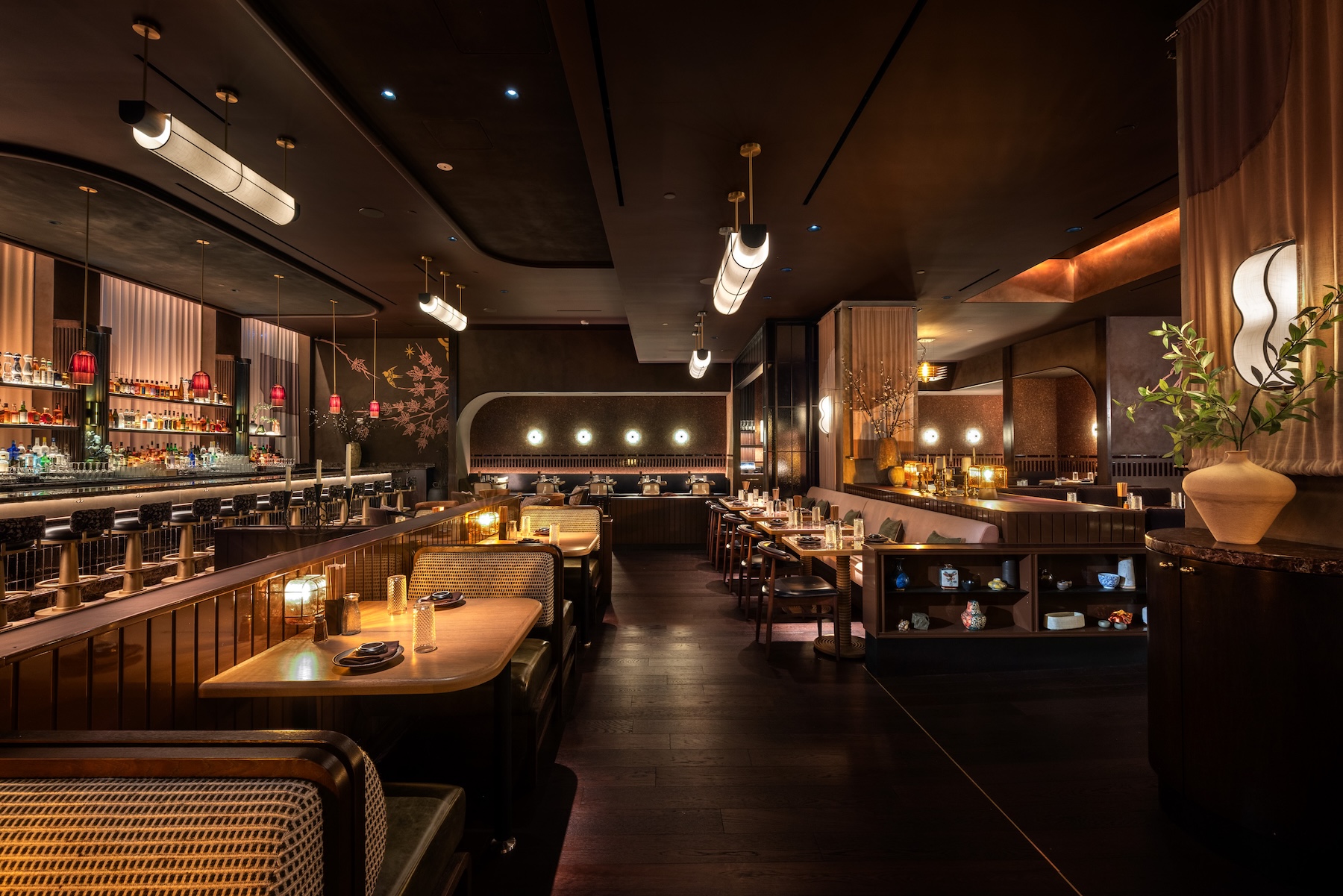
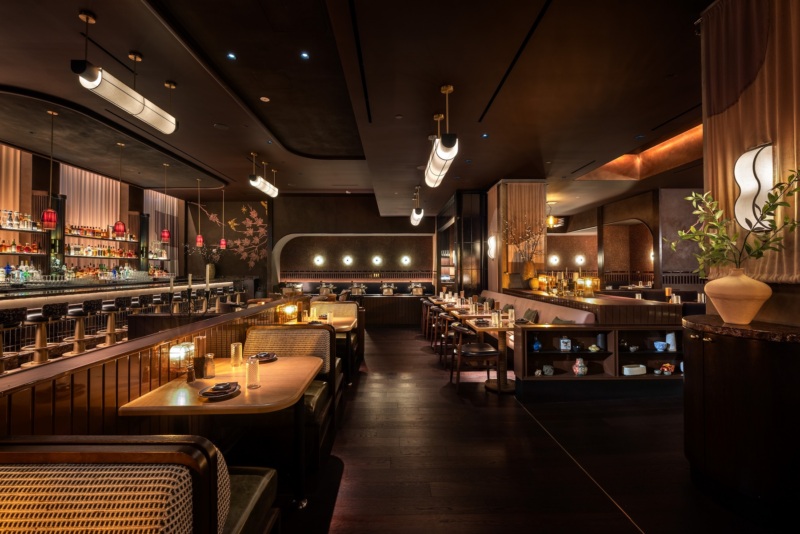
1. The space is sprawling, swank, and vibey.
In Philadelphia, Double Knot is situated in an historic building with brick walls and sports a casual feel. But as the brand has expanded — Double Knot opened in Miami last year — so has the design ethos.
“We did our interpretation of what New York Double Knot would be,” Schulson says. He worked with Parts and Labor, the award-winning team that designed The Grey Restaurant in Savannah, Ga., to overhaul the space, which sits on the first floor and basement level of the former Exxon building.
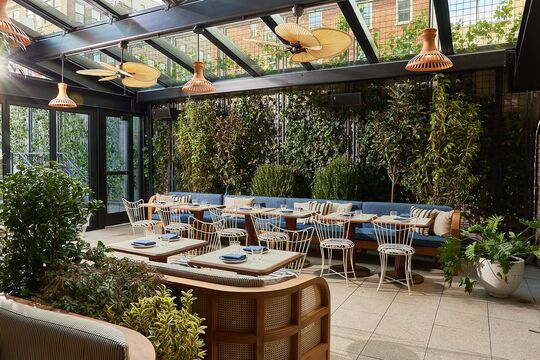
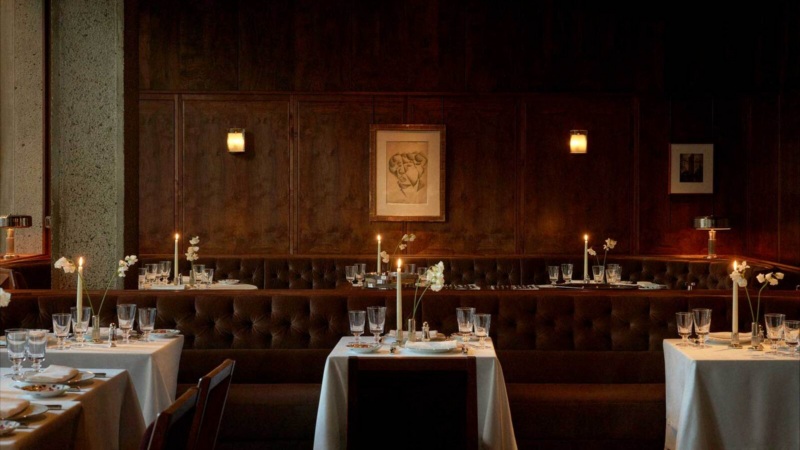
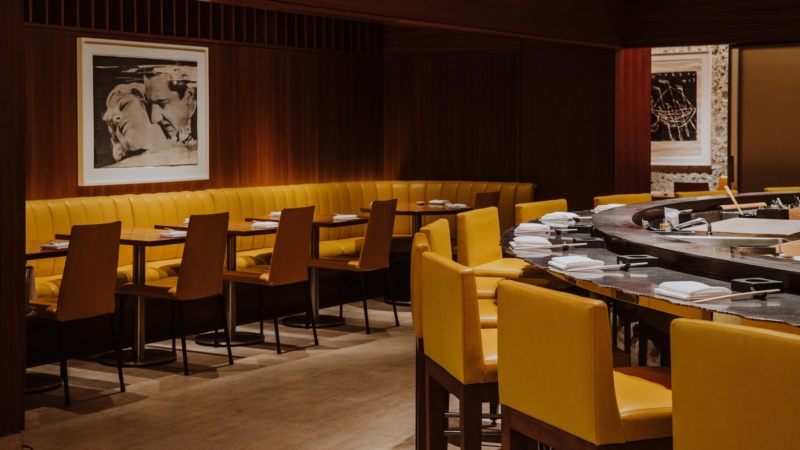
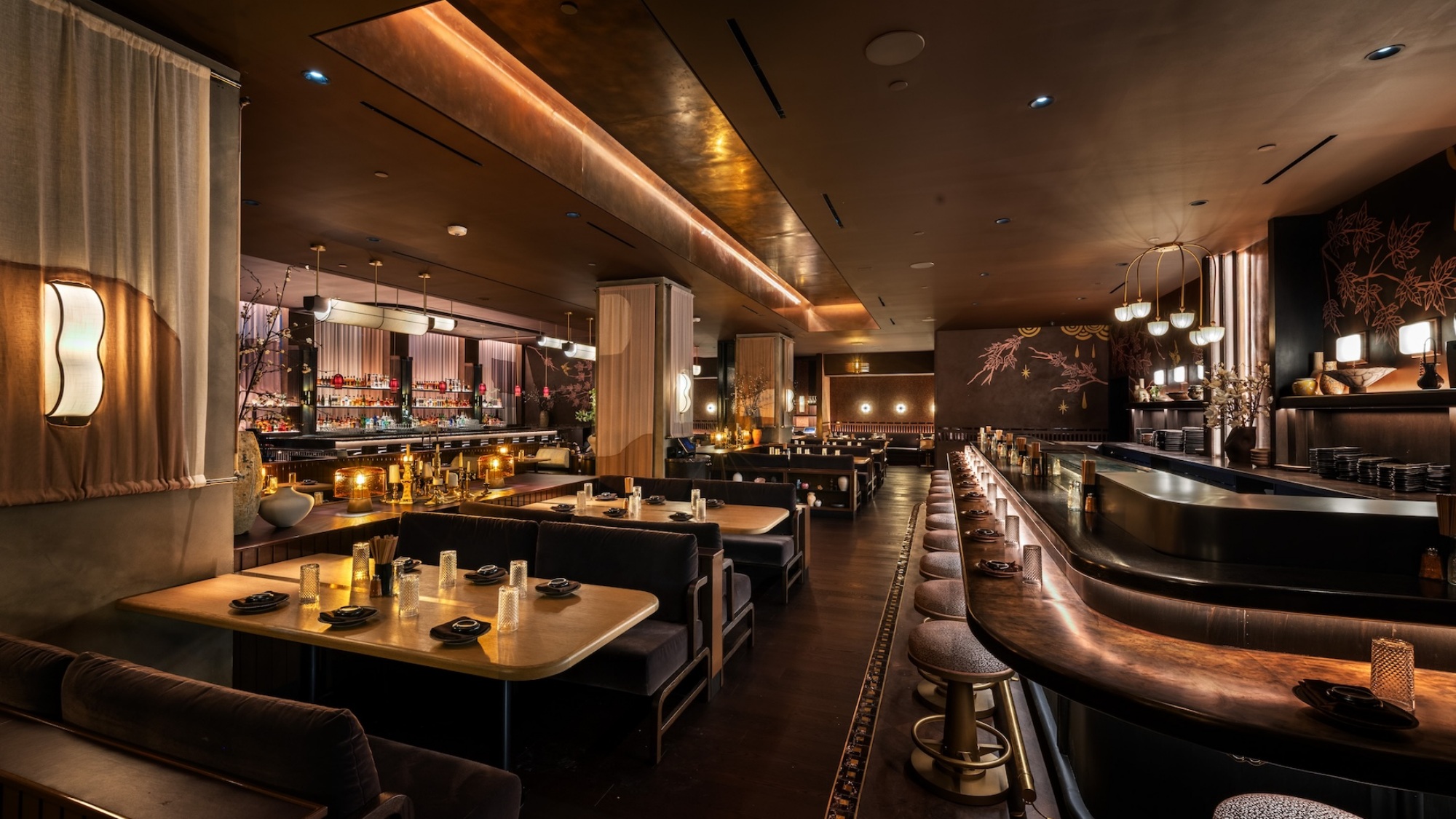
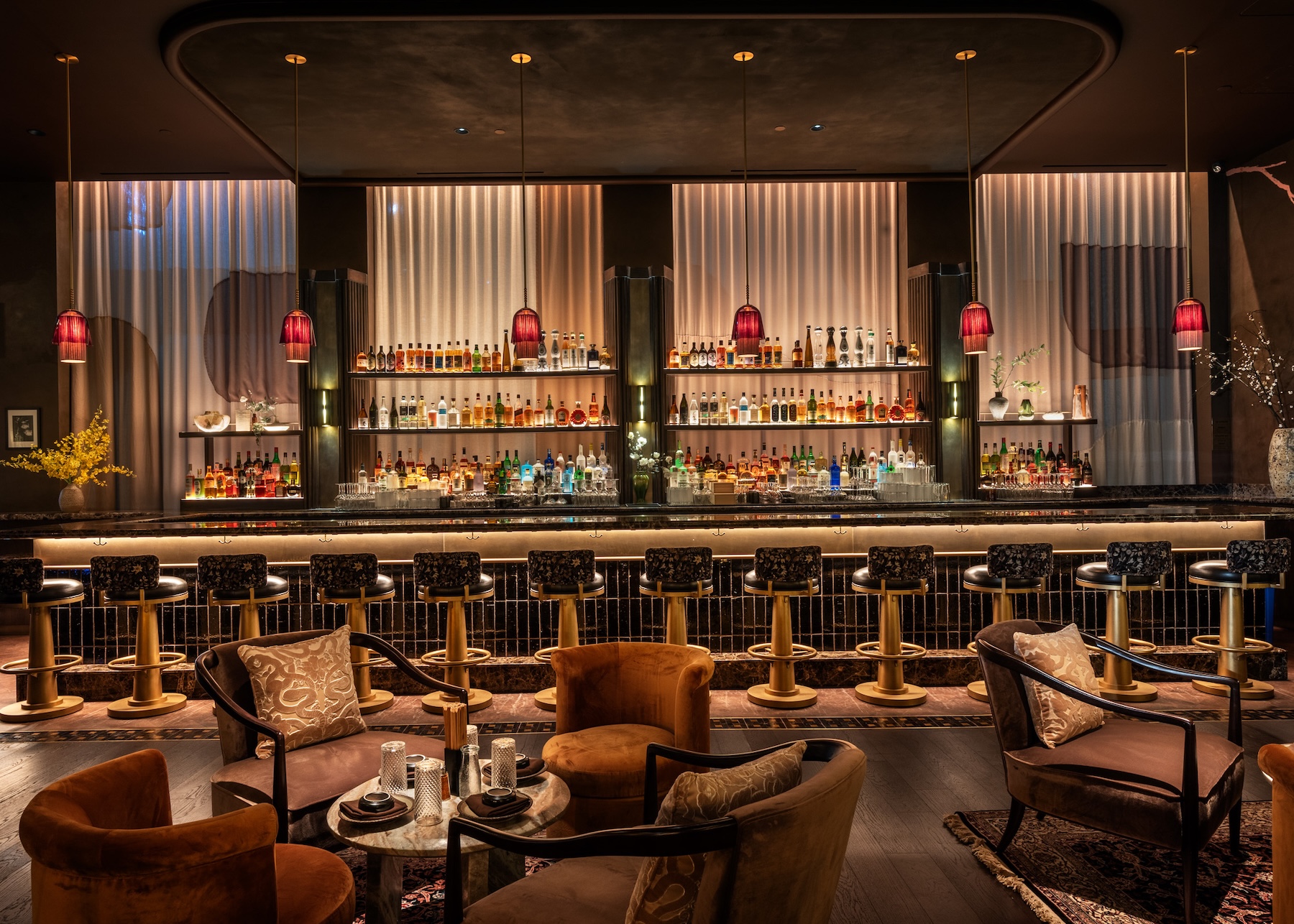
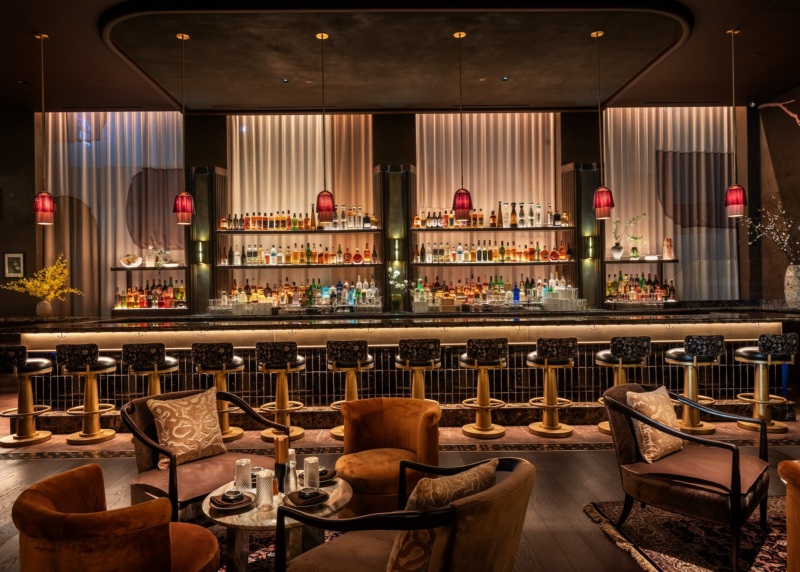
There’s no shortage of seating at Double Knot. Including two private dining rooms, two cocktail bars, a sushi bar, and a bar in front of the grill, the space can seat more than 300 guests, many of them at banquettes. Upstairs, the dining room is dark and moody with lots of earthy and gold tones, and pops of flowers and branches in large vases.
Schulson wanted the basement level to be transportive — “a wow,” “spectacular,” he says, so that guests seated below ground wouldn’t feel like they were being relegated to the kids’ table. Some of walls are covered in mauve velvet, a section of the ceiling is covered in pink mosaic tile, and the space has a rose gold glow. “You don’t necessarily feel like you’re near Radio City or Times Square, or [that] you’re in New York City; you could be anywhere,” he adds.
One design touch that stuck around from Philadelphia are lots of candles throughout the space to add a warm glow.
2. The food menu will be very familiar to Philadelphians.
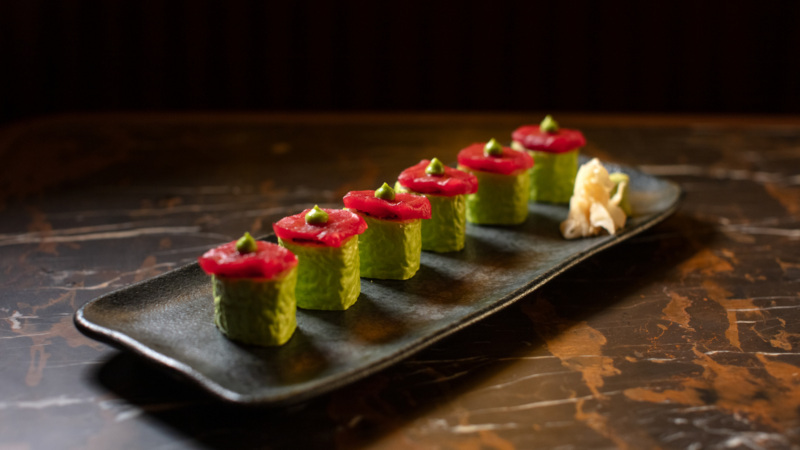
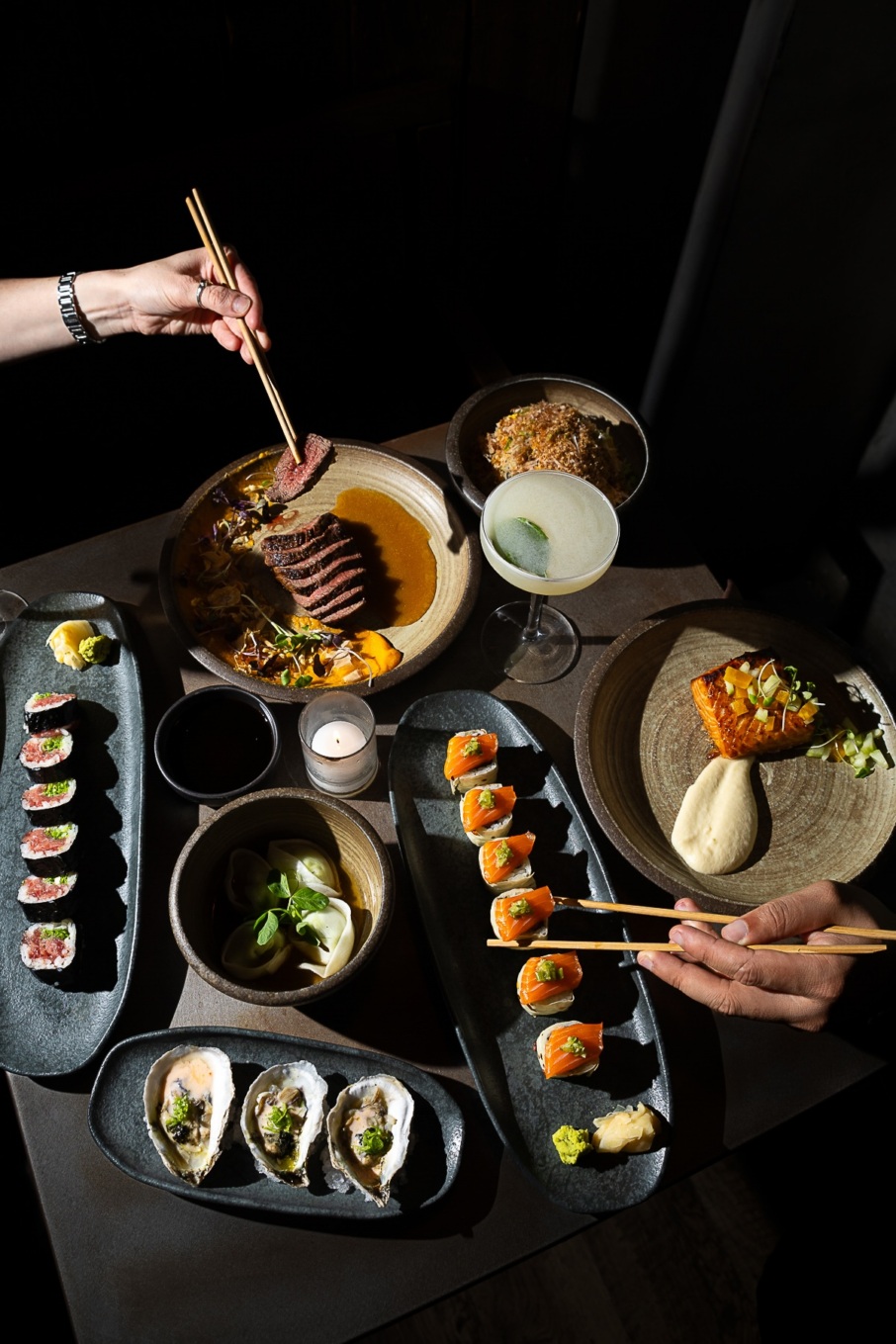
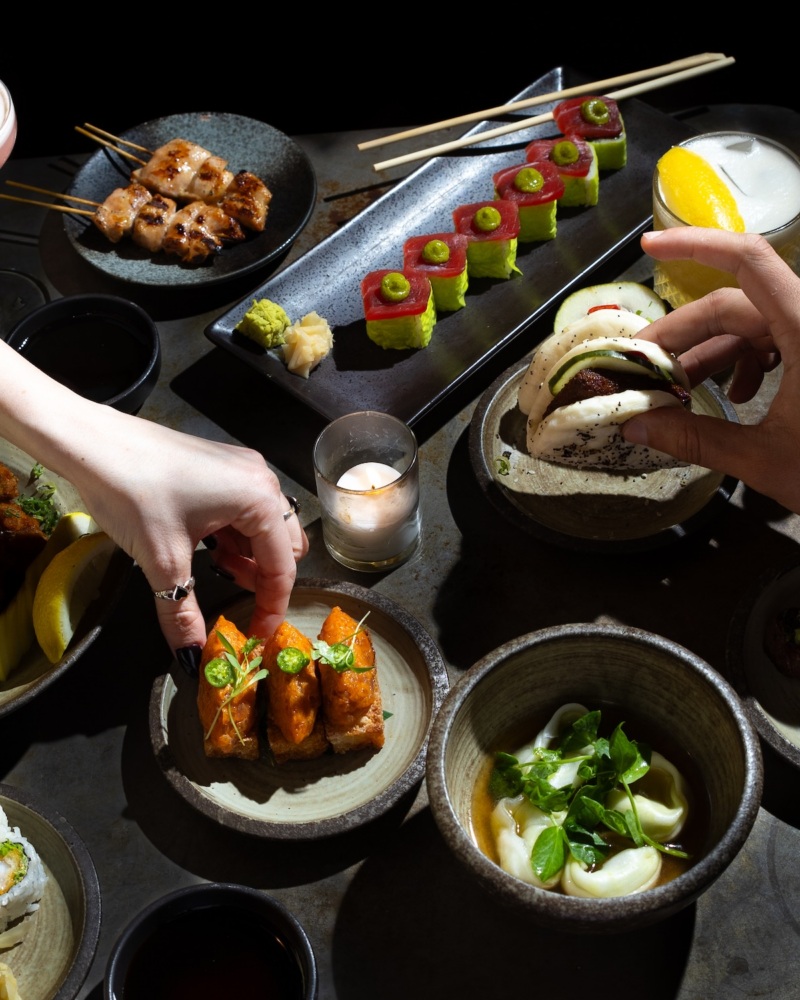
There’s a little something for everyone on Double Knot’s menu, which is the same here as it is in Philadelphia and Miami. Overseen here by chef Sung Kim, formerly of Blue Ribbon Sushi & Steak, Double Knot Miami, and the Tin Building’s Shikku sushi counter, the menu includes a large section dedicated to robatayaki, or skewers of everything from shishito peppers to duck legs, octopus, and kobe beef, which are served with a housemade smoked mustard. Equally as extensive are the sushi offerings, which are served with warm rice and include more modern takes like foie gras with miso caramel and scallion, and red snapper with kombu and ponzu.
Of the cooked dishes, a number have been on the menu since the restaurant opened in 2016, including a cheesesteak bao stuffed with ribeye and provolone, and a duck scrapple bao, which nods to a dish from the Pennsylvania Dutch community that’s traditionally made from pork scraps.
Arguably, the best-known dish from the restaurant is Schulson’s edamame dumplings with truffles, which he first made at the now-shuttered futuristic Philly spot Pod 25 years ago and then put on the opening menu at Buddakan in New York in 2006. The dish hasn’t changed much in that time: Edamame puree with a touch of truffle is wrapped up in housemade har gao wrappers and served in a caramelized shallot sake broth. “If I had a penny for every edamame dumpling, I’d be pretty well off,” he jokes.
If you need some guidance on ordering, consider the chef’s tasting menu ($78) which allows you to pick one item from each section and two robatayaki — or you can leave all the choices to the team.
Finally, for dessert, Kim is keeping things simple with soft-serve ice cream in flavors like miso-caramel, and offering mochi, which they hope to make in house down the road.
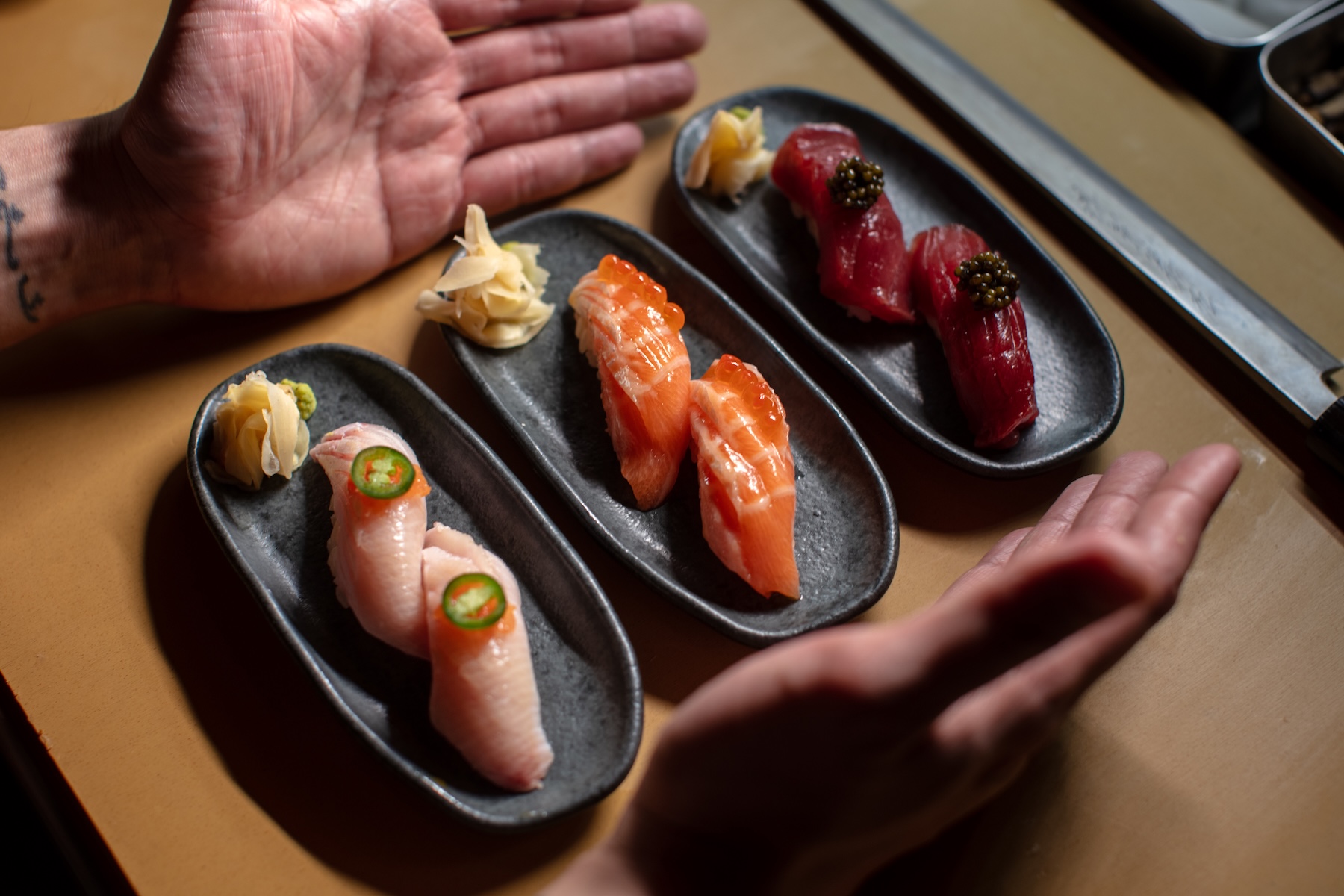
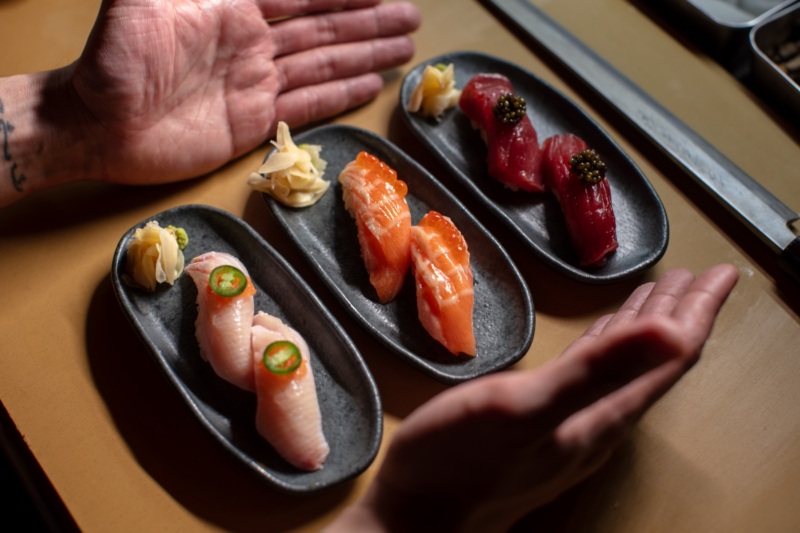
3. There are a lot of sakes to choose from.
While Pennsylvania’s complex liquor laws have limited Schulson, he notes, “It’s been a little easier and more enjoyable to get some good stuff on the menu in New York.” The sake list is extensive and includes several varieties of Junmai Daiginjo, a distinction used for sakes made rice that’s polished to at least 50%, and Nigori sake, with its cloudy appearance including splurge bottles like a Tatenokawa Nehan “Black” for $709.
Beverage director Luke Kingsley says he likes to recommend “the Hojo Biden ‘Pastoral Beauty’ as there is such an interesting umami note — almost like dried porcinis. I also like to recommend Suigei Drunken Whale ‘Harmony’ for something that most people enjoy — melons and tropical fruit with a touch of lingering sweetness.”
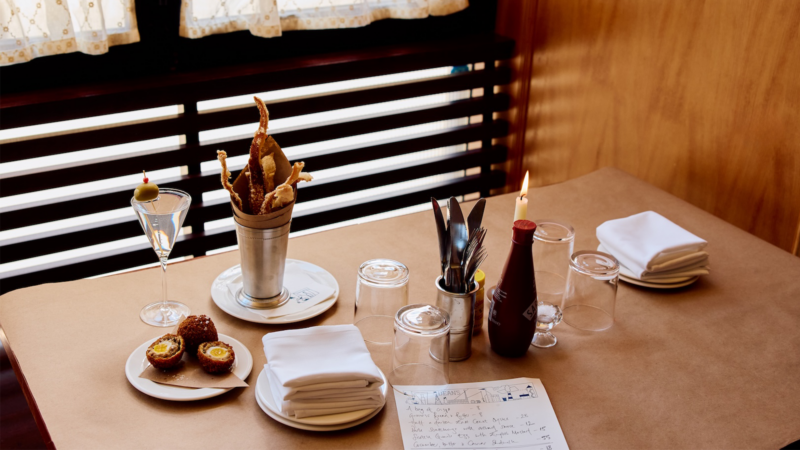
For cocktails, the house signature is The Double Knot with bourbon, rye, vermouth, and smoke. Many of the other cocktails have a fruit element to them, like The Crown Knot with miso gin and strawberry vermouth that’s served with a single Pocky sticking out from the glass.
4. Happy hour is back in full force here.
While happy hour attendance has dropped since the pandemic, it has long been a hallmark of Double Knot in Philly. For Schulson, it’s about creating an atmosphere in the space, filling it with energy. “I think happy hour is important. [At 5 p.m.] most restaurants are not that busy — for me, there’s nothing worse than going into a restaurant that’s empty,” Schulson explains.
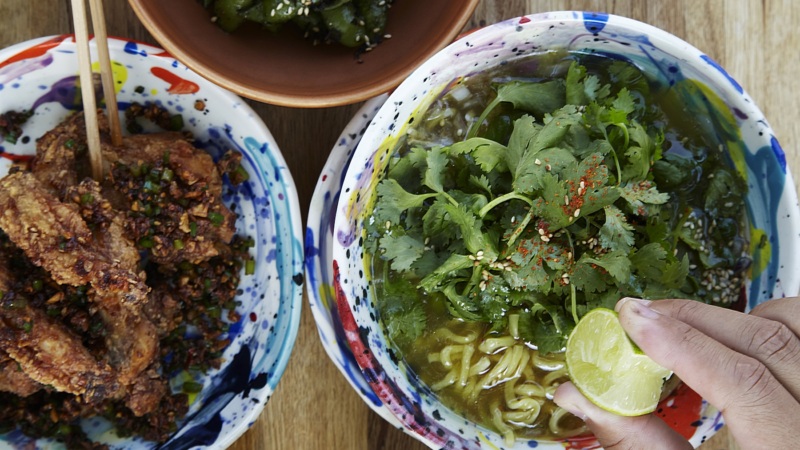
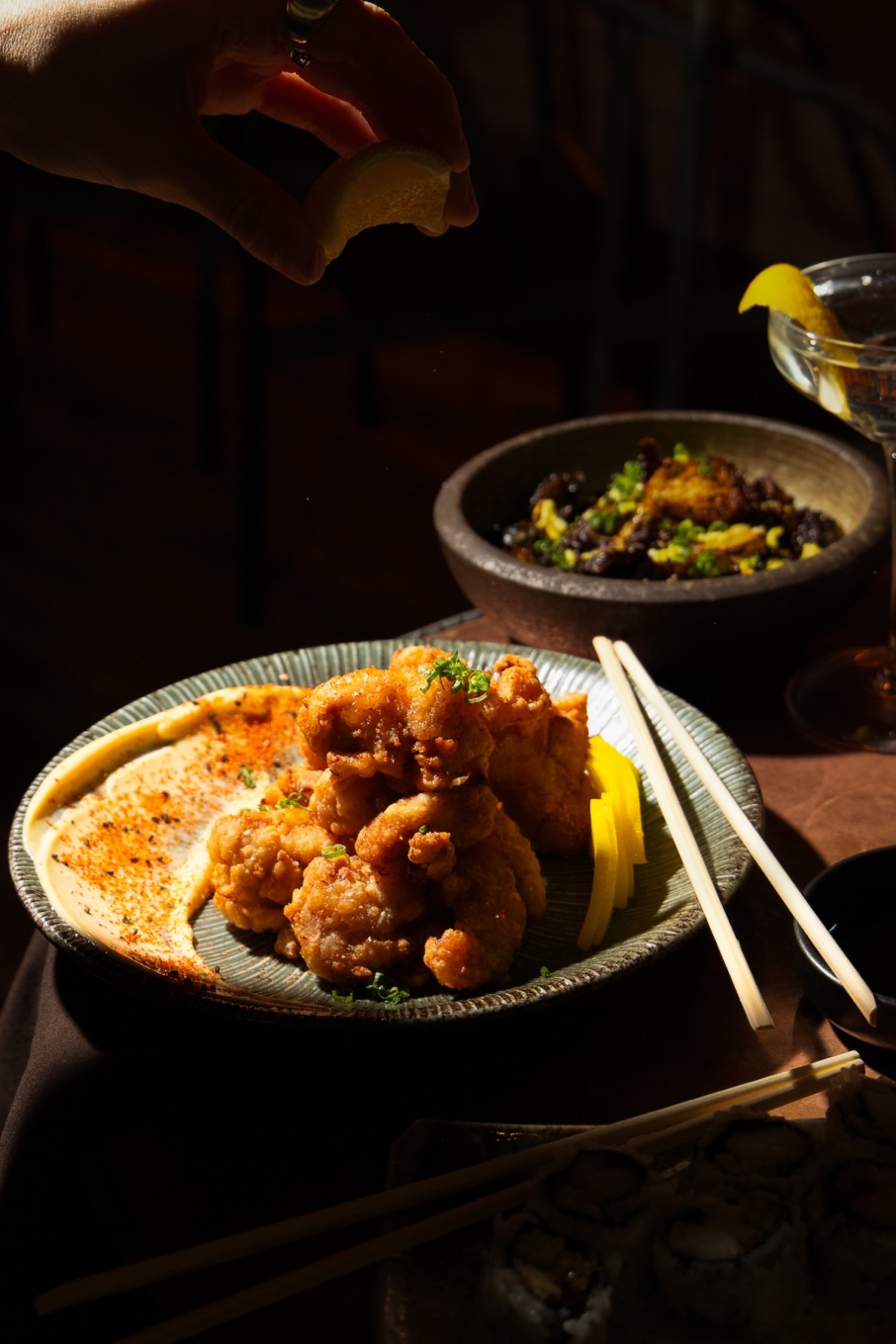
Happy hour at the New York location starts at 4 p.m. daily and includes a couple of cocktails that clock in at only $8 and a pared-down food menu including a few hand rolls, skewers, and Japanese fried chicken.
5. Double Knot is a homecoming of sorts, and may just be the beginning.
While Schulson has carved a name for himself in Philadelphia, he is originally from Long Island and started his career at places like Park Avenue Café and Peacock Alley at Waldorf Astoria New York. Schulson was also the opening chef at the New York location of Buddakan. “New York is where I grew up,” he says. “It’s good to come home.”
He also relishes the fact that despite being less than 100 miles apart, the Philadelphia and New York restaurant scenes are radically different. He chose Double Knot as his first foray here because it is one of his busiest restaurants, but it’s likely to not be his last in the Empire State. “That’s the goal — hopefully New York is good to us,” he says.
Double Knot is open daily starting at 4 p.m.
Devra Ferst is a Brooklyn-based food and travel writer who has contributed to The New York Times, Bon Appétit, Eater, NPR, and numerous other publications. She is co-author of “The Jewish Holiday Table: A World of Recipes, Traditions & Stories to Celebrate All Year Long.” Follow her on Instagram. Follow Resy, too.