How Karravaan Deftly Marries The Flavors and Traditions of The Silk Road
Published:
When I ask Sanjay Mandhaiya about how he came to the idea of Karravaan, his second restaurant in D.C. seven years his first, Pappe, he paused for a moment and asked how much time I had. “It was a long process,” he says. “I thought deeply about the culinary traditions I wanted to showcase through this restaurant that would also showcase the journey of my life.”
Having grown up in a family in the diplomatic corps, Mandhaiya lived and traveled all over the world. “I studied the cuisines and gastronomic norms of different parts of the world, including India, and places along the Silk Road, such as Saudi Arabia, Iran, Bhutan, and Georgia,” he explains. “I wanted to open a restaurant that shows how food in these parts of the world share a common heritage, and that their cuisines were developed through the sharing of ideas.”
As Mandhaiya devised his Silk Road concept, he found it also fit into a unique niche within Washington D.C. Being the international city that we are, D.C. is dense with restaurants that spotlight cuisines from almost every corner of the globe, but there isn’t any one restaurant that links together the foods and traditions of one of the most important trading routes in the world.
Once he had settled upon his concept, Mandhaiya began searching for a venue for his new restaurant and landed upon a spot in Union Market overlooking the local metro station, weaving together all the elements of his vision. Here, he would have a restaurant that provided a culinary journey through the food of countries that shared their cooking methods and ingredients via the routes of the Silk Road. That the restaurant would also be literally located next to a train line, epitomizing the core of his concept – connection through travel – was serendipity.
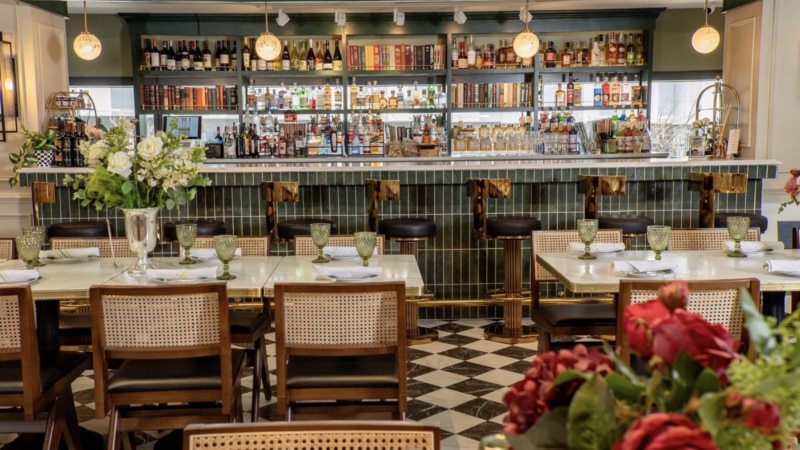
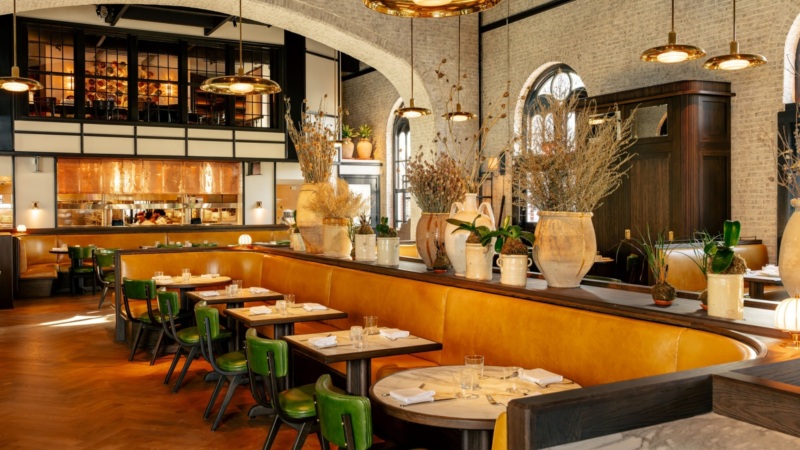
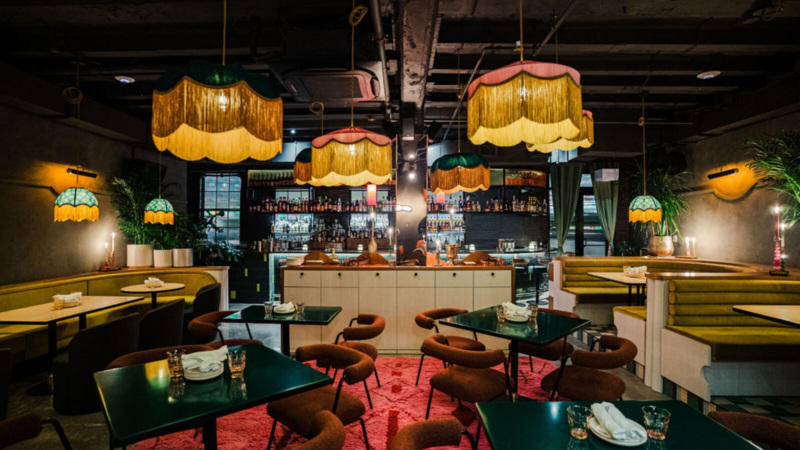
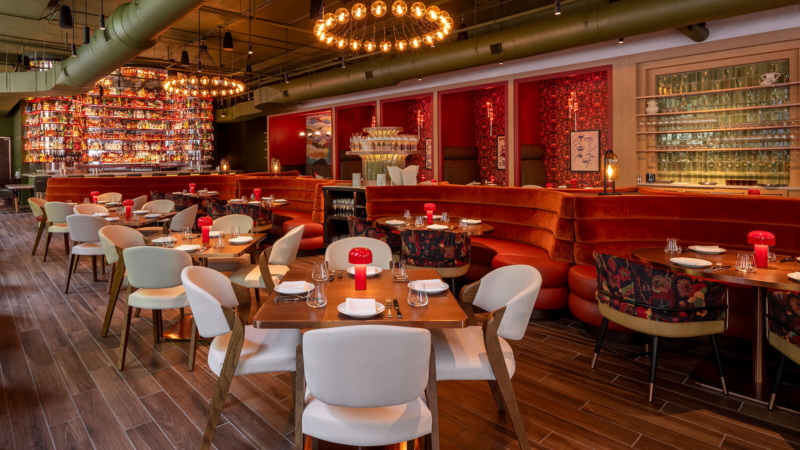
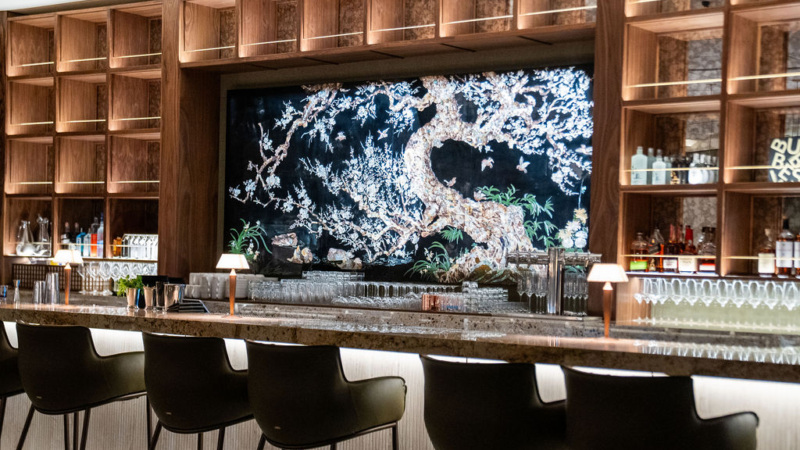
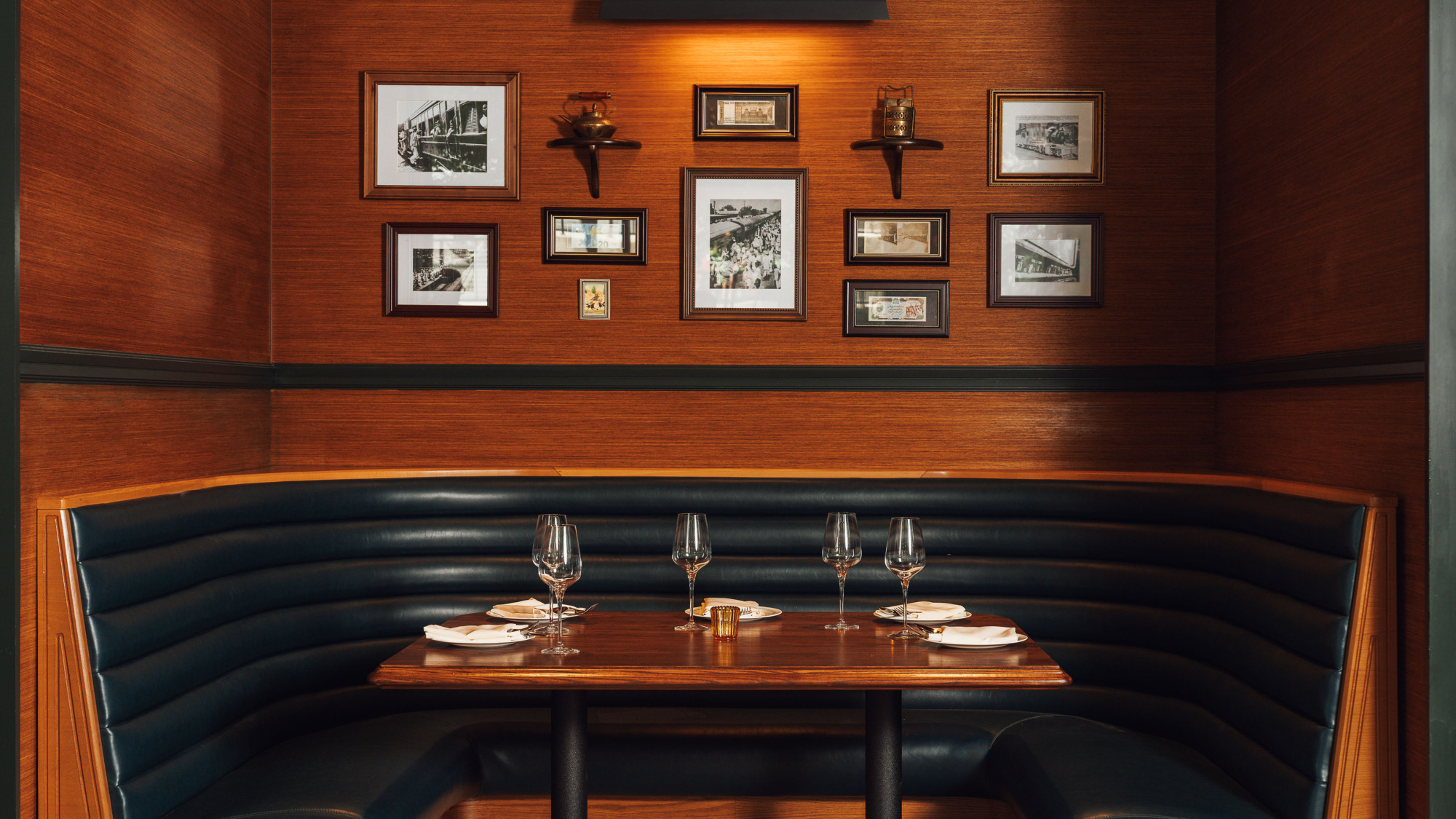
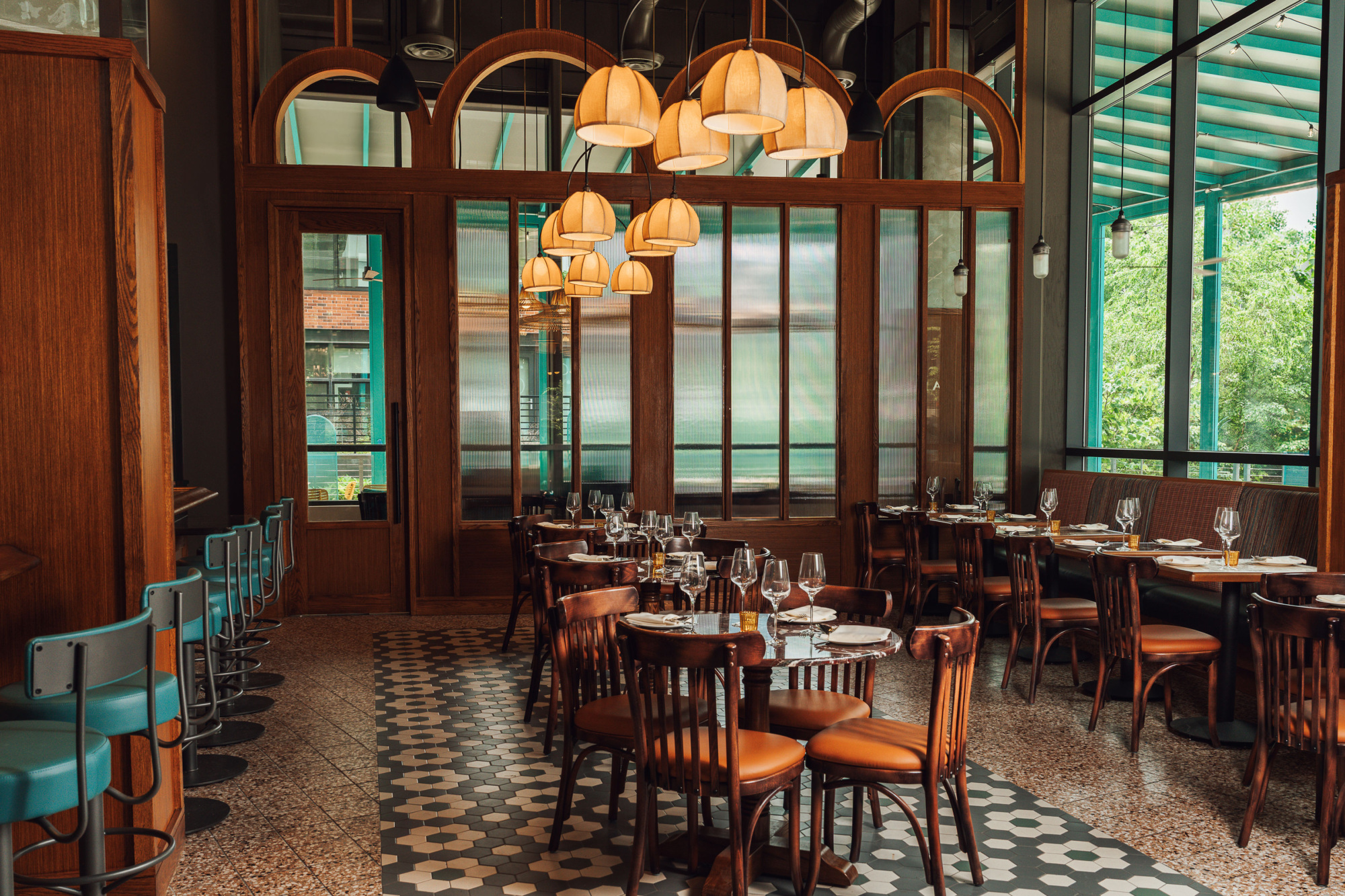
This new restaurant, Karravaan, opened in June 2025, with the theme of a journey present throughout visual cues in the dining room’s decor: the kitchen is designed to look like a train car; a giant clock, reminiscent of those found in train stations across the world, hangs in the main dining room; and the foot rest flanking the bar was actually taken from an old train station.
“My restaurant tells the story about travelling through the world on a train where every stop is a dish,” Mandhaiya says, and he reminds us that the key to his culinary style is that we can never stop evolving – “just as the cuisines of the cultures along the Silk Road continued to evolve as they learned about new ingredients and cooking techniques, I too am hyper-focused on constantly evolving, growing, developing, and improving.” He sees himself as an innovator and translator; adapting the dishes he loves to the palates of his guests each night.
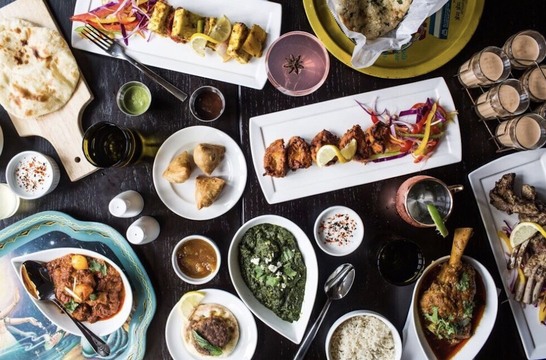
Mandhaiya walked us through his restaurant, literally, and through some of his most exciting dishes, figuratively. Join us for a journey through the menu, via six dishes that embody the restaurant’s ethos.
More Dish by Dish

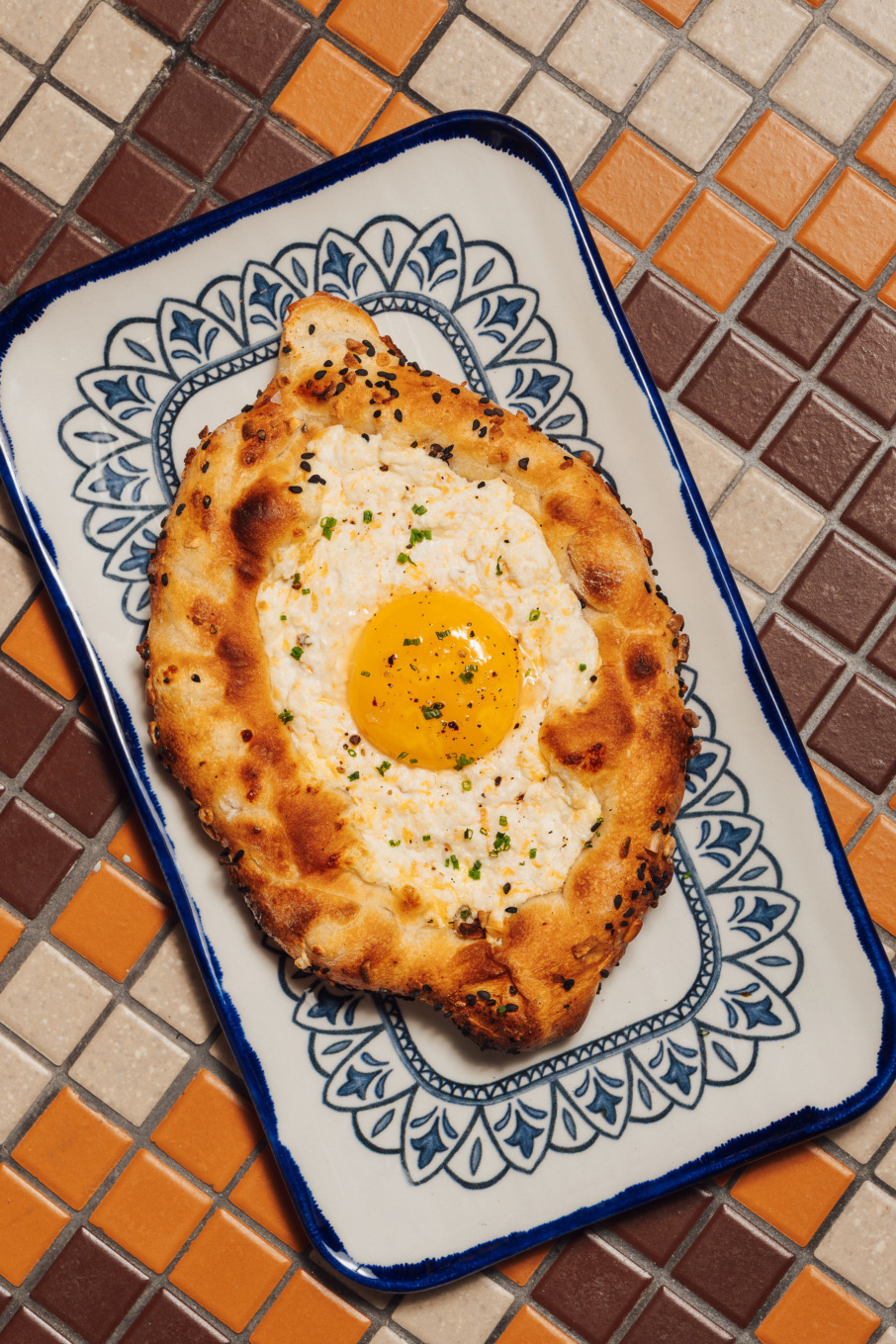
Khachapuri
Mandhaiya describes the classic Georgian dish as “an eastern fondue,” with bread and melted cheese coming together for a truly decadent dish. Karravaan’s version of khachapuri is based loosely on the Georgian original, and it truly slays; it showcases Mandhaiya’s impressive ability to marry concepts and ingredients of different cultures. “Rather than use traditional Georgian bread we use our crusty naan bread, formed in the traditional Georgian boat shape used for khachapuri.”
“The melted cheese includes three kinds — smoked jalapeno cheddar, mozzarella, and ricotta rather than Georgian cheeses — and we use herb butter, chile oil, and everything bagel seasoning for added flavor.” And the winning element? The crust of the dough is also stuffed with cheese. The dish is served while the cheese is still bubbling, and the waiter will fold in the egg that’s been cracked on top of the cheese, for a little extra richness.
Caramelized Shallot Spread
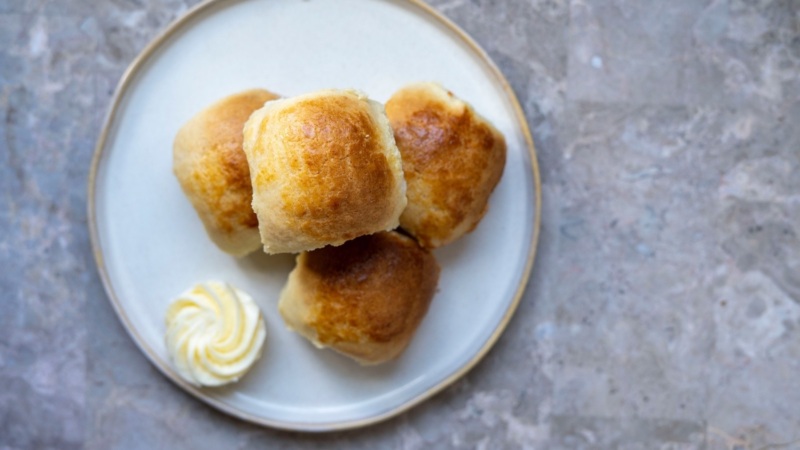
One of Mandhaiya’s favorite dishes from the Middle East is this creamy onion dip. His interpretation of it combines pickled shallots with labneh, yogurt, and cream cheese, as well as vinegar and dill, which are popular ingredients in western cultures, to create a thick, herbaceous dip, completed with a hint of lemon. Served with his house-made flatbread, it’s the quintessential first stop in your dining experience at Karravaan, the perfect pairing to a glass of wine. Pro tip: The wine list at Karravaan was carefully curated to also tell the story of the Silk Road, and includes wines from Lebanon, Portugal, Georgia, and Palestine.
Butter Chicken
The butter chicken at Karravaan follows the classic recipe — perfected at sister restaurant Pappe — but a welcome twist is that instead of the usual morsels of white meat, this one comes with a char-grilled, bone-in half chicken, wing and all. Mandhaiya finds that lots of places make butter chicken too complicated; he wanted this one to be true to the homely strengths of the dish.
While we’re in agreement that the tomato-butter gravy is the most important element of good butter chicken, serving a half-bird in crispy skin on top instantly makes the dish more interesting: more flavorful because of the roasting that lends a contrast to the sweet-spicy gravy; more substantial because of the generous portion that arrives at your table; yet more sophisticated because it wouldn’t be out of place as the centerpiece for a big holiday dinner.
Fish Kofte
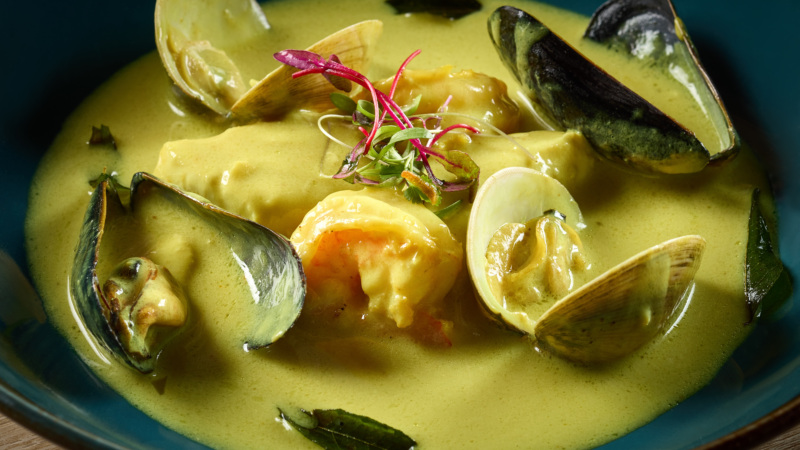
“This is a Lebanese dish, made with whatever fresh fish is available at the market, whether that is cod or snapper or monkfish,” Mandhaiya explains. And he says the flavors speak volumes: “we use ginger and herbs and shallots and put it all in the food processor with the fish, form patties with it, and then grill it.” This dish is a continuous work in progress and Mandhaiya plans to tweak it every six months or so, depending on what else is on the menu at that time and where his experiments have taken him; maybe he’ll bake it or fry it, use a different binder than labneh or a different kind of meat. However enticing these future iterations may sound, the current fish kofte is already lovely, combining the lightness of zucchini fritters with the heft and savoriness that you would get from minced chicken patties.
Wild Mushroom Biryani
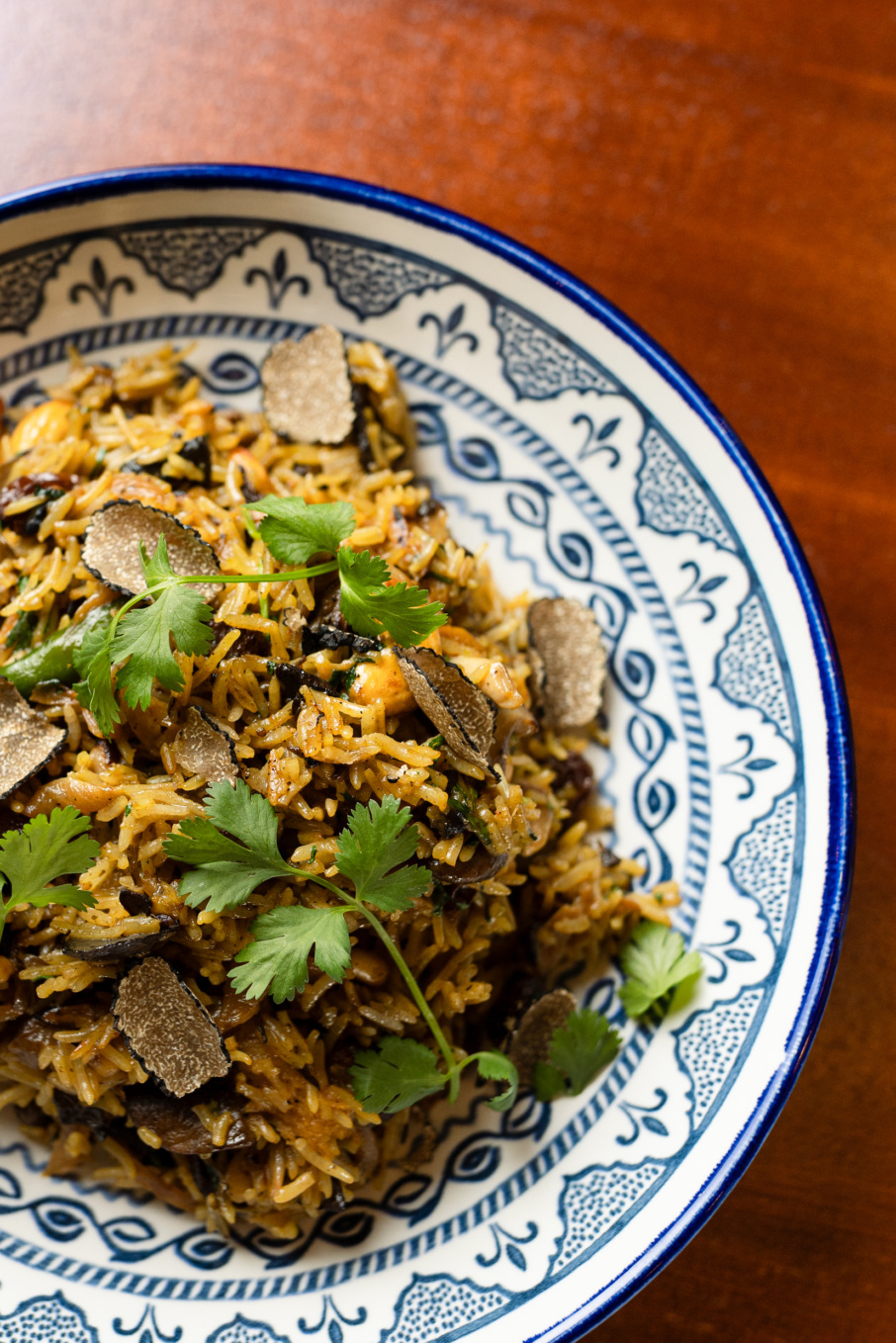
Biryani originated in Persia; the word “birian” means ‘fried before cooking,’ which is how this dish is made, with the ‘cooking’ part taking place in the oven. Over time, this rice dish has evolved differently depending on location; plov in central Asia, polo in Iran, pulao in Pakistan and Afghanistan. Indian biryani is traditionally made with basmati rice, cooked with over a dozen spices including saffron. “We decided to go with a wild mushroom biryani — again adapting the dish to local palates. America has a strong mushroom-eating culture, and we wanted to use local mushrooms and then make the dish super luxurious with chanterelles, shaved black truffles and truffle oil. We then added heat from green chiles, and apricot, raisins, and caramelized onion for a touch of sweetness. Spices like saffron, black and green cardamom, cinnamon, star anise, and cloves infuse the dish through a muslin cloth with aromas and layers of flavor.”
Seasonal Sabzi Tagine
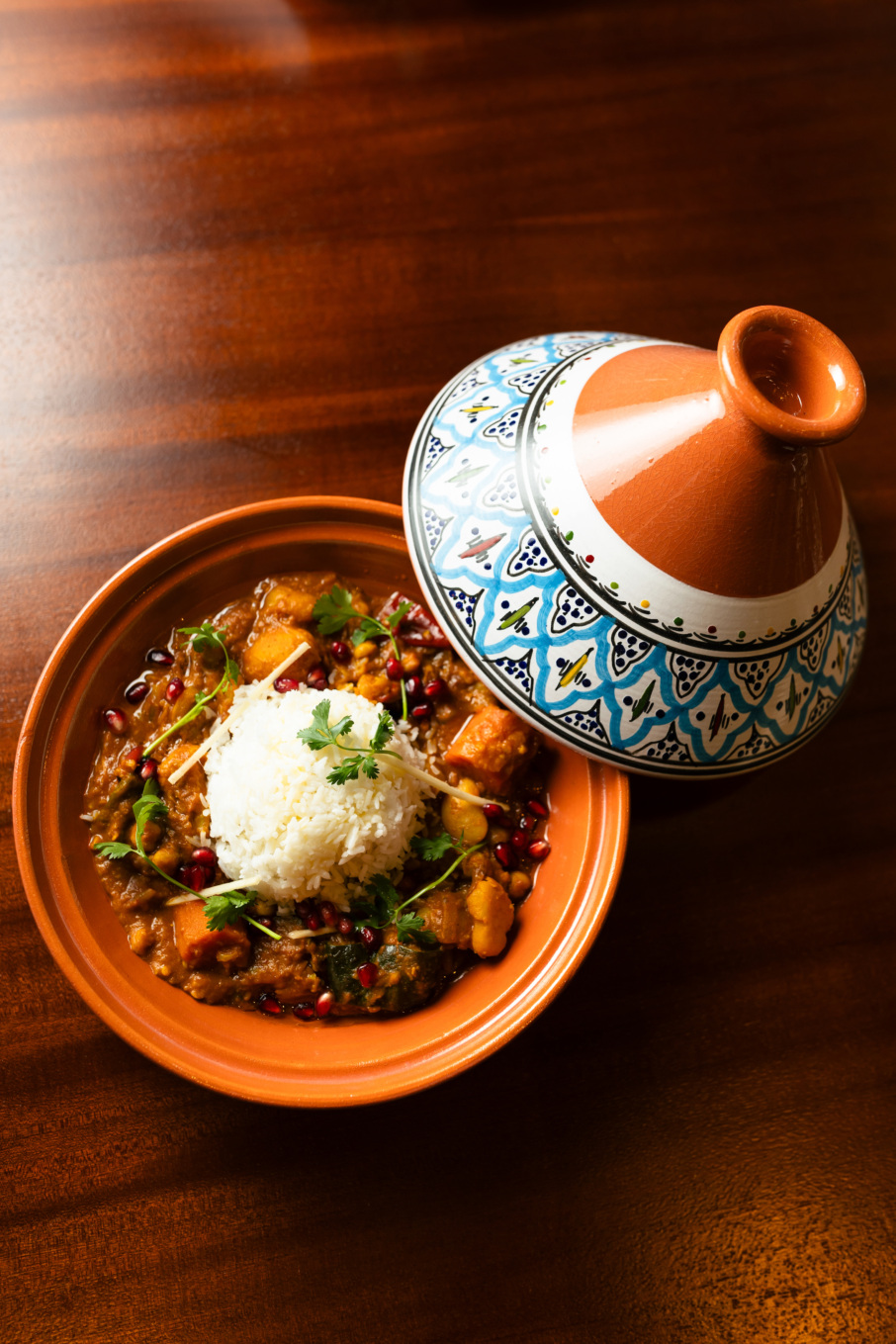
Although this dish is served in a traditional tagine, the dish itself, like many of Mandhaiya’s creations, leans less traditional. In fact, it’s really a hybrid of Moroccan tagine and Indian sabzi, as the name implies. In describing this dish, Mandhaiya recalls how his grandmother, who always loved cooking, used to make him aloo gobi when he was a child: “Aloo gobi is usually dry [i.e. without gravy], but she made it with some broth which allowed the potatoes and cauliflower to soften. And then she added ghee at the end which added richness and really hugged the whole dish.”
“I wanted to bring that memory to this dish and so I cooked zucchini, potatoes, carrots, onions, jalapeños, garbanzos, and gigante beans and with Indian spices. I topped the vegetables with ginger julienned into matchsticks and added preserved lemon for brightness and then include the magic ingredient, ghee. I serve it with rice and sprinkle some cilantro on top for some fragrance. It’s amazing comfort food and every forkful offers the perfect bite: vegetables, ginger, cilantro, ghee; pomegranate for a sweet bite and a touch of Fresno peppers for heat.”