A Day Inside the Pasta Room at Monteverde, Where the Menu’s Foundation Is Laid
Published:
If you’ve ever wondered what it’s like behind the scenes of a restaurant, this is for you. In Behind the Line, photojournalists take you inside the kitchen for a unique perspective on everything that goes into a single day of service, and the people who make it all happen.
In this edition, we get a glimpse into a day at Chicago’s Monteverde, from photographer and journalist Laura Scherb.
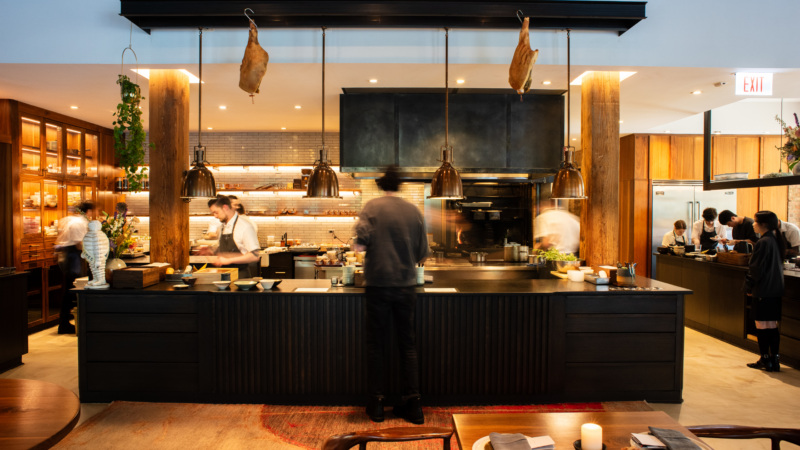
Since opening in 2015, Monteverde has topped list after list of Chicago’s best restaurants. Over the 11 years of operation, chef-owner Sarah Grueneberg has worked to marry an Italian cooking philosophy with Midwestern ingredients and the demands that come with being a destination hotspot.
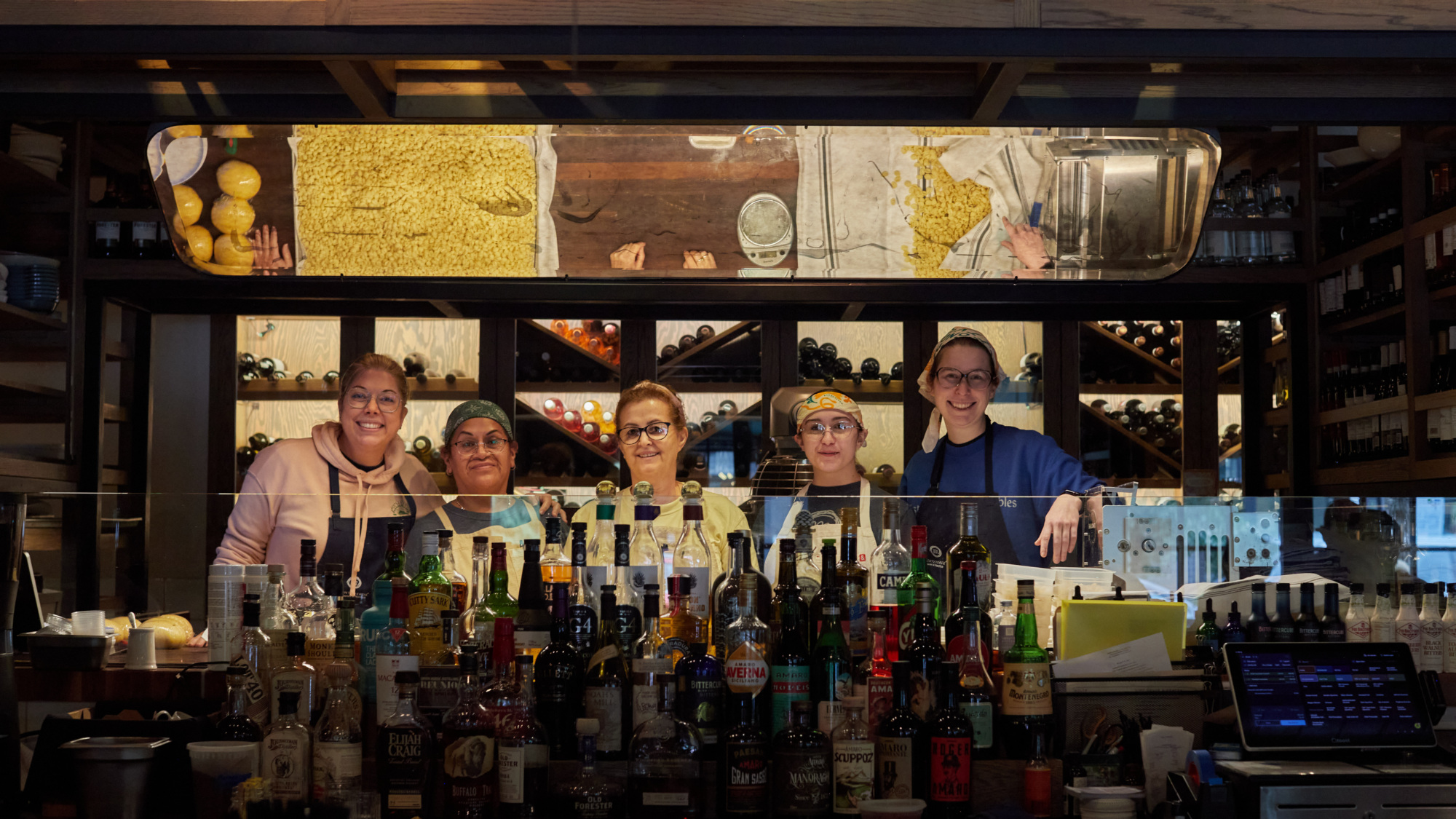
At the core of the restaurant, literally, is the pasta room, or pastificio. Here, in an elevated space that sits behind the bar, Monteverde’s pasta team churns out pasta a mano, sheets of handrolled pasta called sfoglie that are made with fresh, egg-enriched dough, and pasta trafilata al bronzo, extruded pasta made with an egg-free semolina flour dough. All of the restaurant’s pasta dishes, including staples that have been featured since day one, are based on these two doughs, made by the pasta whisperers: Bese Xhemo and Maria Perez, who have been with Monteverde since 2015, and Luciel Deolles, who joined recently.
We spent the day inside the pastificio, following these pastas from their humble beginnings as flour and water to their eventual transformation into beautiful finished dishes that earned executive chef Bailey Sullivan a James Beard nomination for the emerging chef category. Even during a weekday lunch service, Monteverde was humming with activity, every table filled with patrons tucking into plates of the hand-rolled and cut pastas. Here’s how it all comes together.
9 a.m.
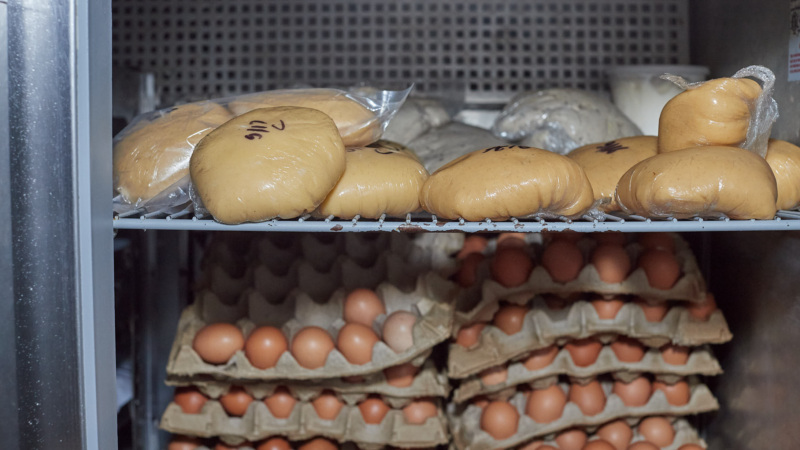
The pasta chefs have staggered arrival times in the morning, but by 9 a.m., with two hours to go until the restaurant opens for lunch service, the pastificio is running at full speed. Xhemo and Perez helm the pastificio in the morning, each working on her own specialty. There’s plenty of dough in the refrigerator, but every morning, the pasta chefs start additional doughs to ensure there’s enough to get them through dinner service. The day that I’m visiting, Xhemo starts in on the fresh dough for sfoglia with the eggs, cracking her way through just one of the 2,160 eggs that Monteverde goes through on a typical week.
10 a.m.
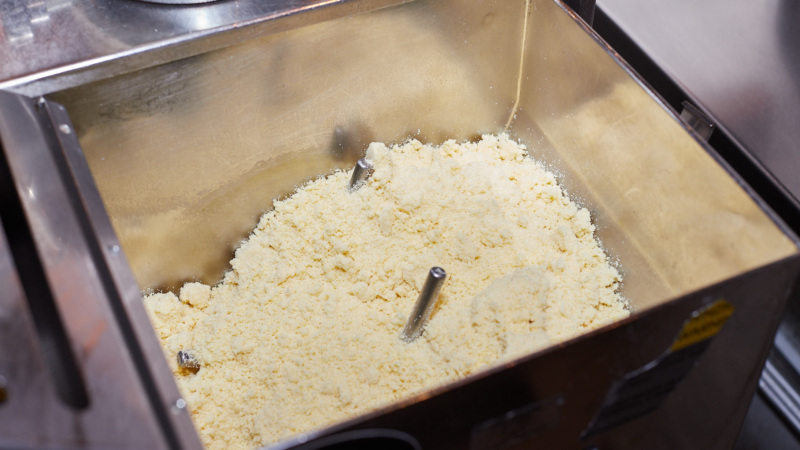
When Perez starts in on the semolina dough, I’m surprised by how crumbly it looks as she transports it from the mixer to the EmilioMiti extruder. Grueneberg explains that the extraordinary amount of heat and pressure that is applied to the dough on its way out of the Italian extruder helps to form the pasta shapes from its loose beginnings. But the chef assures me that Perez knows by feel how to get the perfect pasta day in and day out, despite the dough changing and reacting to differences in temperature and humidity. “There’s so much specific detail and knowledge and feel that goes into [making pasta],” says Grueneberg. “She’s watching that dough, she knows how to make it better than I do.”
11 a.m
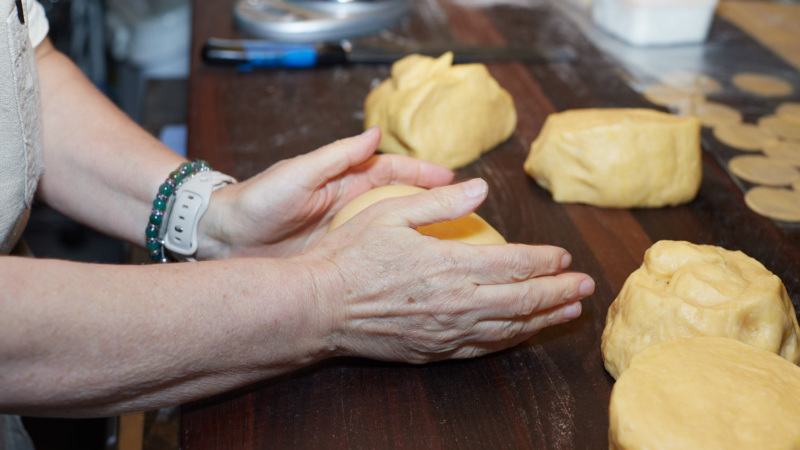
After the sfoglia has rested, Xhemo unwraps it and begins to roll it out with well-practiced hands. She’s been making pasta for decades now after learning the craft in her native Bologna, Italy. The enriched dough is a gorgeous shade of yellow from the use of local eggs. “Great dough starts with the flour and the eggs, and it was very important to me that we used farm eggs,” says Grueneberg. “For a restaurant of our size and the volume of the food we do, to hand-crack every single egg for every single recipe, from desserts from ice cream to pasta dough, is a level of commitment. The eggs need to be good.”
7:46 a.m.
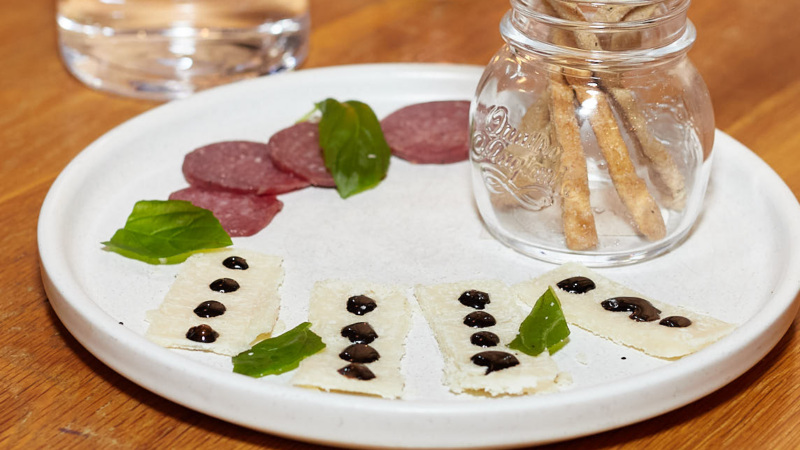
Grueneberg brings over a plate for a quick snack —Monteverde’s signature grissini (a thin breadstick), beef salami, and slices of Parmigiano Reggiano, each topped with a perfect drop of Monteverde’s balsamic vinegar. On a shelf above the pastificio sits a batteria, which is a line of small wooden barrels, all filled with balsamic that is aging inside a different type of wood. Each year, a small amount of vinegar is taken out of the smallest barrel, its vacancy filled with vinegar from the next largest barrel, whose vacancy is filled with the vinegar from next, and so on. The largest barrel is then topped off with new balsamic. Monteverde’s balsamic is 11 years old, the same as Monteverde itself. Like the restaurant, it’s aged well.
12 p.m.
As the restaurant fills up and orders start rolling in, Xhemo and Perez keep an eye on an iPad that’s mounted at their station, pausing their pasta-making to fill plates with the exact amount of pasta to fill each order. In between ferrying these plates into the kitchen to be cooked, they continue making and rolling out more doughs that were resting in the refrigerator. “We call this place the heart of the restaurant. It’s the most calming place in the restaurant, but maybe also the most nerve-wracking when it gets busy,” says Grueneberg. “Our whole concept started with this idea of making pastas to order, and that’s pretty much what we do. Some are made throughout service, and the filled pastas are made pretty much right when guests order them.”
12:07 p.m.
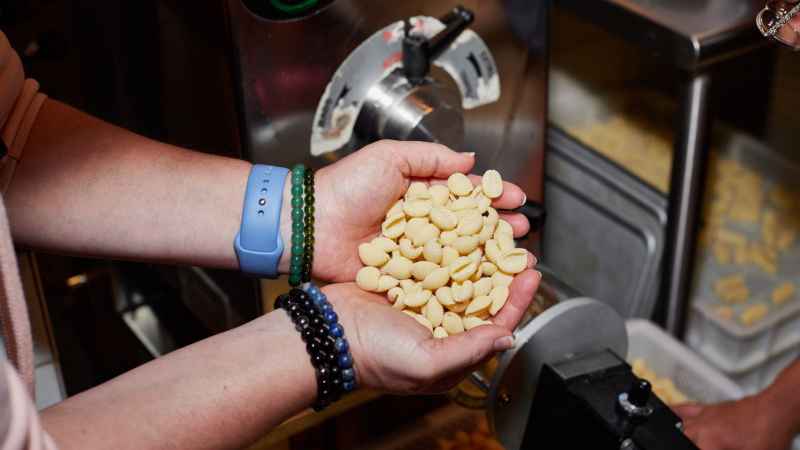
Perez transfers a batch of semolina dough into the pasta extruder and fits the machine with a gnocchetti die. Gnocchetti, a traditional Sardinian shape, are a fan favorite at Monteverde and have been since they first appeared…on the kids’ menu. After a few iterations, the team decided to serve them with a vibrantly green fresh basil pesto, and the rest is history. “We have such a following for the gnocchetti that even if we wanted to change it up, we can’t,” says Grueneberg. We watch as the tray below the extruder fills with the shell-esque pasta after it’s shaped by the automatic cutter, then we head for the kitchen.
12:10 p.m.
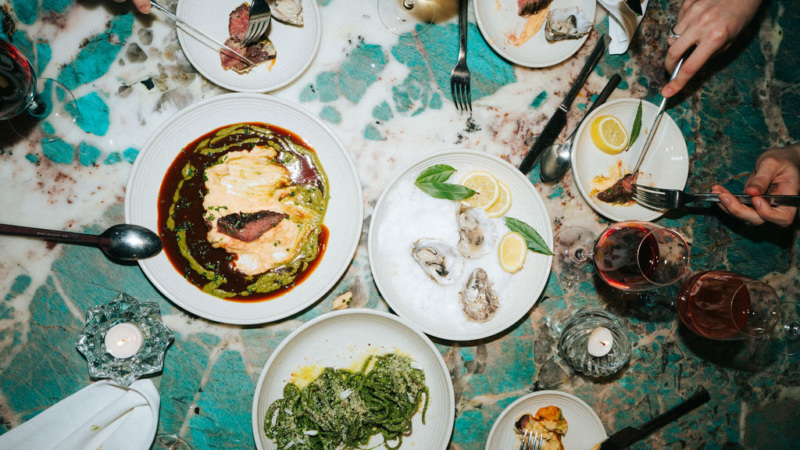
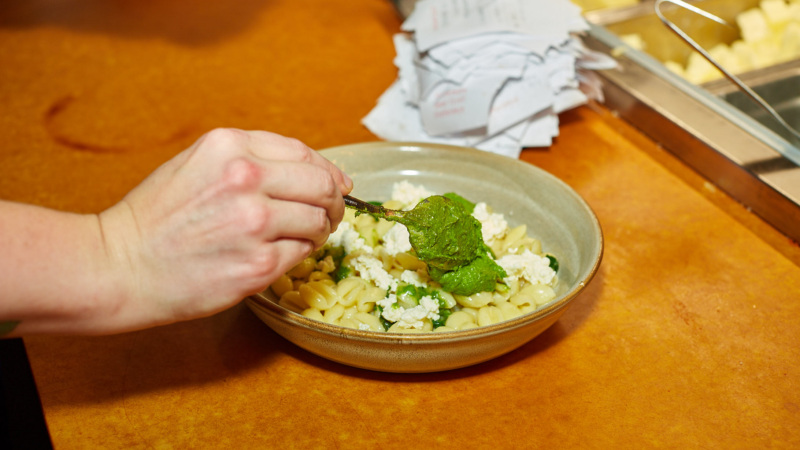
There, Sullivan is waiting for us. The dish is simple, and once the gnocchetti are cooked, it comes together quickly, the noodles getting a quick bath in butter and kissed with fresh basil. Sullivan emulsifies the buttery basil base with some pasta water, flipping it expertly in the pan until it’s evenly coated. “We’re looking for a nice texture from the natural starches, then the noodles become these little glazed jewels,” Sullivan says. Afterwards, it’s topped with housemade ricotta and the fresh basil pesto. “Each dish has a flavor bomb component,” she says. “Ricotta, made in-house every day or extremely fresh basil…it’s these delicious flavors that bring it all together.”
12:13 p.m.
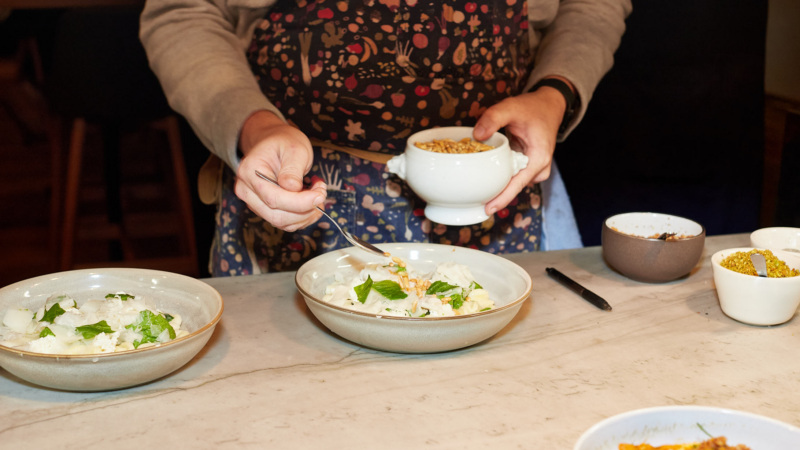
The gnocchetti con pesto hits the pass, where it gets a healthy garnish of pine nuts, one of the signature ingredients that Monteverde goes out of its way to source and import from Tuscany. “There are just certain ingredients that you can’t substitute,” says Grueneberg.
12:15 p.m.
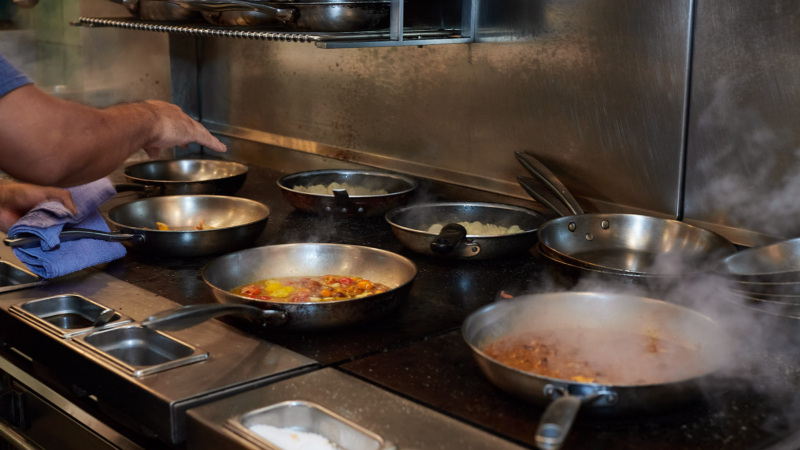
Lunch is slammed, and the kitchen that is tucked behind the pastificio is enveloped in the steam of the cooking water. Each pasta has a different cooking time depending on whether they’re filled or dried. Timers beep routinely, but the staff, many of whom have been there for years, know the cooking times by heart.
1:00 p.m.
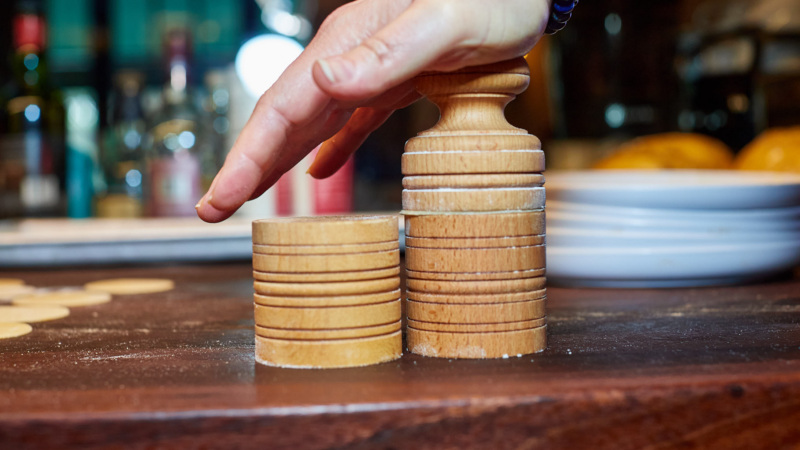
An order for corzetti comes in, so Grueneberg pulls the pre-cut sfoglie, which have been waiting patiently under a special sheet of pasta resting plastic, towards her and reaches for the pasta stamps. The stamps, which were handmade by an Italian artisan named Filippo Romagnoli, feature delicate designs.
1:01 p.m.
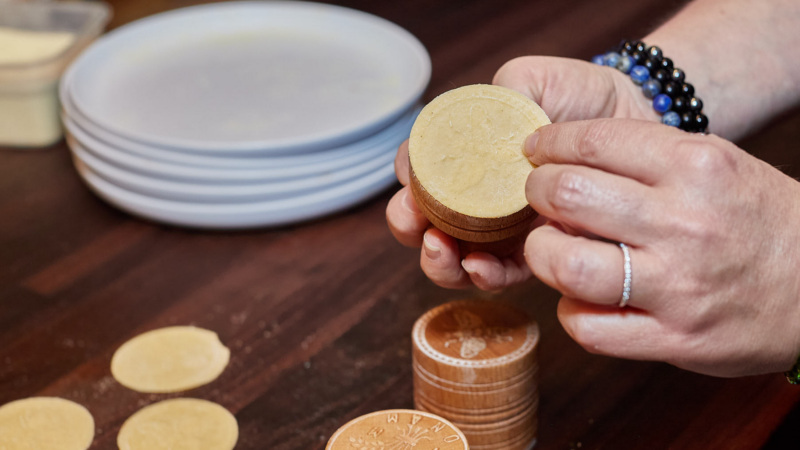
Grueneberg puts the perfect circle of thin pasta dough on top of the carved wood then presses another flat stamp on top, pushing down as hard as she can. When she lifts the stamp, I see that the design, a beautiful bee, is now imprinted onto the pasta dough.
1:10 p.m.
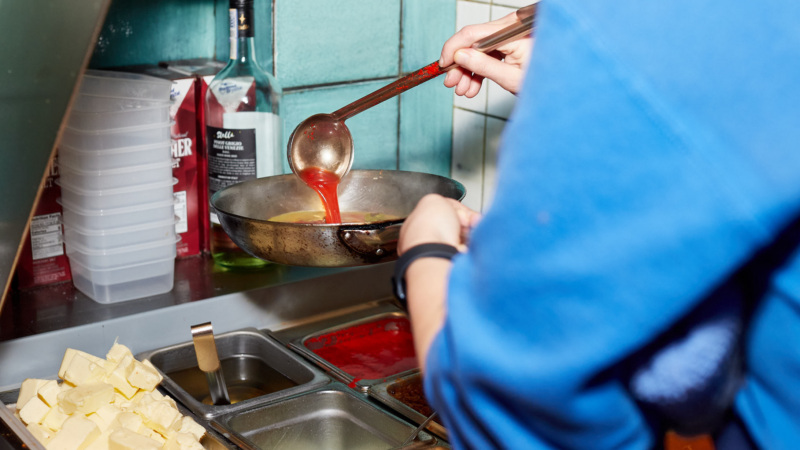
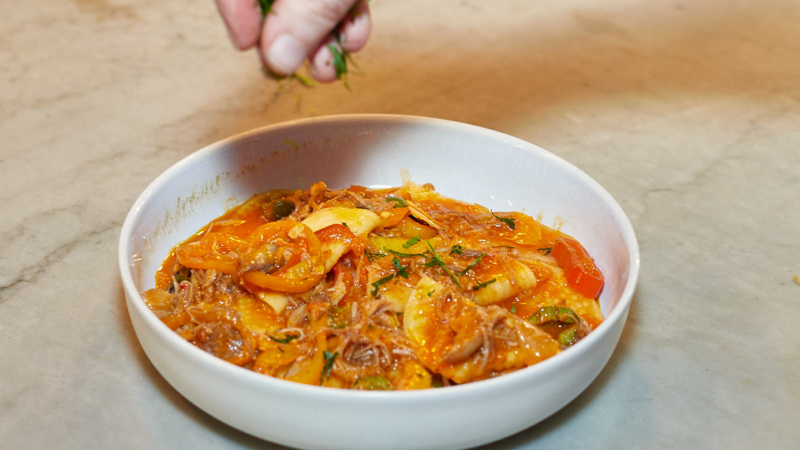
Grueneberg and I walk the corzetti, now all stamped with bees, over to the kitchen, where Sullivan is waiting for us. The pasta gets put into the water to cook for a quick three minutes, and Sullivan gets to work on the rest of the dish. First, olives, peppers, and garlic sweat in a pan, which is deglazed with white wine. For the final flourish, Sullivan adds a ladleful of bright red pepper juice, so saturated in color that it almost looks artificial. From there, she adds the duck, which has been confited, and soon, a beautiful, brothy sauce emerges. She adds the corzetti, which I’m amazed to see have kept their shape during the cooking process, and then takes it to the pass to plate.
1:12 p.m.
It’s hard to believe that these will expand and puff in the oven to create the giant croissant that is one of their best-selling pastry case items. The team has started making the croissants larger since first opening, to the delight of diners.
2:00 p.m.
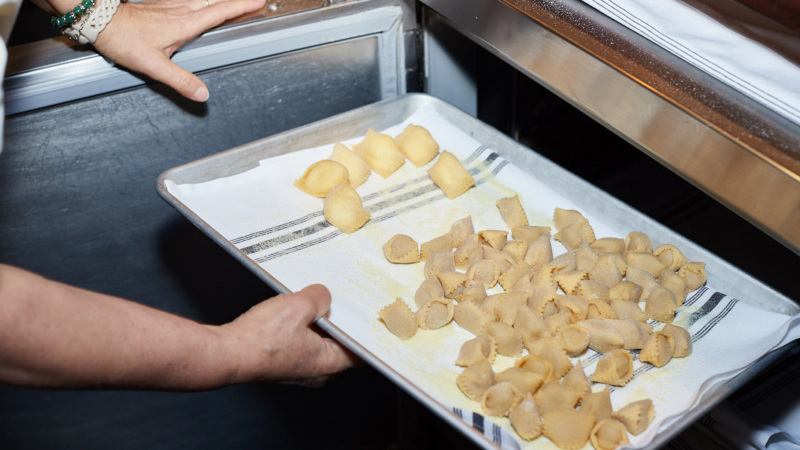
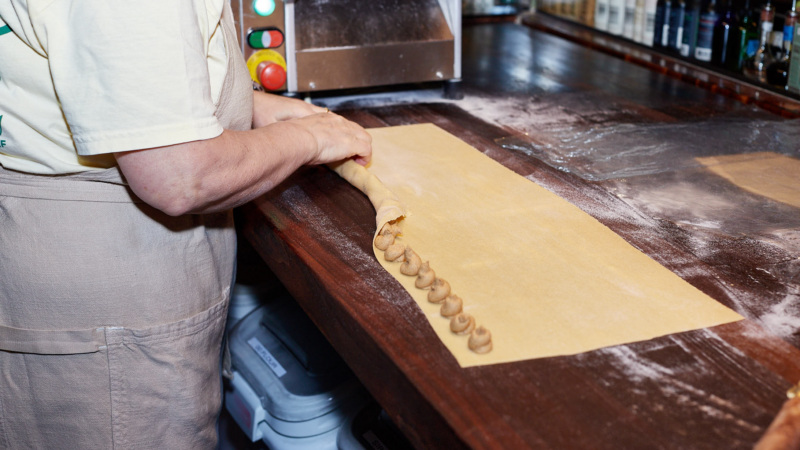
Xhemo starts in on another batch of agnolotti, a filled pasta from the Piedmont region. After she rolls out the fresh dough, now perfectly pliable at 100% hydration, she fills the sheet with a perfect dollop of the filling, which is made with roasted chanterelle mushrooms and La Tur, a creamy cheese made in Piedmont from a blend of cow, sheep, and goat’s milk. The dough gets tucked into itself, and then Xhemo uses a hand cutter to gently slice each individual piece of pasta before handing it off to the kitchen.
2:05 p.m.
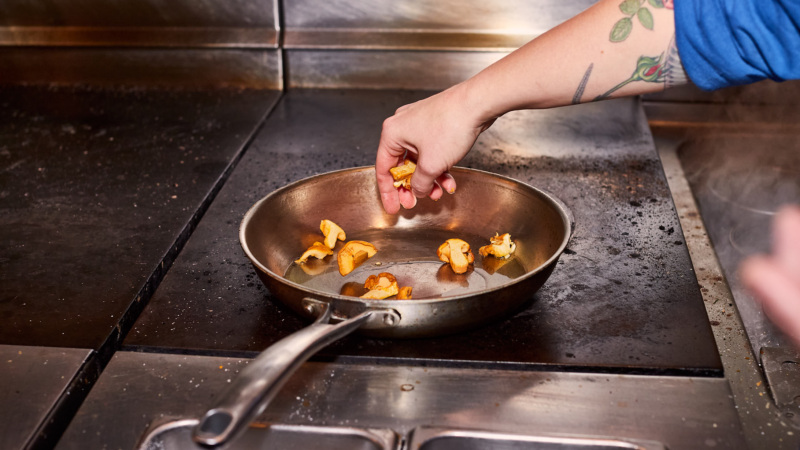
As the agnolotti cook, Sullivan fires the sauce, which is a study in some of the most luxurious ingredients in the kitchen. First, chanterelle mushrooms hit the pan, followed by onion and white wine. Next comes a ragu of prosciutto sausage, and before I know it, the agnolotti are swirling around in the pan, smelling (and looking) like a million bucks.
2:07 p.m.
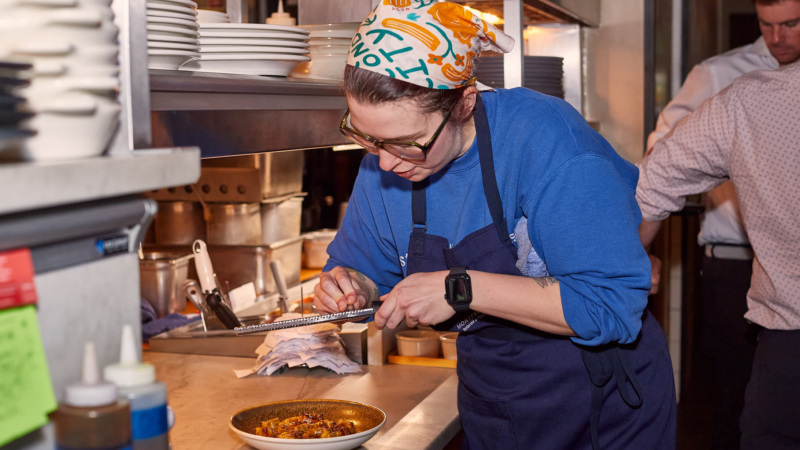
As the agnolotti makes its way to the pass, Sullivan gives it a quick garnish of more savory herb, which she describes as a flavor somewhere between sage and oregano, and then drizzles the dish with balsamela, a balsamic vinegar made with only apples. She grates it with nutmeg —”it’s so essential to do this in the moment so you get a strong aroma from it” — and voila.
2:25 p.m.
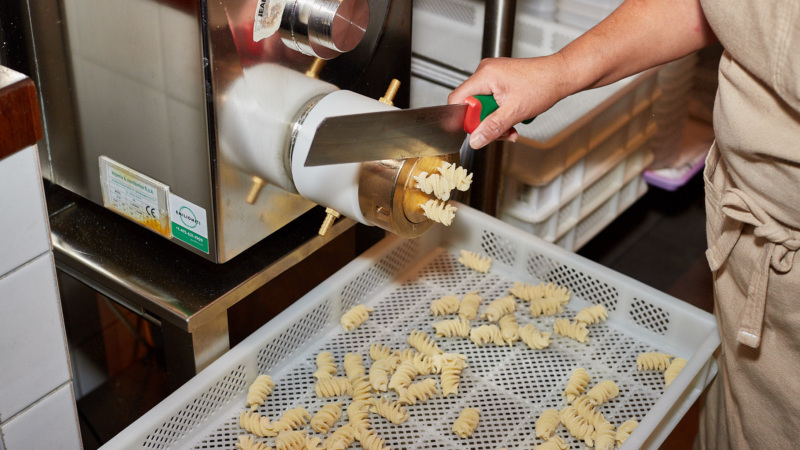
Back in the pastificio, Perez is switching out the bronze dies on the EmilioMiti pasta extruder. She’s going to make fusilloni, a twisted helix shaped pasta that is the basis for one of Monteverde’s signature dishes, the cacio whey pepe. This dies doesn’t have an automatic cutter, so Perez stands over the extruder with a knife, eyeballing each set of fusilloni, then cutting them into the waiting tray.
3:05 p.m.
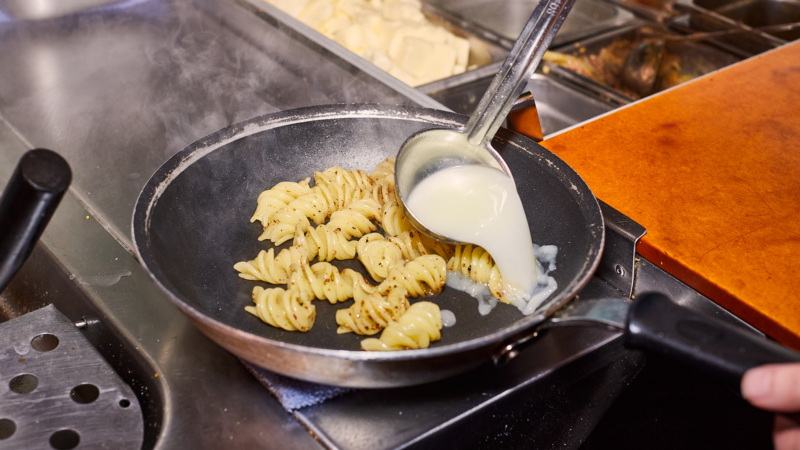
The fusilloni that Perez is making now has to dry, which takes about an hour, so Grueneberg brings some that was made this morning over to the kitchen. Sullivan grabs a pan and starts with a healthy sprinkle of pepper, then adds the just-cooked fusilloni. Next comes the secret ingredient that makes this dish special: the whey from the housemade ricotta, which is used here to create a silky, tangy sauce that pairs beautifully with the sharp pepper. Sullivan flips the pasta aggressively in the pan to create the emulsified sauce. “We call this the marriage ceremony,” Grueneberg says, gesturing to the other pans on the flattop where sauces and pastas become one.
3:07 p.m.
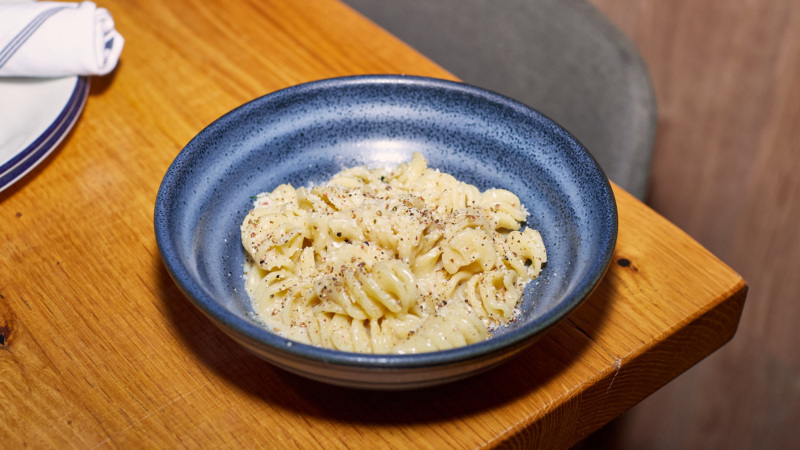
The cacio whey pepe gets a final sprinkle of Pecorino cheese, then lands at the table in all of her deceptively simple glory.
4:45 p.m.
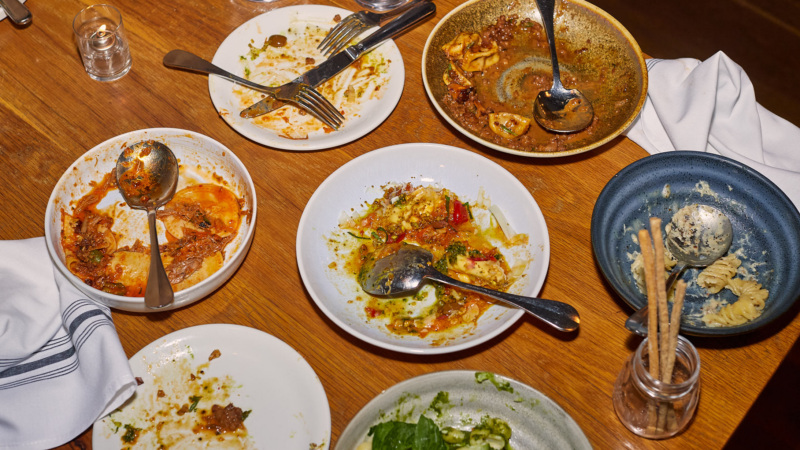
I linger a little longer, savoring all of the pastas and chatting with the team, but the room starts to feel charged with energy. The pre-shift meeting starts, and all of the sudden, the bar is full. Dinner service is about to start, so I take my final bites and clear out, taking one last peek at the mirror above the pastificio before I do.