1678 Omakase Masters the Affordable Sushi Omakase
Published:
It’s no exaggeration that Atlanta is swimming in omakase options. The wave’s far from over as Michelin star-awarded spots like Omakase Table expands, innovative takes like Ryokou develop more deeply, and top talent is flown in with the seafood, like with M @ Umi. Early staples remain high in demand, too. Hayakawa’s still hot with Resy Notifys and Chirori’s show-stopping tuna cuttings are consistently sold out.
However, exclusivity comes with a matching cost, and the luxurious details and high-touch niceties that create layered experiences also tally up into special occasion price tags.
Generally, it’s worth it. But for the newly indoctrinated, jumping into the deep end of the omakase pool can feel like an intimidating investment. That’s all the more reason why 1678 Omakase is the perfect way to dip a toe into the world of omakase. For a beginner’s taste of what treasures await in its depths, read on to learn what it’s all about.
1. It all started with the affordability factor.
The idea for 1678 Omakase had been in Jak Tuanphakdee’s head for some time. Since his first experience in Japan, he made it a point to try omakase everywhere he traveled. Five years ago, this led him to stumble onto offerings in New York City, which at the time, ranged at an estimate of $60-70.
Tuanphakdee then realized, “There was nothing in Atlanta that was similar; no one was doing it for under $100 here.”
This led him to wonder about how to source seafood imported from Tokyo’s famous Toyosu fish market for less, with an accessible combination of familiar favorites and novel items. He also mulled over the idea of making an omakase more casual to help make it more affordable for the younger generation so that they could fall in love with sushi the same way he did.
These questions turned his longtime friendship with chef Joe Aye into a business partnership in 2024 when Aye was finally ready to leave the grind of Michelin-rated kitchens and Manhattan. And with Atlanta’s dining scene on the rise and Tuanphakdee ready to roll the dice, they opened Jak Omakase in Duluth, just outside of Atlanta. Today, it’s his proof of concept for value-based omakase.
2. The restaurant name tells a story of its own.
With the omakase wave in Atlanta still cresting, Tuanphakdee felt the time was right to offer the same cost of entry closer intown, in a modern Brookhaven shopping development with plenty of free parking to entice Atlantans to go just OTP (and closer to home).
“I live right around here!” he laughs, “So I know what’s going on and the area. My kids go to school here and I like the community.” So much so that the name itself is a reference to local pride.
“I like the sound of numbers. And putting the offer – 16 courses of sushi for $78 — right in the name seemed straightforward,” he said; it’s a show of commitment to the value proposition. “And it seems silly, but I liked the idea of building the area code, 678, into the name.”
3. Approachability is the approach.
“There are a few types of omakase sushi styles in Japan,” Tuanphakdee explains. “The most popular one is the Edomae style out of Tokyo … this is not that,” he laughs.
“We’re more modern, we use sauces, toppings, and different flavors. We want to be approachable, easy to eat, familiar but better, providing an enjoyable entry level for the American palate. More New York-style,” he says.
Where Atlanta’s fine dining omakase bastions offer an emphasis on hypervigilant omotenashi hospitality, 1678 has a more casual, efficient approach, optimized for hungry sushi-lovers ready to snap apart single-use chopsticks and get down to business.
4. What to expect in 16 courses (or 20 if you want to upgrade).
For dinner, the signature 16-course is the default, but a premium 20-course upgrade is available for $128 (there’s also a 12-course experience at lunch for $58). Each promises to wrap up with plenty of time to get back to the car within the two-hour free parking limit.
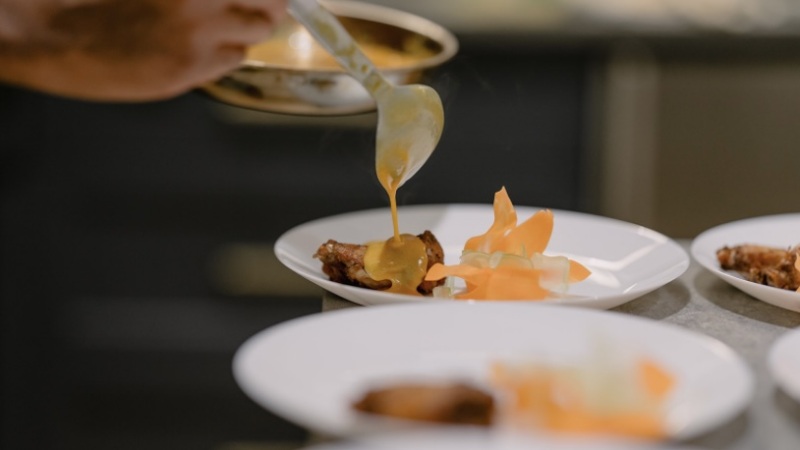
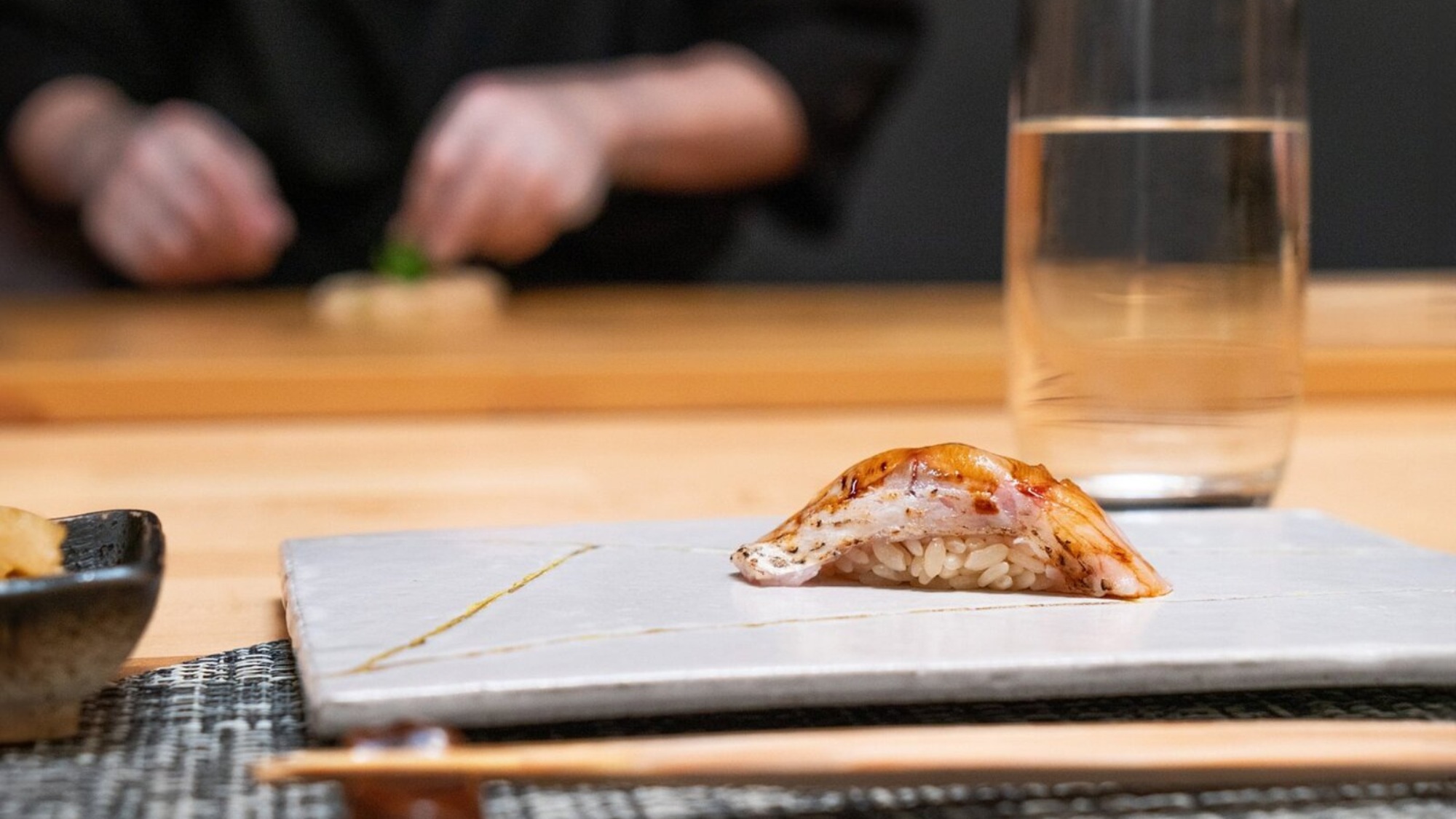
Each set is a surprise; no preview menus provided. Generously cut nigiri is presented with little fanfare – good news for those who love a jump-to-recipe format and guests keen to converse with their companions. Yet, as with any omakase meal, questions and looking on is encouraged as the chef torches, brushes, dabs behind the counter, building complexity in baby steps. Watch as the juiciness of tuna and Miyazaki beef is released with a touch of heat and roe assembled in a nest of seaweed.
Always on the menu are Tuanphakdee’s signature upgrades. “Customers love The Big Mac, which is wagyu, uni, and caviar. It’s a combination of all the best things, and what’s better than that?” he asks, before answering his own question with his latest infatuation, a special monaka creation.
Already unveiled at his newest omakase room in Midtown, Sushi Onten, this not-so-secret-menu item is “like a cookie, crispy,” he says of the flower-shaped mochi rice wafer sandwich. In the middle, chopped toro, salmon roe, caviar, and uni pile on decadence – a memorable way to be initiated into the world of omakase in Atlanta.
5. Pair everything with Japanese whiskey and cocktail ingredients.
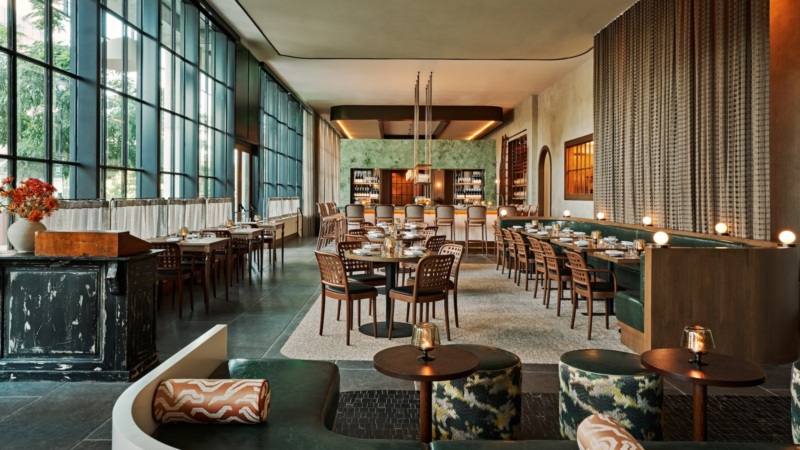
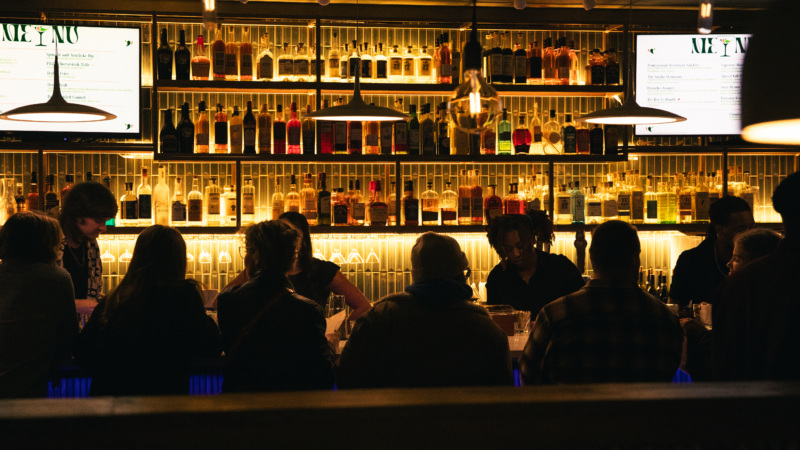
Early comers can start at the cozy bar, where Japanese whiskies are displayed on an imported live-edge wood shelf. Semi-private nooks in front of four dark and minimalists rooms for 8-10 diners provide other waiting area options.
Signature cocktails by beverage director Jessica Slick, who worked with Tuanphakdee in the past as well as at storied Nan Thai Fine Dining’s bar, are worth exploring.
“Jak suggested we bring something unique to match the vibe of the place and flavors. He has a background in matcha, so we created a Midori Highball with ceremonial matcha and yuzu – kind of like an Arnold Palmer with Japanese ingredients,” she says.
“The Uji Silk is like a matcha latte with vodka, and the Japanese Kuro Old Fashioned has some ginger to kick up the spice and keep it from being too whisky forward,” her other favorites from the developing cocktail list. “Plus, it’s served with ginger candy, and people love that!”
The Resy Rundown: 1678 Omakase
Why We Like It
With straightforward service, a casual vibe, simple preparations, and more accessible price point, 1678 Omakase is a serviceable primer to the world of omakase dining.
Must-Order Dishes
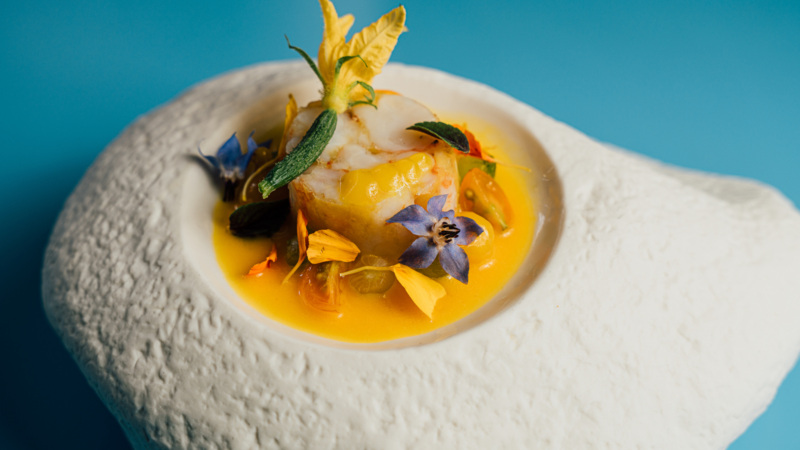
The 16-course standard, which might include chili crunch-crowned torched whitefish, flake salted sliced scallops, seared Miyazaki beef, tuna multiple ways, caviar-topped cuts, and uni and blue crab hand rolls.
Essential Drinks
Try the Midori Highball, which uses ceremonial-grade matcha Tuanphakdee sources personally, and yuzu, for a twist on an Arnold Palmer.
Who & What It’s For
Sushi-lovers ready to “graduate” to the excitement of trusting the sushi chef to design their seafood adventure and those seeking a more casual, no-fuss, no-frills, and expedited version of omakase dining.
How to Get In
Reservations are available daily and released on a rolling basis up to 30 days in advance.
Pro Tip
Looking for even more value? Make a Resy for the 12-course lunch at $58 to experience the core of the essentials, or for a Monday to enjoy unlimited hot sake with your meal.
1678 Omakase offers lunch seatings at noon, 1 p.m., and 2 p.m. Dinner seatings are at 5 p.m., 6:30 p.m., 8 p.m., and 9:30 p.m.
Su-Jit Lin is a rehabilitated New Yorker, former New Orleanian, and current Atlantan, in addition to being a travel, food, and lifestyle writer. She has contributed to EatingWell, HuffPost, Epicurious, The Takeout, Eater, The Kitchn, VinePair, Thrillist, Food & Wine, Serious Eats, Southern Living, and more. Follow her on Instagram. Follow Resy, too.