At Heritage, Fine Dining Traverses the African Diaspora and Black Foodways
Published:
On a sunny summer morning, weeks before reservations to their new tasting menu restaurant opened to the public, chef Demetrius Brown and business partner Brandon Blanchard were cheerful.
Sitting together on the patio at Bread & Butterfly, the Inman Park cafe where the two highly trained kitchen vets held their popular Heritage Supper Club dinner series before purchasing the restaurant in 2023, Brown and Blanchard spoke about their new venture, the brick-and-mortar arrival of Heritage.
The two first worked together at the luxury farm resort and residential community, Serenbe, located south of Atlanta. Blanchard, who has longtime experience in food and hospitality management, recognized exceptional talent in Brown, a Johnson & Wales graduate from Rhode Island with Trinidadian roots. Together, they turned Heritage Supper Club into one of Atlanta’s most acclaimed pop-ups.
As a supper club, Heritage Supper Club represented culinary traditions and flavors of the African diaspora, expressed through Brown’s particular culinary perspective and Blanchard’s operational skill and high-level service standards. And at its new permanent space, Heritage is intended to allow the duo to build on their concept through an expanded suite of reimagined interpretations of African, Caribbean, and Black American cuisine, offered in a carefully designed multi-level space with a rooftop offering panoramas of Summerhill and beyond.
The Rundown
Heritage
-
Why We Like It
A story-driven fine dining concept originated from a heralded pop-up, Heritage dares to illustrate the global journey of African diasporic food through creativity, skilled technique, and deep appreciation of Black foodways. -
Essential Dishes
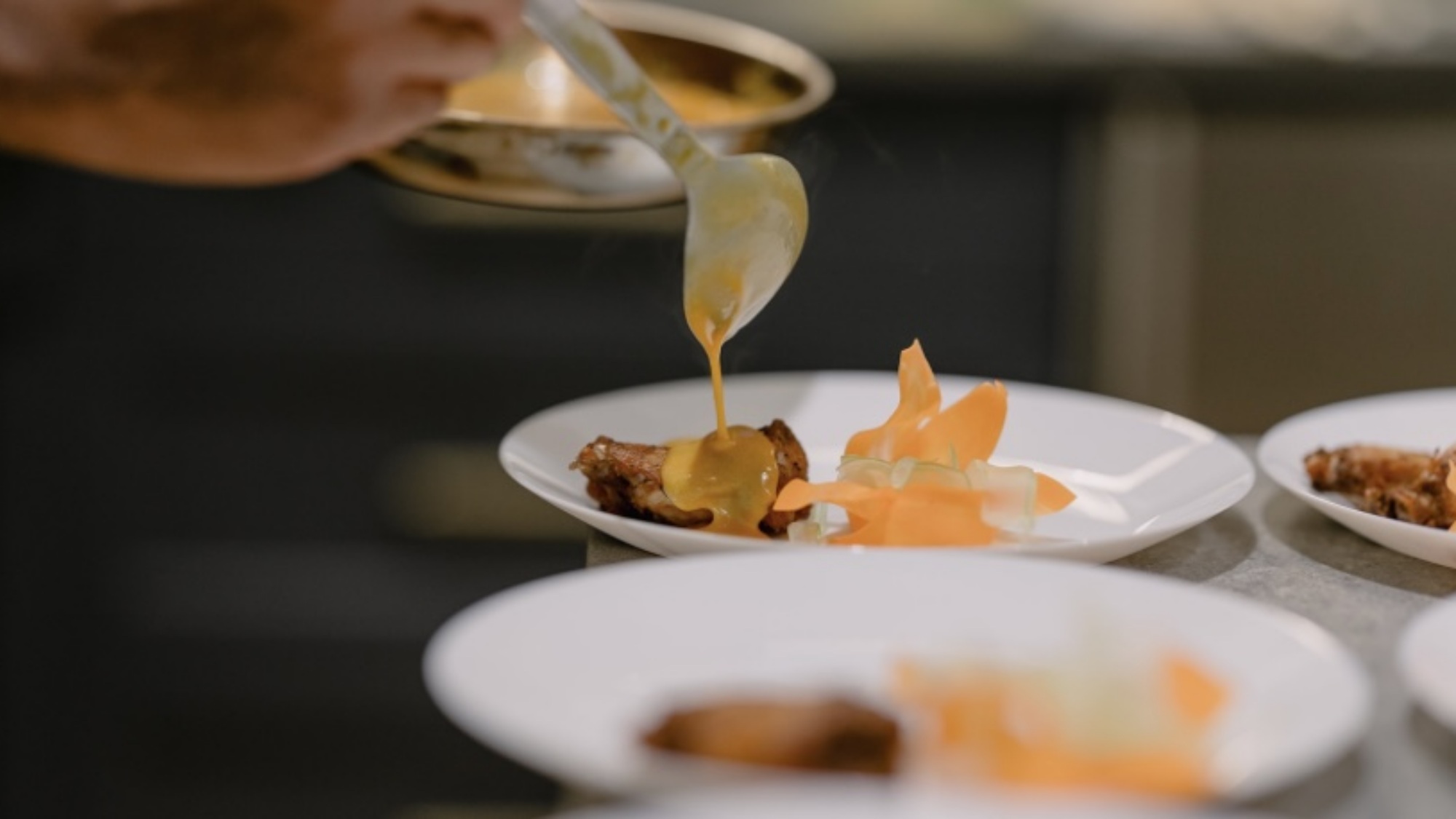
Chef Demetrius Brown’s waakye and yakitori-grilled jerk chicken are part of the multi-course tasting menu, while the cocktail lounge offers dishes like the Caribbean-spiced chicken burger. -
Must-Order Drinks
Veteran Atlanta drinks expert Keyatta Mincey developed a cocktail menu of collaboratively imagined drinks like the signature Heritage with gin, local honey, and orange bitters , and a rice-water martini, both made with Black-owned spirits companies based in Africa.
-
Who and What It’s For
Fine dining enthusiasts happy to see increasing bets being made on Atlanta’s highly talented Black chefs like Brown creating momentum and leading the way for a new generation of culinary dreamers of color. -
How to Get In
Reservations are available 90 days in advance. -
Fun Fact
Chef Demetrius Brown has in fact beaten Bobby Flay. Also, try to hold your enthusiasm for Heritage’s soon-coming rooftop lounge, which they plan to open within the year and will offer feast-worthy views of Summerhill and downtown Atlanta.
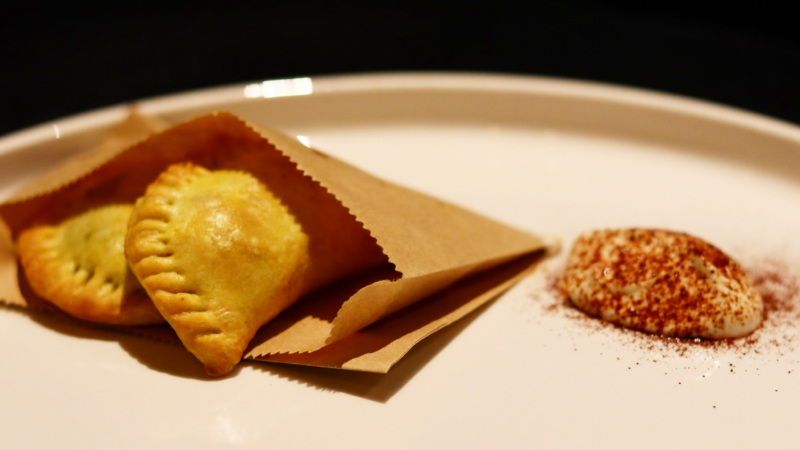
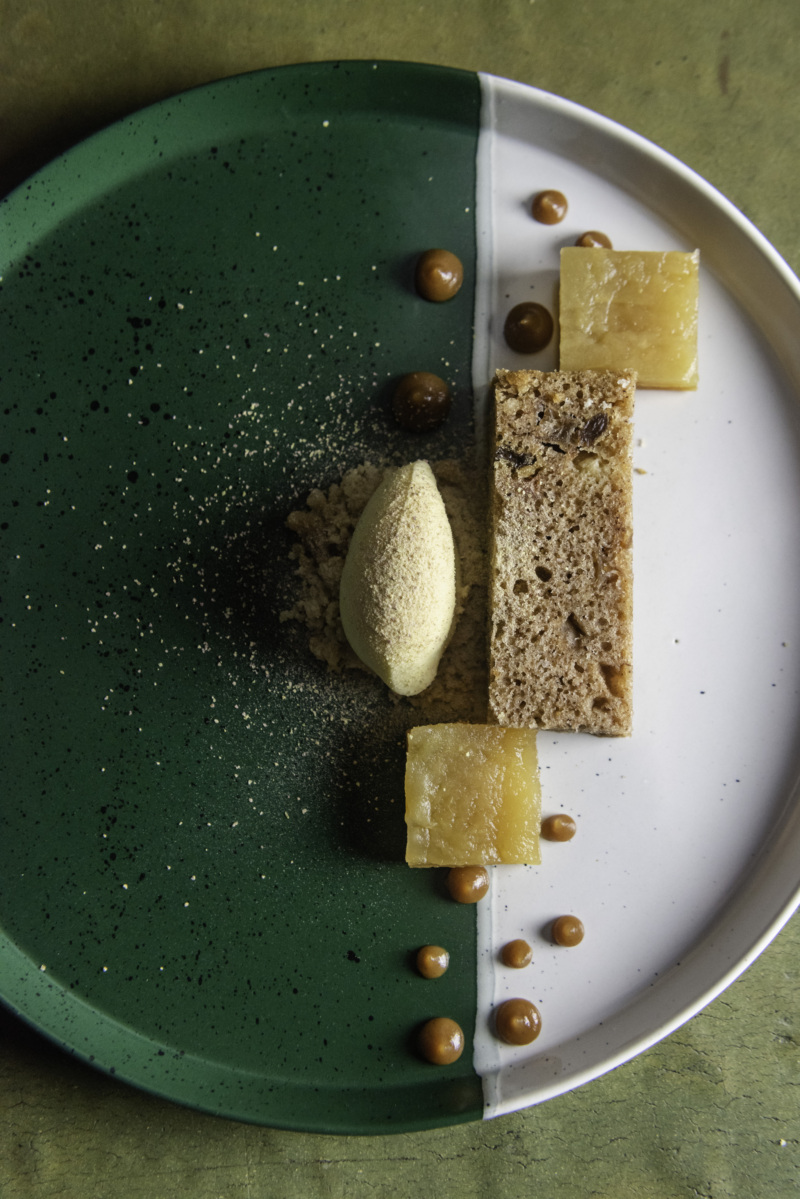
The goal, they say, is to bring a sense of majesty to marginalized food traditions while telling undertold stories of African diasporic cuisine and culture via modern and classic cooking techniques.
“One thing we’re going to do really well is have a very strong point of view of what our food is and what our service is like,” Brown says.
“As much as we’re saying it’s [focused on the] African diasporic, it’s more of a representation of everywhere Black people have been. So whether that’s lemon pepper wings, which are going to be on the cocktail menu, or whether it’s waakye — which is going to be on the tasting menu — all those things are rooted in Black culture. But we’re using ingredients and techniques to make it more palatable, more approachable for people who may not be familiar.”
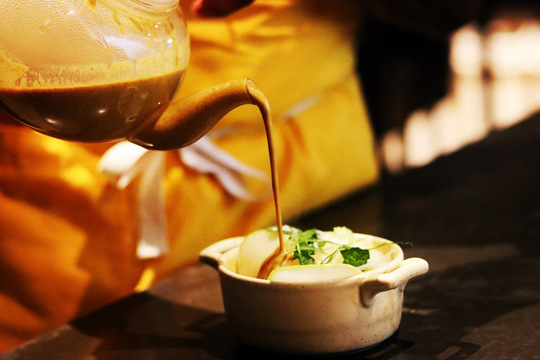
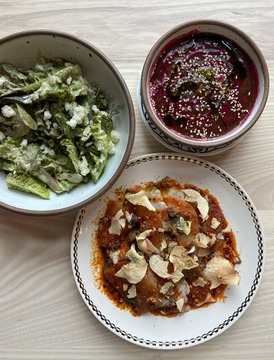
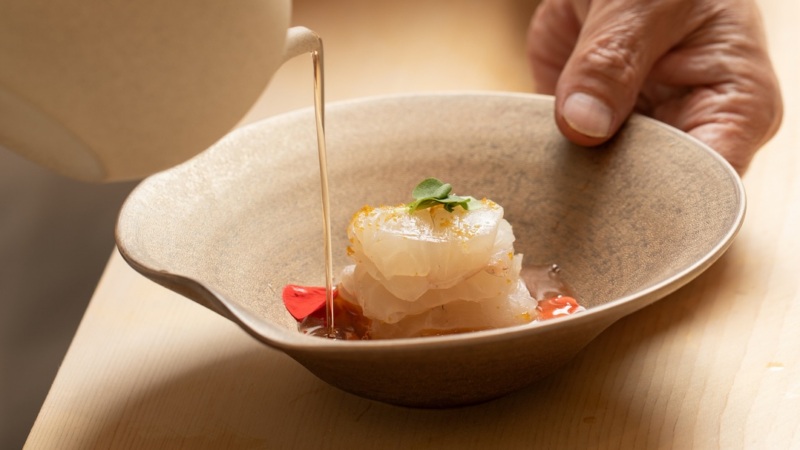
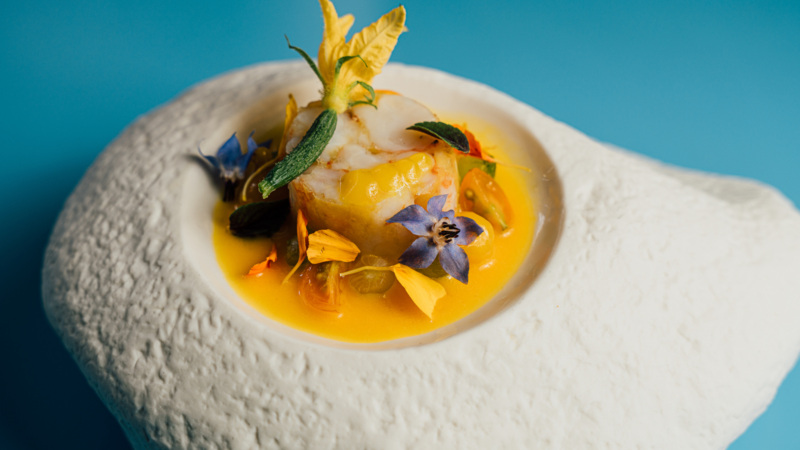
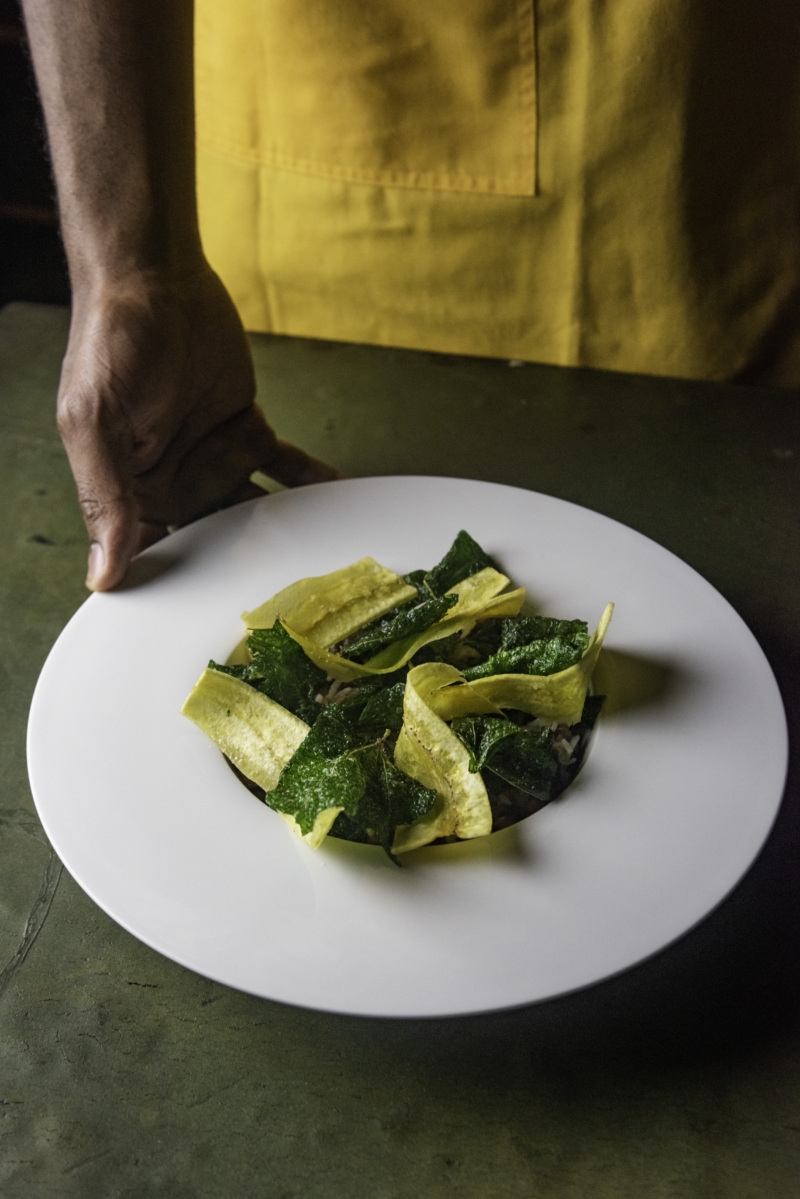
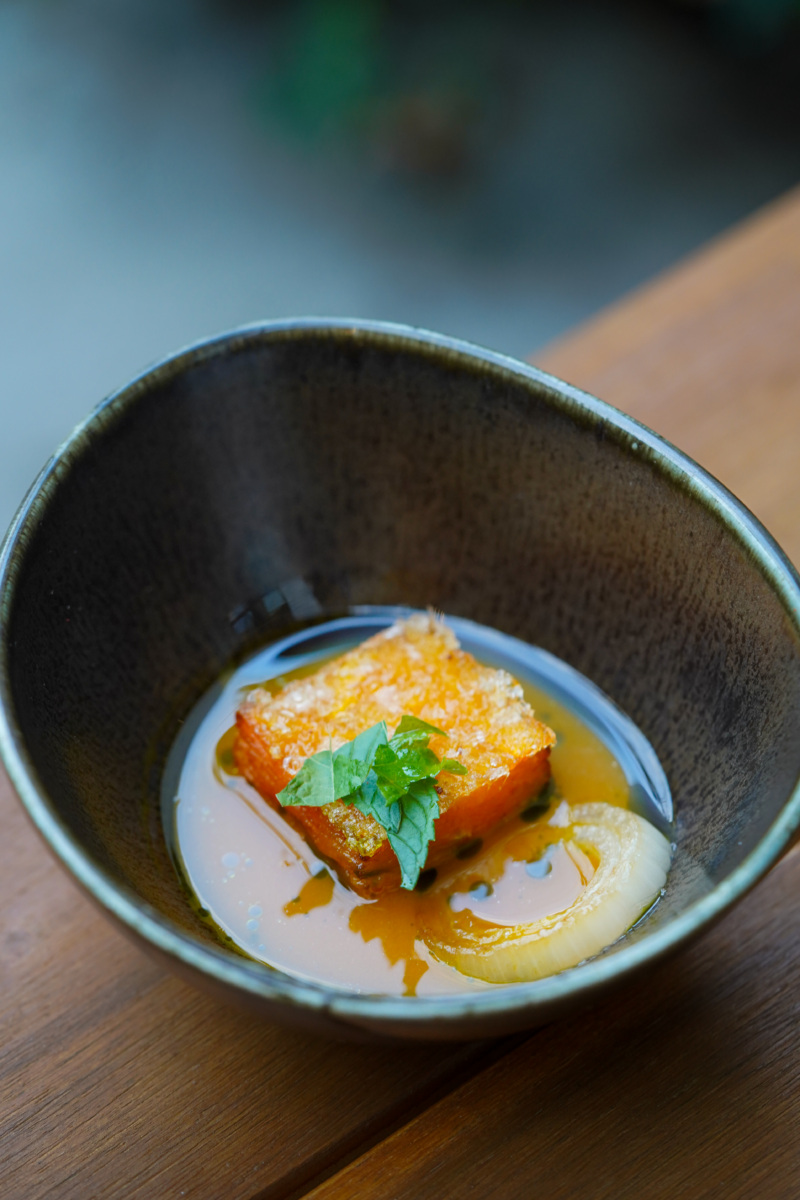
Heritage has two dining options: dinner service featuring seasonal tasting menus or the à la carte menu available exclusively in the restaurant’s lounge area and featuring bites like Brown’s house-ground Caribbean chicken burger. The opening tasting menu will include dishes like the aforementioned waakye and additional courses excluded from the a la carte menu, such as yakitori-grilled jerk chicken, calabaza squash, representing West African and West Indian traditions, and a family-inspired dish of fermented, pickled and frozen, granita-style cucumbers.
The beverage program is developed by veteran drinks expert Keyatta Mincey. Signature cocktails will include the Heritage with Bayab African Gin, local honey, and orange bitters, and a rice-water martini with Bayab gin or Vusa Vodka, both from Black-owned spirits companies based in Africa.
“My hope is that every drink complements the story being told on the plate and creates a memorable experience for every guest,” Mincey said.
Brown says the design of Heritage, curated by local designer Imani James, was influenced by the National Museum of African American History and Culture in Washington, D.C. Walking through the simulation of a slave ship made him wonder how he could use design and motion to evoke emotion in a dining space.
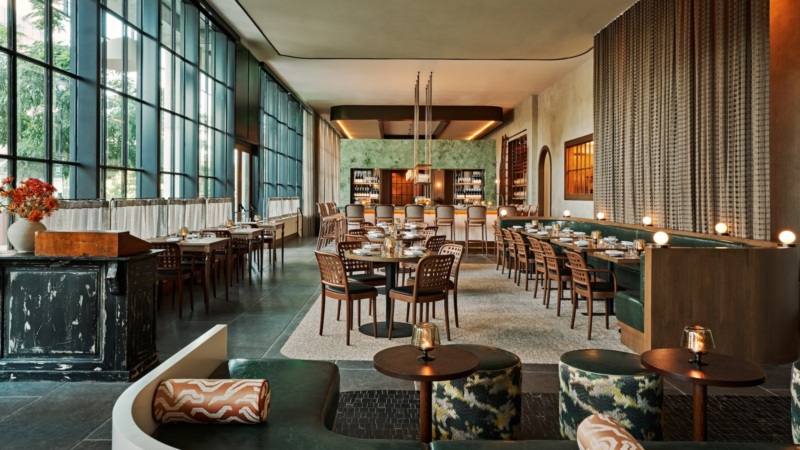
Guests entering Heritage will first encounter the lounge area before accessing the art-immersive dining room through a dim hallway ending at a hidden door, opening to reveal a double-tiered dining room in front of an open kitchen. Throughout the space, there are earthy color tones and textures, from the seating to the large, thought-provoking Black art by Atlanta-based artists like Aaron Monu and Honey Pierre, whom Brown commissioned to create a quilt-like image of his grandmother made of yarn.
If you look throughout each corner and crevice of the restaurant, everything has intention, everything has a meaning, everything has a story.— Chef Demetrius Brown
“If you look throughout each corner and crevice of the restaurant, everything has intention, everything has a meaning, everything has a story,” he says.
Heritage is arriving at a critical place and time for Atlanta’s dining scene. Located in the Summerhill community, after the conclusion of hosting global sports competitions, the restaurant seems to be intentionally projecting a spirit of defiant confidence.
“This is going to be a one-of-a-kind restaurant,” Brown says. “There’s no other restaurant like this in the city. And as much as that’s a great thing to say, it’s also kind of a scary thing to say.”
The arrival of a cluster of restaurants following Summerhill’s recent development boom continues to show promise as the city becomes accustomed to the neighborhood being a culinary destination. Some of Atlanta’s most critically acclaimed restaurants, including Southern National and Little Bear, operate within a single block radius.
Chef Duane Nutter and business partner Reginald Washington are co-owners of Southern National, located diagonally across from Heritage. They welcome the addition of another Black-owned restaurant in Summerhill, one of Atlanta’s oldest Black neighborhoods established shortly after the Civil War.
Nutter is excited for Brown and Blanchard, and says he believes Heritage will be great for Summerhill and the perception of Atlanta’s Black dining scene. He’s a fan of Brown’s culinary skill, and wants to see the same enthusiasm from customers who enjoy other forms of Black creative expression.
“I feel like food, and us cooking the way we do, is one of the last things we get into as a culture,” Nutter says. “We support basketball players, Black race car drivers, but it’s different about food. Chefs don’t get the same love that we would get if we played football.”
Washington shares Nutter’s appreciation for Brown’s talent, but says he’s also clear-eyed about the challenges Heritage will need to overcome. In a time where many Black-owned fine dining restaurants are operating in survival mode, he wants diners to understand why they should be more financially invested in the efforts of Black chefs and operators to deliver excellence on the plate.
“We’re out here trying to serve great food [and provide] great service, delivered the right way,” says Washington. But it’s a tough business. I want to make sure that what everybody’s doing — us and them — is really appreciated. And in this neighborhood, it really should be.”
“It’s showing, if we’re both across the street, that we’re not a monolith as a culture,” he says, adding that the dining and music scenes of Atlanta are analogous, sharing how the city’s famous musical artists and rappers have stylistic range, versus being just one thing. “We can have the same thing in food is what I’m saying.”
Back at Bread & Butterfly, seemingly unshaken while taste-testing the latest iteration of a peach-shrub-infused cocktail, Brown says the timing for Heritage is perfect. Drawing evidence from the rise and success of Afro Caribbean chefs and restaurateurs across the U.S., such as Tatiana, By Kwame Onwuachi in New York City, and Lucia in Los Angeles, led by executive chef and James Beard Award finalist Cleophus Heathington.
“I mean, if it was up to me, we would’ve opened three, four years ago. I think we’re at a time now, not even just in the city, but in the country, where … it hearkens back to the same time where David Chang came out. Everybody was, you know, kind of infatuated with Asian, Thai, Korean flavors. I think we’re in that same place now,” Brown says of Caribbean cuisine’s current cultural heatwave.
Before, I think, it would have been a harder sell for a lot of people. And I think now that Atlanta has positioned itself as a total destination; we’re not so reliant on tastebuds in the state and the region. Now we have more eyes on what we’re doing.”
Another factor was the unexpected opportunity to buy Bread & Butterfly from its previous owners, Billy and Kristin Allin, who’d watched Heritage Supper Club draw crowds to the restaurant. Upon taking ownership, Brown steered the French cafe’s menu toward foods influenced by the colonization of African and Caribbean nations including Senegal, Haiti, Niger, and Jamaica. Bringing those ideas to life offered practice and proofs-of-concept for Heritage, whose opening was the original goal.
“That’s why we started dinner here and why we wanted to really push, to see if we could build enough traction. I think that proved the point to a lot of people that it can be sustainable.”
“One of the main reasons we started working together was because it was very clear to me that he was doing what he loved, and he’s not veering from that,” Blanchard says of Brown.
“We’re taking a big risk. We’re putting food on a table that a big portion of people we want to come in can’t pronounce, don’t know what it is, don’t know where it comes from. We’re stepping out there and saying, we know this is great.”
Blanchard said the belief in the execution of the experience and the story they intend to tell give them a level of faith and fortitude in the restaurant and how it might shape the city. That means making sure Heritage feels universally welcoming to all diners.
“If you choose not to, that’s on you. But we feel very confident in what we’re doing, and we’re doing it with passion, with love. And I think that’s what’s missing in Atlanta.”
Heritage will be open Tuesday to Saturday for dinner from 5 to 9 p.m., and their cocktail lounge will be open from 4:30 to 10 p.m. The official opening is set to take place in late September.
Mike Jordan is an Atlanta-based food and culture journalist with bylines in The Wall Street Journal, Rolling Stone, Bon Appetit, National Geographic, Southern Living, and others. He is Resy’s former Southeast editor and served as founding editor of Thrillist Atlanta, digital program director at Atlanta radio station WVEE-FM, and senior editor at The Atlanta Journal-Constitution. He is chairman of the Atlanta Press Club. the U.S. South academy chair for 50 Best Restaurants, and winner of the James Beard Foundation’s 2024 Jonathan Gold Local Voice Award, for which he was a finalist in 2023. Follow him on Instagram. Follow Resy, too.