The 2025 Resy Retrospective: Dining Is More Connected Than Ever
Published:
Dining in 2025 was all about connection — shared plates, seamless tech, and experiences that brought people together. From the rise of the table captain to embracing communal tables, diners valued the IRL hospitality that restaurants uniquely deliver. At the same time, restaurants adopted tools that help them work smarter, like deeper integrations between restaurant tech platforms. Together, these shifts prove that dining out isn’t just about food, it’s about how we connect.
Preview the trends below and download The 2025 Resy Retrospective here.
FRONT OF HOUSE
Introducing: The Table Captain
We all have a Resy Queen or King in our friend group, but do you have a Table Captain in your life? This is the person who takes the reins on ordering for the group – they know the restaurant’s specialty, they can account for everyone’s dietary restrictions and hunger levels with ease, they make decisions quickly so you can get to catching up.
The top three qualities that make a good TC?
Food knowledge (66%), decisiveness (48%), and overall rizz (20%)
Table Captains have become a critical part of the dining experience: According to a recent survey of 1,000 U.S. diners, 72% of diners surveyed say they like to try new restaurants with a Table Captain in tow, and 60% say it improves the experience1. Over half of Gen Zers surveyed say they’ve invited a person to dinner simply for their expertise about the restaurant or cuisine.
Aye aye, captain!
All Plates Are Share Plates
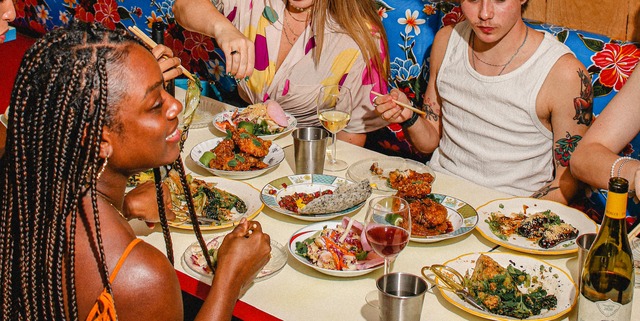
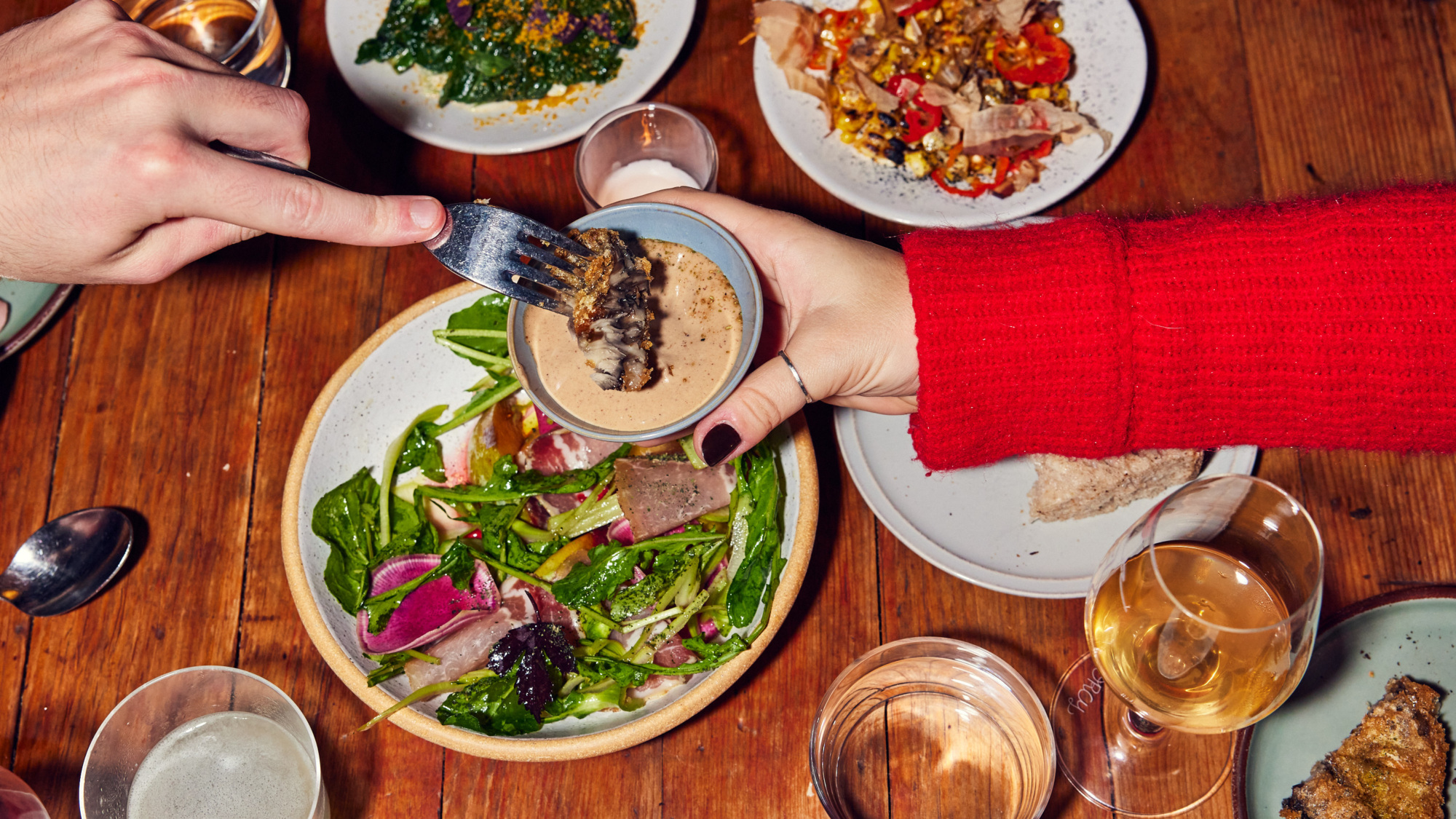
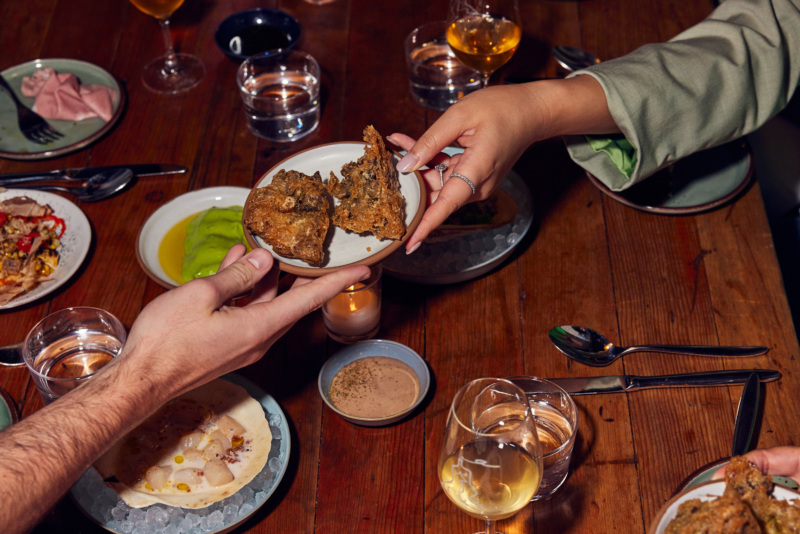
Long gone are the days that share plates are unique to tapas restaurants. Sharing has become default mode, with over 94% of diners surveyed (and over 97% of Gen Z) saying they’re likely to share their meal when dining out, depending on who they’re sharing with. Respondents said they’re most likely to share with family (85%) and close friends (81%), but 46% would share with a first date, and 45% are likely to share with a coworker1. “Oh — and some fries for the table” is a go-to move, just ask your Table Captain.
Top shareables, according to Team Resy:
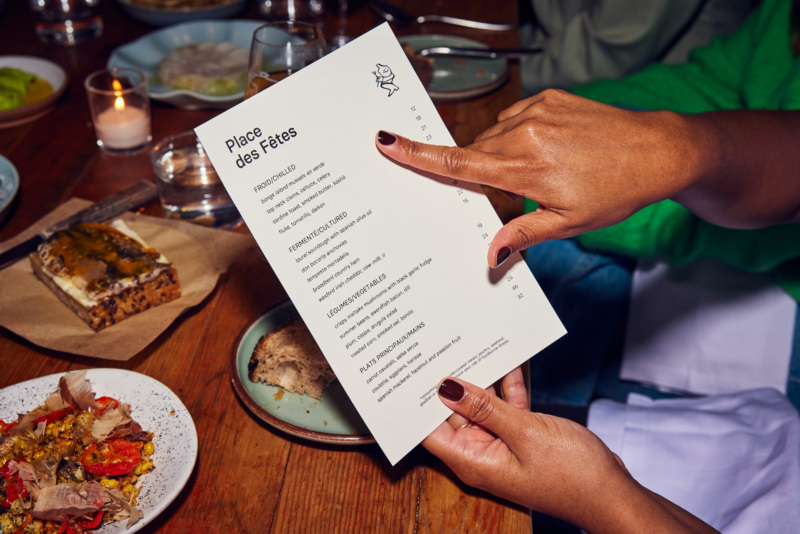
- Crispy Maitake Mushrooms at Place des Fêtes, New York
- Pancakes at Golden Diner, New York
- Mom’s Lao Sausage at Good Good Culture Club, San Francisco
- Lamb Wrap Situation Tâm Tâm, Miami
- Tahdig at Kismet, Los Angeles
The simple answer for the rise of share plates is that younger diners — typically more open to variety and discovery — are shaping how we eat. But really, it comes down to the role restaurants play as a third space in New York. Sharing food is one of the best ways to enjoy good company, especially at the kind of thoughtful restaurants this city does so well.— Steve Wong, co-owner and director of operations at Place des Fêtes, Cafe Mado, Golden Ratio, Laurel Bakery
1 in 3 have made a new friend
1 in 7 have even scored a date
Communal Tables
In this era of digital fatigue, restaurants are a haven for IRL experiences where we can put the phone down (AI can’t smell, taste and enjoy a great meal for us!) – but none more than Gen Z.
90% Gen Zers surveyed say they enjoy dining at communal tables, compared to 60% of Baby Boomers. For communal table fans, there’s a clear draw, and it’s the “meet cute”: 63% of respondents say communal tables are great for meeting new people.
Half of respondents say they’ve had interesting conversations with someone they otherwise wouldn’t have while dining at a communal table.
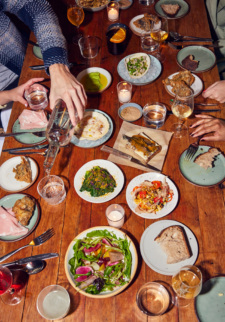
Feeling communal-curious and wondering where to start? Washington, D.C. residents are in luck, with D.C.’s restaurant scene seating the highest percentage of diners at communal tables. Here are the top communal tables around the country2:
- Aita Restaurant, New York
- Dudley Market, Los Angeles
- Galit, Chicago
- Tapori, Washington, D.C.
- Little Hen, Miami
- Madeira Park, Atlanta
A Decade of ‘Hot Table’ Alerts
Ten (yes, 10!) years ago Resy launched a feature called ‘Notify.’ A decade and millions of Hot Table alerts later, it remains a reliable way to score an in-demand reservation.
The best time to set a Notify for that table you’re trying to lock down? Sunday still reigns supreme as the day of the week when your Notify is most likely to convert into a reservation3.
These are the in-demand restaurants in top dining cities with the highest rate of Notify conversion (that’s Resy speak for Notifies set turning into booked reservations)4:
- New York: Casa Enrique, CheLi, PRANAKHON
- Los Angeles: Hatchet Hall, KA’TEEN, Pijja Palace
- Chicago: Frontera Grill, Middle Brow Brewery and Winery, Sal’s Trattoria
- Washington, D.C.: Buck’s Fishing & Camping, Namak, Pastis
- Miami: Lucali, Pastis, Rosemary’s
- Atlanta: Avize, Eight Sushi Lounge, Il Premio
What’s Your Aura Score?

BACK OF HOUSE
A More Connected Era for Restaurant Tech
From streamlining reservations to powering smarter guest experiences, restaurant technology is entering a new era of connection. This year, Resy, Tock, and American Express announced a strategic, multi-year partnership with POS system Toast, alongside new integrations with CRM platforms Loyalist and Fishbowl — laying the foundation for a more unified digital ecosystem across hospitality.
As Resy Chief Operating Officer Junaid Shams explains, the next evolution of restaurant tech is all about systems that truly talk to each other:
“When you talk to restaurant owners, one thing is clear: time is the scarcest resource. Most operators are juggling a hundred details before service even begins: staffing, deliveries, equipment. They don’t want six different logins or to manually move data from one platform to another; they’re focused on the essentials of serving guests for the next five hours, not troubleshooting tech. They want systems that communicate and simplify their day-to-day.
When you talk to restaurant owners, one thing is clear: time is the scarcest resource.— Junaid Shams, Resy Chief Operating Officer
One of the biggest shifts we’re seeing in restaurant technology is toward integration — connecting the dots between tools so they actually work together. We’ve already seen how digital reservation and table management systems changed the game by automating manual processes. Now, the focus is on bridging those systems — linking reservations, POS, CRM, and other platforms so restaurants can operate more fluidly. When your reservation system and POS are integrated, for example, your host doesn’t need to walk the floor to see which tables are finishing dessert and which are turning next. The goal is a more connected digital ecosystem that saves time, reduces friction, and creates more space for operators to focus on what hospitality is really about.”
Smaller, Smarter Spaces
It’s not just your imagination: restaurants are shrinking. Well, not actually shrinking, but the average size of new restaurants joining Resy has decreased every year since 20195. Rising construction, rent, and labor costs have made smaller footprints more practical and sustainable, while staffing shortages have pushed operators to design spaces that can be run with tighter teams.

Reservation Resale Sees a Crackdown
As restaurant reservations became a hot commodity post-pandemic, a “black market” emerged for reservation resale – but this year, those practices faced real pushback: State bans on unauthorized reservation resale went into effect in New York and Florida, with more on the way.
Reservation scalping hurts both restaurants and diners. It disrupts operations, undermines trust between restaurants and their guests, and often leads to no-shows and lost revenue for operators.
Diners largely support legislation like this: among diners familiar with third‐party reservation booking and resale, 78% of those surveyed say it is important to protect both restaurants and diners from unauthorized actions1.
So far, the legislation has been effective. As of July 2025, Resy has seen a 90% reduction in no-shows caused by bots and brokers in New York State since last year. Resy’s largest quarterly drop — a 68% decrease — coincided with the New York Restaurant Reservation Anti-Piracy Act going into effect6.
“In 2023, there were nights when we were seeing 20-25% of our reservations no-show,” said Amy Zhou, VP of Operations and partner at Gracious Hospitality Management. “This became a massive business interruption, hurt our team members who relied on tips, and our incredible customers found it difficult to book with us. I brought the issue to the New York State Restaurant Association (NYSRA) during a routine board meeting and they suggested legislation. I worked collaboratively to create a draft of the Restaurant Reservation Anti-Piracy Act which passed in 2024, with support from Resy and other industry champions. This law makes it illegal for third party websites to list or sell our reservations without our permission, and with no marketplaces to thrive on, scalping has decreased significantly. We can go back to focusing our efforts on taking care of our diners. Reservation scalping hurts our industry, diners, and restaurants — period!”
Reservation scalping hurts our industry, diners, and restaurants — period!— Amy Zhou, VP of operations & partner at Gracious Hospitality Management
From Shoulder Time to Primetime
The uptick in post-pandemic early dining has yet to tick down. This year, more people dined between 5 p.m. and 6 p.m. than in the three hours between 8 p.m. and 11 p.m. More people are even dining at the 4 o’clock hour than the 9 o’clock hour. According to diners surveyed, 46% say they’re willing to dine earlier because they want to avoid the primetime dinner rush, while 41% want time to relax after dinner. Some Gen Zers (40%) have even had a two-dinner night1.
For restaurants, this is a welcome shift. Filling those early reservation slots – called “shoulder times” in the biz – helps spread demand across the evening. Instead of having a lull followed by a rush, they have a steadier service, which means more balance for servers and the kitchen.
The Sustainability Shift
Sustainability in restaurants is not just head-to-tail or veg-forward cooking; some carbon footprint-minded restaurants are incorporating sustainable practices across operations, design, and sourcing.
Is there an impact on diner demand? The data says ‘yes’: 59% of diners surveyed say they would be more likely to dine at a restaurant if they know the restaurant uses technology to help reduce food waste.
Sustainability isn’t about checking a single box — it’s about completely rethinking how we operate. True responsibility means being community-driven at every level, from how we source ingredients to how we treat our teams, our neighbors, and the environment. It’s about building direct relationships with farmers and producers who nurture the soil rather than strip it, who see agriculture not as extraction but as regeneration. When restaurants choose to buy from these growers, they’re not just purchasing ingredients — they’re investing in the future of food. True sustainability isn’t a trend; it’s a mindset, a movement, and a promise to a generation you may never meet.— Rob Rubba, chef and founding partner of Oyster Oyster

Today, the appetite for more than just food is reshaping the dining experience. Diners aren’t simply looking to satisfy hunger, they’re seeking moments that linger, stories that unfold, and environments that spark emotion. From immersive tasting menus to concept-driven pop-ups, businesses are evolving into stages where ambiance, creativity, and narrative play equal roles alongside flavor. The modern meal is no longer just a dish, it’s an experience.
Gen Z’s Winery Revolution: It’s the Scene, Not the Sauvignon
When visiting a winery, Gen Z is prioritizing the experience over the wine itself. Across all age demographics, Gen Z is the most likely age demographic to prioritize the experience over the wine itself, with 33% of respondents prioritizing the experience1.
Top Wineries Offering the Most Variety of Experiences7:
- Laurita Winery and Marketplace, Plumsted, NJ
- K&L Wine Merchants, Culver City, CA
- Adirondack Winery, Lake George, NY
- Stoller Wine Bar, Newberg, OR
- Aurora Vineyards, Aurora, OR
Home Suite Home: Travelers Look Local for Getaways
U.S. travelers are choosing proximity over passports: 15% of consumers say they’re prioritizing overseas trips this year, while many are rediscovering what’s nearby: 60% of travelers are more likely to consider a staycation in their own city. Nearly half (47%) have already booked an experience at a local hotel in the past year, a trend driven by Gen Z, where 55% report doing the same1.
Top Hotels Offering the Most Variety of Experiences8:
- Cafe Carlyle, New York
- Deer Valley Resort, Park City, UT
- Windows at Marquette, Minneapolis
- Superior Sauna Events and Experiences, Michigan & Wisconsin
- Hotel Jerome, Aspen, CO
HEATING UP:
2026 Predictions
Resy’s editorial team weighs in on the dining trends they’re most excited about for 2026.
1. Tableside service
Tableside presentations have exploded beyond Cherries Jubilee and Bananas Foster. It’s super fun (and super ‘grammable).
Spotted at: ADDA, The Dining Room at Chateau Royale, Fancypants, Gunshow, Shinji’s, Francie, La Tête d’Or by Daniel
 2. Mortadella
Bologna is so hot right now.
Spotted at: Le Virtù, Mother Wolf LA, Mother Wolf, Rolo’s, Necessary Purveyor, Publican Quality Meats
3. Cambodian, Lao, and Hmong cuisines
are stepping into the spotlight.
Spotted at: Vinai, Diane’s Place, Bong, Lunette, Hermosa, Khâluna
4. Fish dip is the new tinned fish
The new “it” appetizer is literally everywhere.
Spotted at: Smithereens, FET-FISK, Alewife, Si! Mon, Pêche, Magdalena, Anton’s, Meetinghouse Bar and Beer Company, Brother’s Keeper
5. Go for the wine, stay for the food
The “Is it a wine bar or a restaurant?” debate has finally been settled: it’s both. With more substantial fare at wine bars, there’s reason to sip and graze for hours on end.
Spotted at: Cactus Wren, Lei, Bar Etoile, Kid Sister, Heavenly Creatures, Maison, Madeira Park, To Be Determined, The Press Room, Valley Bar & Bottle
6. Peak pizza
Great pizza isn’t just in NYC anymore. We’re pumped about the LA pizza boom and so many memorable pies from coast to coast.
Spotted at: Flour + Water Pizzeria, Quarter Sheets, Pizzeria Sei, Annesso Pizzeria, Solimar, Bird Pizzeria, Glen Ellen Star, Dimmi Dimmi, Middle Brow Brewery and Winery, Boogy & Peel, Fratesi’s Pizza, Pizza Lobo, Bettina

7. Tiny ‘tinis
Good things come in small glasses.
Spotted at: Pastis, Vern’s, The Fox Bar & Cocktail Club, Jojo’s Beloved Cocktail Lounge, Friends and Family
8. More regional specificity in cuisines
Chefs are going past broad labels to showcase regional specialties with real depth and detail, giving diners a richer sense of place on the plate.
Spotted at: Semma, Bungalow, Bread & Butterfly, Golden Hof – Korean Bar & Grill, Ryokou, KARRAVAAN, Tapori, Restaurant Mixtli
9. Listening bars
Where vinyl, cocktails, and atmosphere come together.
Spotted at: Eavesdrop, Darling by Sean Brock, Only The Wild Ones, side a, Commune ATL, Dante’s HiFi, Equipment Room, Oasis The Listening Bar, Bar Shiru
10. Omakase
is still super hot…
Spotted at: Jak Omakase, Miss Crispy Rice, Mr. OmaKase, Pavilion, Hinoki Counter, Hanaya Omakase, Kissho House Omakase, Omakase Room by Tadayoshi, Noda
… but izakayas
are on the up and up.
Spotted at: Tsubaki, RVR, N/Soto, Doto, Budonoki, Kira, Izakaya Rintaro, Dancerobot, Double Knot Miami, Ima Izakaya
The Next Hot Food City: PHILADELPHIA
Now home to three of North America’s 50 Best Restaurants honorees, Kalaya, Royal Sushi Omakase, and Friday Saturday Sunday, and with The MICHELIN Guide arriving in Philadelphia this year, Philly has quietly — and confidently — stepped into the national spotlight and become one of America’s top dining destinations.
I love Philly! I’m so proud to be a part of the city’s vibrant restaurant scene where spicy, Southern Thai food is celebrated and enjoyed in the same neighborhood as restaurants serving Lebanese, Portuguese and Corsican dishes.— Nok Suntaranon, chef & owner, Kalaya
Download The 2025 Resy Retrospective here.
[1] This scientific random sample of 1000 US adults (age 18 and older) was surveyed between September 23, 2025 and September 24, 2025 by DKC Analytics. All respondents dine out frequently or at least some of the time, as confirmed by user self-confirmation. DKC Analytics conducted and analyzed this survey with a sample procured using the Pollfish survey delivery platform, which delivers online surveys globally through mobile apps and the mobile web along with the desktop web. No post-stratification has been applied to the results. Survey was commissioned by Resy.
[2] Based on the percentage of Notifies set for a given restaurant that converted into a reservation between January 1, 2025 and October 1, 2025, according to Resy proprietary data.
[3] Based on the percentage of Notifies set for a given restaurant that converted into a reservation between January 1, 2025 and October 1, 2025, according to Resy proprietary data.
[4] Based on the percentage of Notifies set for a given restaurant that converted into a reservation between January 1, 2025 and October 1, 2025, according to Resy proprietary data. “In-demand restaurants” defined as restaurants in the top 20% by Notifies set in each city.
[5] Based on average capacity of new restaurants joining Resy each year between 2019 and 2025, according to Resy proprietary data.
[6] Based on Resy proprietary data from March 2024 to July 2025. This data reflects no-shows by accounts deactivated by Resy for behaviors indicative of unauthorized resale or automated tools to secure reservations.
[7] According to Tock proprietary data, based on experiences booked at wineries between January 1, 2025 and August 31, 2025.
[8] According to Tock proprietary data, based on experiences booked at hotels between January 1, 2025 and August 31, 2025.
Disclosure: Not all restaurants mentioned in The 2025 Resy Retrospective are Resy restaurants, and therefore are not eligible for Resy dining related benefits.