Today’s Tasting Menus Have Evolved, With Something For All of Us
Updated:
The tasting menu is back in a big way. But it’s different. Formality is being exorcised in favor of fun, while the cuisine standing front-and-center is hardly exclusive to France, let alone Europe.
This is very good news to me. I’ve been writing about restaurants for over two decades and have witnessed, sitting tableside like Ben Stiller at MSG, how the tasting format has burned hot, and subsequently flamed out over the years. Fine dining, like professional athletics, has won an obsessive level of fandom, with diners flexing limitless budgets and oftentimes with that, beaucoup opinions to share. As a writer on a writer’s budget, I’ve tended to sit in the upper deck for these displays of culinary muscle. I’ve watched the particulars of these menus come and go, tallied the stats, cheered on certain players — even if I enjoyed courtside seats only once in a while.
But then, you could argue the tasting menu was always a craft meant to appreciate at a distance. Beginning with the maximalist muscle of Thomas Keller, Charlie Trotter, and of course Ferran Adrià — and the thousands of chef acolytes following along through Instagram and the pages of Art Culinaire — the tasting menu has for at least four decades forged ahead through economic downturns, plant-based pivots, a retreat to nostalgia, magic tricks, walks around farms, speeches about flour milling, cult peppers, caviar, ash, clarification, and so much moss and lichen.
Resy Presents
Tasting Menus Take a New Approach
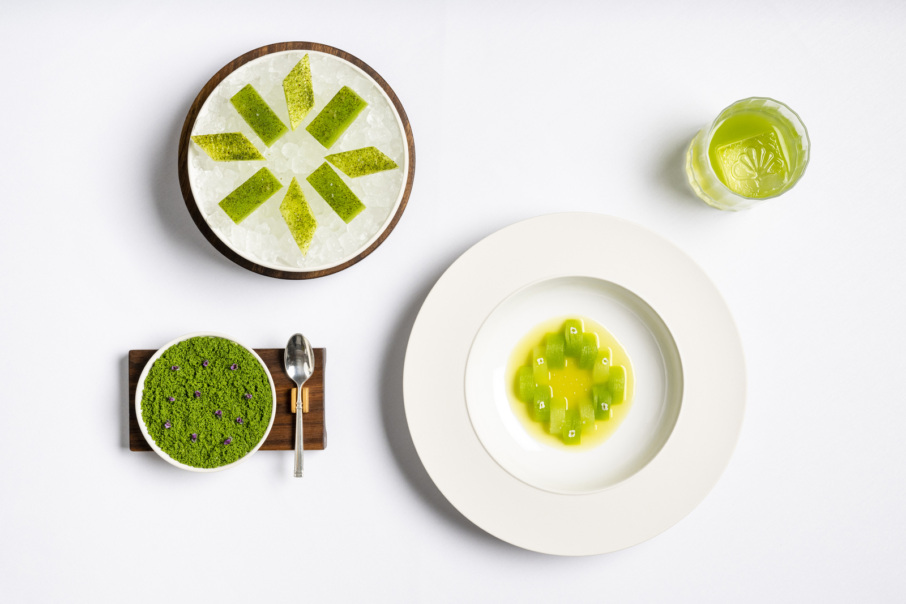
- How Eunoia Challenges the Norms of Fine Dining, in Six Dishes
- Feld's Jake Potashnick Is Always Learning
- 31 Great New York Tasting Menus Under $100
- Eight Awesome and Affordable Tasting Menus in San Francisco
- 13 Great Tasting Menus in Miami, From Under $125 to Splurge Worthy
- Eight Great Los Angeles Tasting Menus to Try Right Now
- The Resy Guide to Splurge-Worthy Dining in Philadelphia
- The Resy Guide to Splurge-Worthy Dining in Atlanta
- Eight Great Chicago Tasting Menus to Try Right Now
Today, it’s a pleasure to see the energy that a new cohort of tasting menus has brought to the form, even as some classics hold down their strengths. In an era of content overload — for good or for ill — the opportunity for crisp and genuine storytelling through food has become as important as the sear on tilefish skin and the integrity of the sauce Américaine, although like Sichuan pepper, a little goes a long way. Also, the tasting menu has somehow become empowered to be shorter, when circumstances warrant. If your hesitation in the past was the fear of walking out of dinner feeling like an overfilled birthday balloon, there are tasting menus to leave you delighted. The people have spoken, and the chefs have … kind of been listening.
Over the past several months, I’ve enjoyed (and, OK, sometimes endured) nearly 10 tasting menus from New York to Napa. I’ve been mesmerized by Indian, Mexican, Japanese, and hyper-regional American ingredients that have only sometimes been cooked by a chef of that origin. I’ve sat for what felt like hours, but also been greeted with the check at what felt like the intermezzo. I’ve experienced lightness, hunger, bloating, puzzlement, and near perfection through these meals, and it’s inspired me to speak with a few of the people at the center of the tasting menu’s new era, where sharp self-awareness for diner’s needs and, most strikingly, brevity has won the day. Storytelling has always been at the center of tasting menus, but we’re finally confronting a key question: How much is too much? The modern chef must walk a tightrope. Say too much and the meal feels like an English 102 lecture on Milton. Yet say too little and the meal can feel rudderless, and not so much an eventized dining experience worthy of half a paycheck.
On the brevity front, consider what Charlie Mitchell is doing sixty-three floors above Manhattan’s Financial District at Saga: cooking with his guests front of mind. Truly. Saga’s 10-course menu (six courses, $215; 10 courses, $315), he’s careful to point out, is smaller than it sounds. “It’s designed to not crush you with food,” he says. “You don’t want to fall asleep in the Uber.” Pacing is critical. “Some people want to sit and eat for four hours, but most people my age — you may want that experience, but you want to be out of there in under three, two and a half hours, really.”
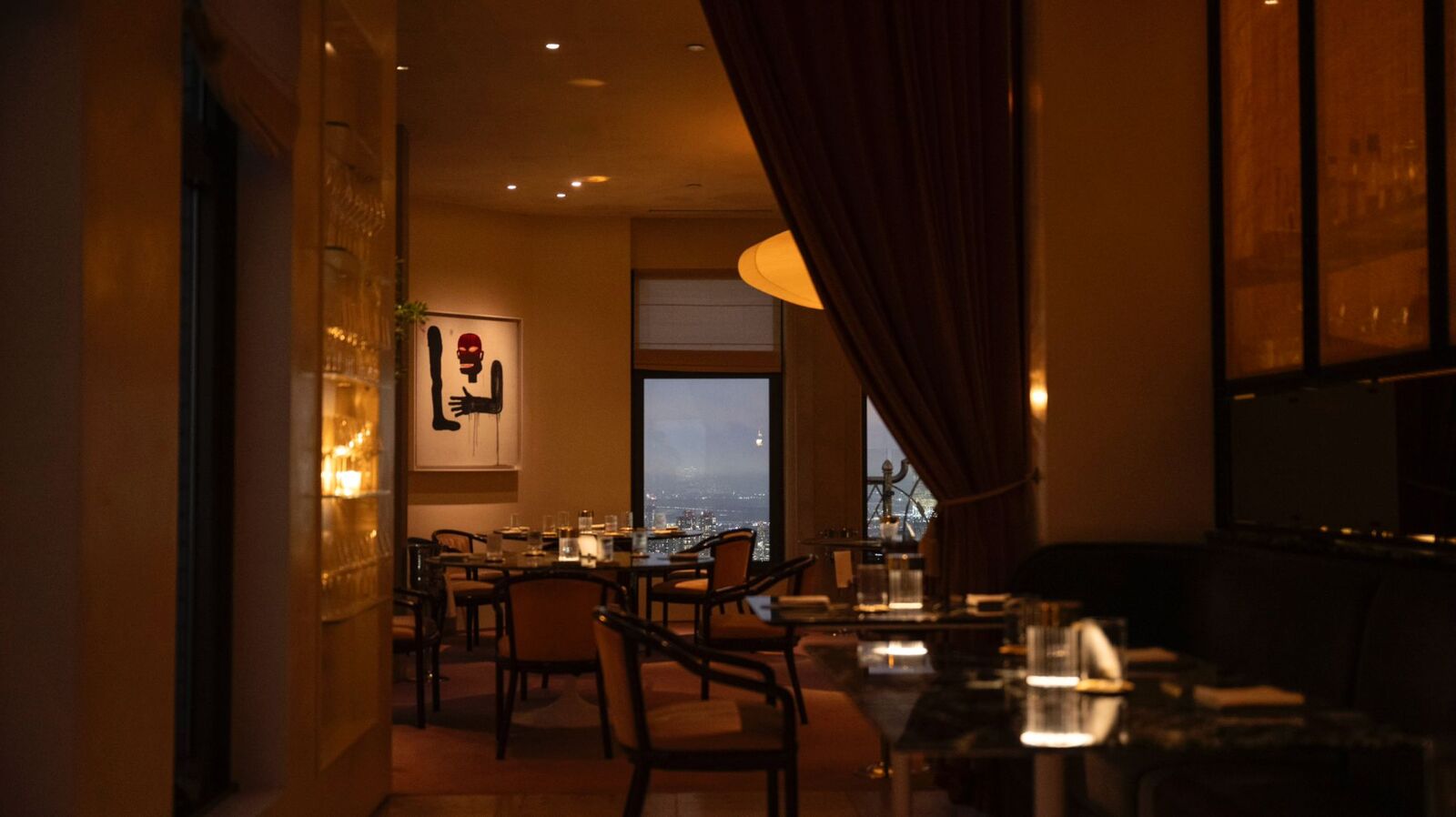
Mitchell took over Saga’s kitchen after the sudden death of his mentor James Kent, inheriting a dining room with an identity he needed to both honor and rewrite. This spring, that meant a menu inspired by Japan — a country he’s never worked or apprenticed in. My spring meal included a light tempura with sawara (Japanese mackerel), a beautifully cooked sea bream with dirty rice and a pristine pea broth, and a deconstructed banoffee pie. After the meal (and requisite selfies from the restaurant’s panoramic deck), I felt fabulous. “I think there’s a line you have to walk,” Mitchell says. “If you want to dive too far into someone else’s cuisine, you may have to go and spend time there. But it really started organically, through work, through sourcing.”
Or take Daniel Patterson, who’s had an interesting summer. “We were slow as f—, like scary, go-out-of-business slow,” says the chef-owner of the new Los Angeles restaurant Jacaranda, which he opened with his partner, Sarah Lewitinn, in May, offering a twelve-course, $295 tasting menu. “We were doing twelve, fifteen [covers] a night. I didn’t think I would need a shorter menu. I thought the demand would be there, and hey — it wasn’t.” Something needed to change.
Patterson has earned exceptional acclaim in professional cooking, and speaks with the candor and confidence of a chef with little to prove. His influential restaurant Coi in San Francisco opened in 2006 and, alongside the crescendoing work at Noma in Copenhagen, took local California ingredients like Monterey Bay abalone, angelica root, and sea beans and transformed them into creative tableaus expressing terroir and hyper-seasonality. Rising to three Michelin stars and a place on the World’s 50 Best Restaurants list before its closure in 2022, a meal at Coi was a hefty fourteen courses.
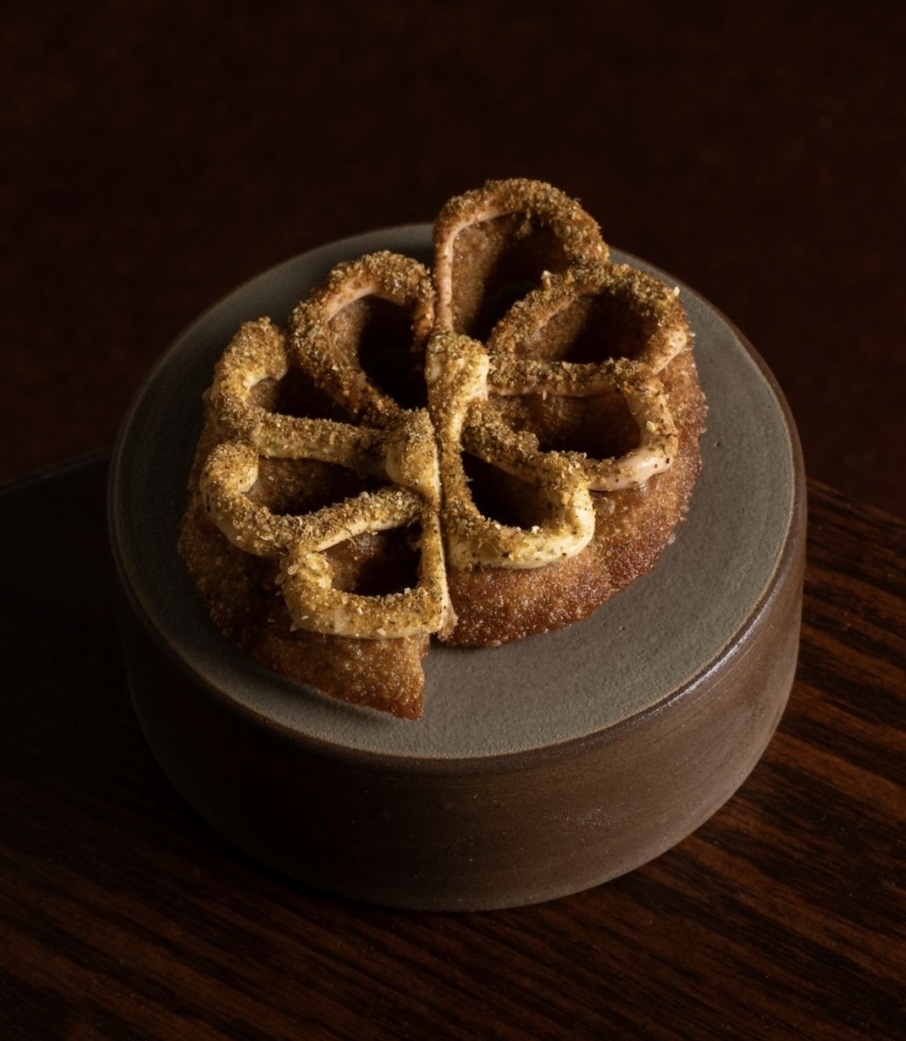
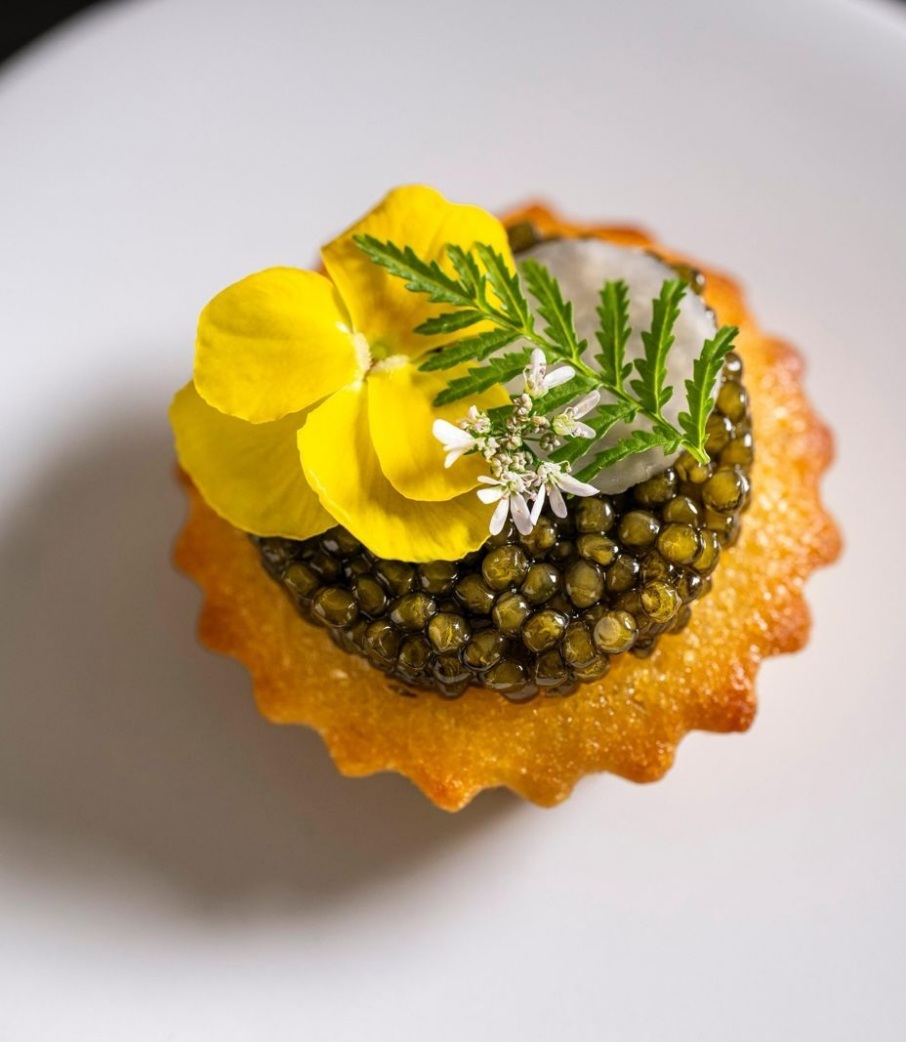
At first, Jacaranda operated with much of that same ethic — until the introduction of a two-week, citywide summer promotional menu in August, which slimmed the menu to six courses for $175. The restaurant offered the same cherry tomatoes with cold yuba in soy milk and the same shrimp-and-squash dumpling with habanero-saffron sauce. But they were coursed out at close to half the price and half the time.
“The young me would have been like, ‘Oh, f— this,’ but the me now? I’m like, ‘What a godsend,’” Patterson says. Indeed, he asserts that the shorter menu has reinvigorated Jacaranda. The six-course menu will remain permanent, although priced at $185. “There’s an energetic feeling in the room. People are happy.”
Back on the other coast, at the four-month-old Cynthia (six courses, $165; seven courses, $205) in New York’s West Village, chef Sherry Cardoso and her partner, Claire DuBois, wanted to bring a different set of priorities to the tasting menu: their goals of operating with low-to-zero waste and accessibility. Cardoso was born in Brazil and refined her fine dining chops at Per Se before working in executive roles at Cafe Cluny and Metropolis by Marcus Samuelsson. “We make it so the average person can have a beautiful experience at a fraction of the cost,” says DuBois. DuBois is clear: The relatively accessible price has been a major draw, with guests returning multiple times, even with few changes to the menu.
“The tasting menu is our way to control the guest experience,” Cardoso says of the pacing. One of her tools is the “sweep”: a cluster of small dishes disguised as a single course, which lets her stretch seven courses into something closer to twelve plates without adding time at the table. The corn sweep utilizes nearly every part of the vegetable: kernels juiced into a custard and a sorbet, cobs turned into stock, husks charred and pulverized to finish a tamale, pulp fermented into a miso folded into beurre blanc. “It’s corn on corn on top of corn and more corn,” she says. It’s a nose-to-tail philosophy turned cob-to-silk.
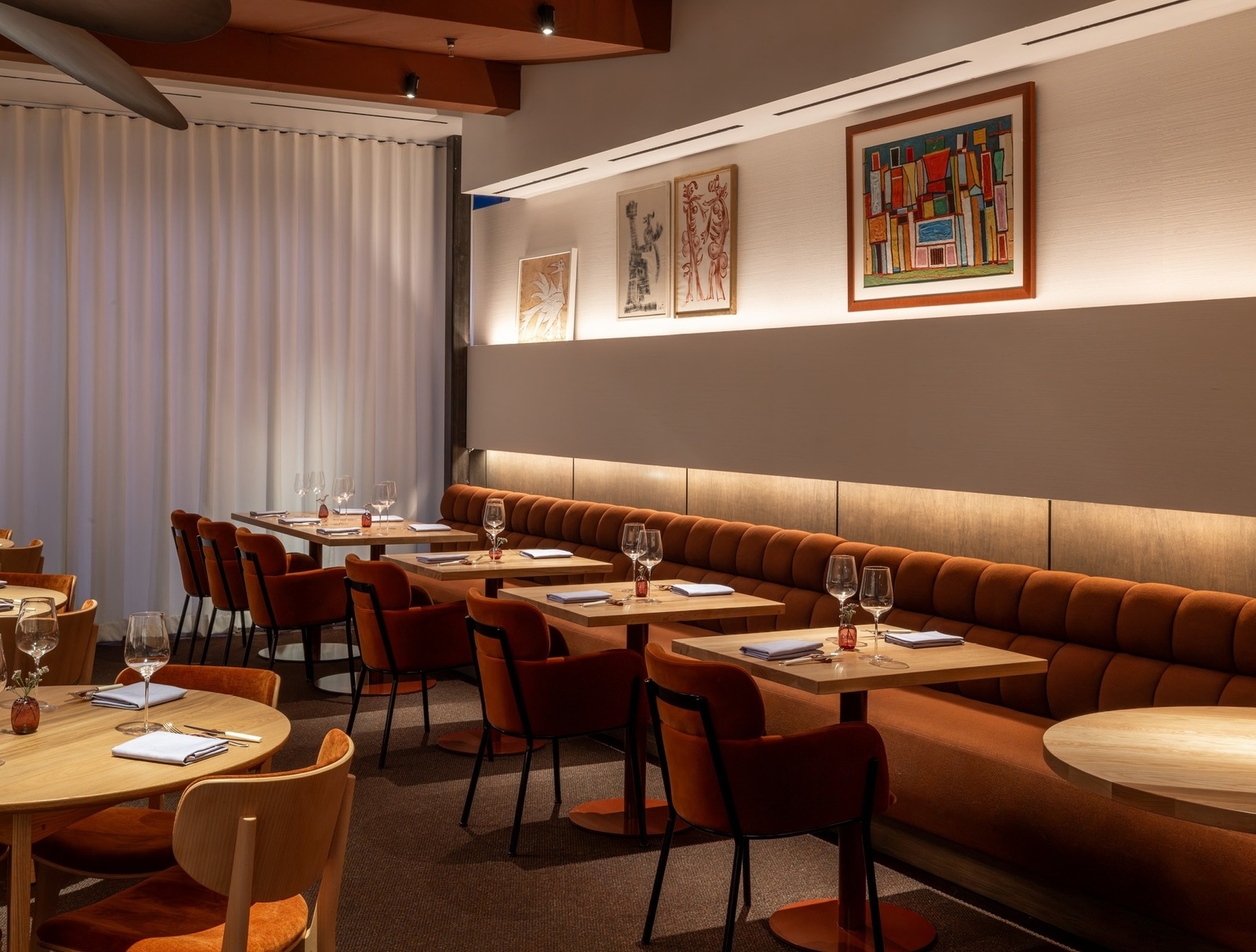
At the same time, the storytelling that once infused nearly every tasting menu has found ways to evolve. Consider Sujan Sarkar’s approach. At Indienne in New York (10 courses, $175–$195) and Indienne in Chicago ($135-$155), Sarkar spins the tale of modern Indian food through inventive plays on classic dishes from throughout the subcontinent, including courses of avocado bhel, egg curry with masala babka, and a stunning chicken makhani with chicken mousseline and a smoky and creamy red pepper makhani sauce.
“Modernizing Indian food is not easy,” he admits. After more than a decade cooking modern European and French food in London (where, to be fair, the Indian-focused tasting menu had an audacious run in the 2000s) Sarkar left those cuisines behind and spent three and a half years relearning Indian cuisine from the sprawling country’s own regions before trusting himself to reinterpret it. That ethos has extended to the format of Indienne’s menu, too. “The young diners don’t want to stick around,” he says when asked about the intentionally fast pacing — our meal was under ninety minutes— and the youthful crowd, which is made up of a lot of people born in India but raised in America.
Sarkar is equally insistent that dining-room aesthetics and the style of service repudiate formality: a relaxed restaurant that plays an esoteric Japanese city pop playlist curated by the bartender with an ambitious nonalcoholic pairing option all made in house — a nod to the swelling number of millennial nondrinkers. “We don’t put people into a box, and I don’t dictate how to eat,” he says of his three tasting menus that accommodate vegetarians and vegans. “You don’t like this lamb? Okay, go for the celeriac shammi.”
Even Patterson, who as he says “kind of helped pioneer” the storytelling format, has concluded it needs to be used sparingly — with the food doing most of the work. “If I tell them everything,” he says, “what the hell are they going to discover?”
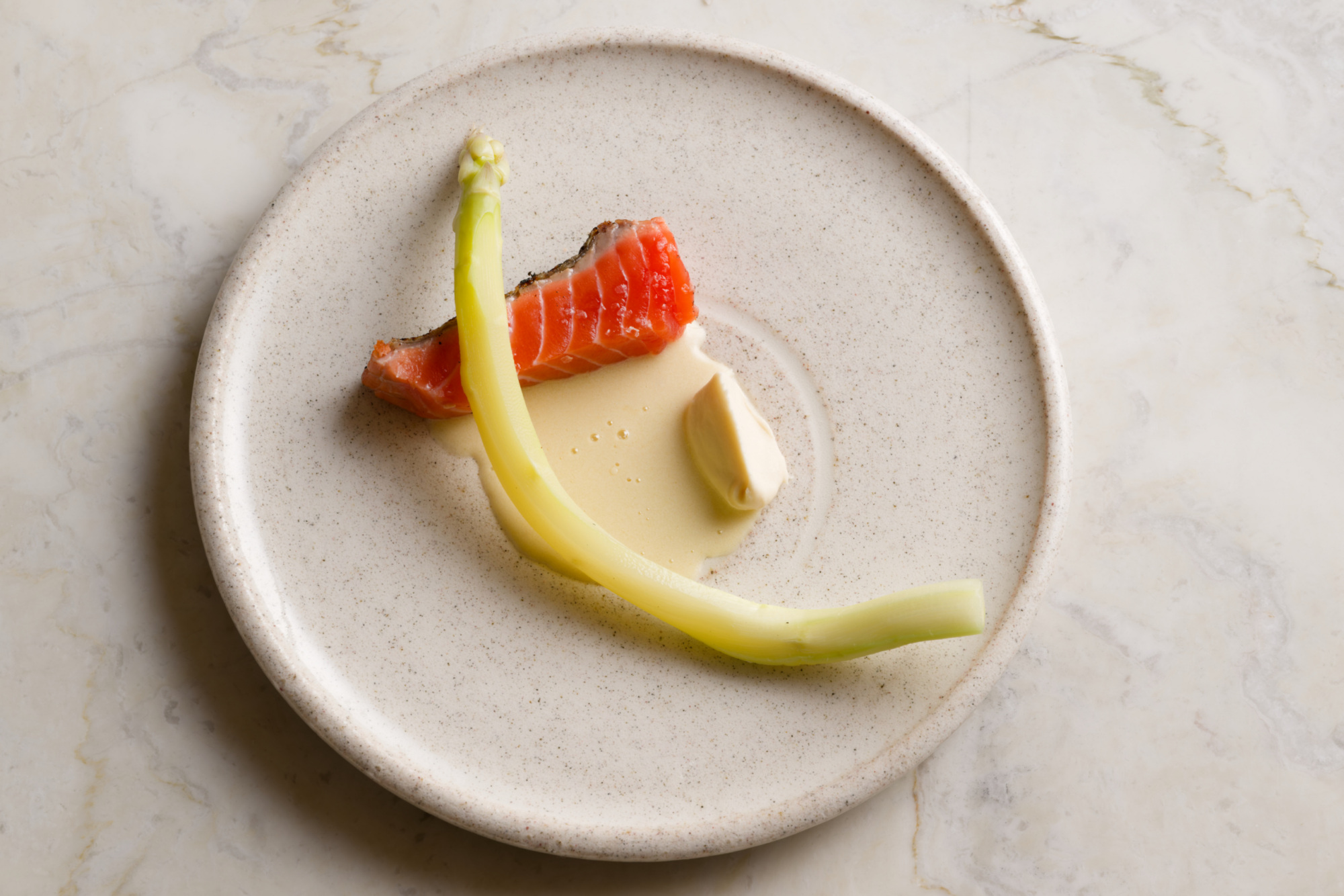
Perhaps the discovery doesn’t need to take a single form. At Kato in Los Angeles, Jon Yao has reimagined the food he grew up eating in the nearby San Gabriel Valley through his tasting menu — but there’s less spiel and more implied story in the resonances on the plate. His milk bread with green onions can evoke a scallion pancake, without an overt discourse.
In any of these cases, the form of modern tasting menus go back to a word Cardoso used: control. All these chefs are fighting for a version of it. Cardoso wants control over her restaurant’s food waste; Patterson wants control handed back to the plate itself, no gassy narrative required. Sarkar took his back by throwing out a decade of French technique and starting over. Mitchell found his through a place he’s never visited, and a menu that tells diners a story of place without the personal anecdote. None can exactly agree on how much a chef should say out loud, and after many meals, neither do I. What is certain from my time sitting in these dining rooms over the past months is that control doesn’t mean the diner hands their time, money, and stomach over to the chef. Subordination is way out, playful discourse is in.
I also know that the tasting menus I encountered a decade ago and the ones I’m eating today are vastly different. The music is louder, the spaces often tighter. The check sometimes comes when you’re still happy to keep hanging out, as I experienced last weekend at the Chicago restaurant Feld (twenty courses; $225) in the city’s West Town neighborhood.
Twenty courses might seem like a marathon, but we were done in two-and-a-half-hours, at which point chef Jake Potashnick invited guests to the restaurant’s backyard to roast s’mores and talk about the food. There was nothing cheffy about the plastic-bag marshmallows and Hershey’s bars, and we were delighted to stay. When the format is done right, we’re not desperate to leave. And the s’mores in this case ended far better than the toasty climax of “The Menu.”
Matt Rodbard is a writer, editor, and author of food and culture books with more than two decades of experience working in television, magazines, book publishing, and online media. He’s the co-author of “Koreatown,” “Koreaworld,” and “Food IQ,” the founding editor of online food and culture publication TASTE, and co-host of the podcast This Is TASTE. Follow him on Instagram. Follow Resy, too.