Torno Subito’s Famed Tortellini Is an Homage to True Craftsmanship
Published:
Chef Massimo Bottura’s iconic tortellini in Parmigiano Reggiano sauce has been on the menu at his iconic Osteria Francescana in Modena, Italy since day one. To put that in perspective: The restaurant, now considered one of the most influential and decorated in the world, marked its 30th anniversary last year.
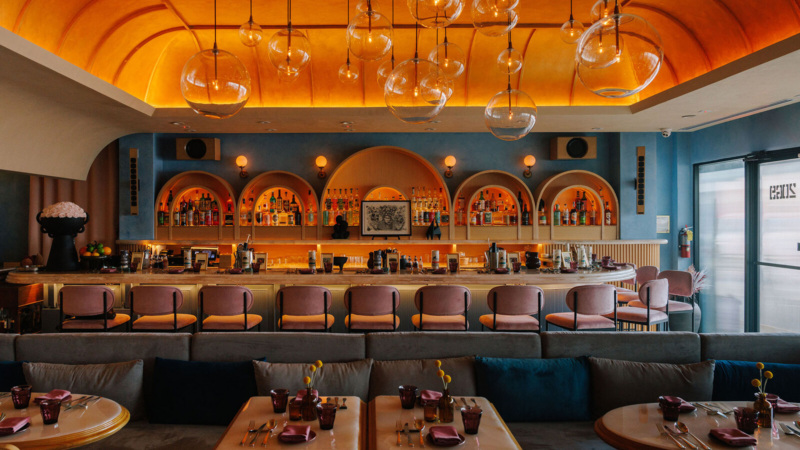
So when I first sat down to a bowl of those same tortellini at Torno Subito, the chef’s lauded South Florida outpost, I was fully aware of what I was eating. This wasn’t just another pasta dish. It was Bottura’s signature — a dish that has come to define his cooking and, in many ways, modern Italian cuisine itself.
Still, nothing quite prepared me for how hard I fell for it. Halfway through the bowl, all I could think about was how much I didn’t want it to end. (Suddenly, the more than $50 price tag made sense.) And then I kept thinking about it, long after I had finished my meal. So much so that when I traveled to Italy this past fall, I planned part of my itinerary around tortellini. I made sure to stop in Emilia-Romagna, where both Bottura and his signature dish were born, eating as much of the region’s pasta as I possibly could. If I was lucky, I thought, maybe I’d find a comparable plate of tortellini finished in that incredible Parmigiano Reggiano sauce.
To my dismay — but not surprise — the tortellini I tried in Italy didn’t come close. And it wasn’t until I started digging deeper into the story behind Bottura’s version that I understood why.
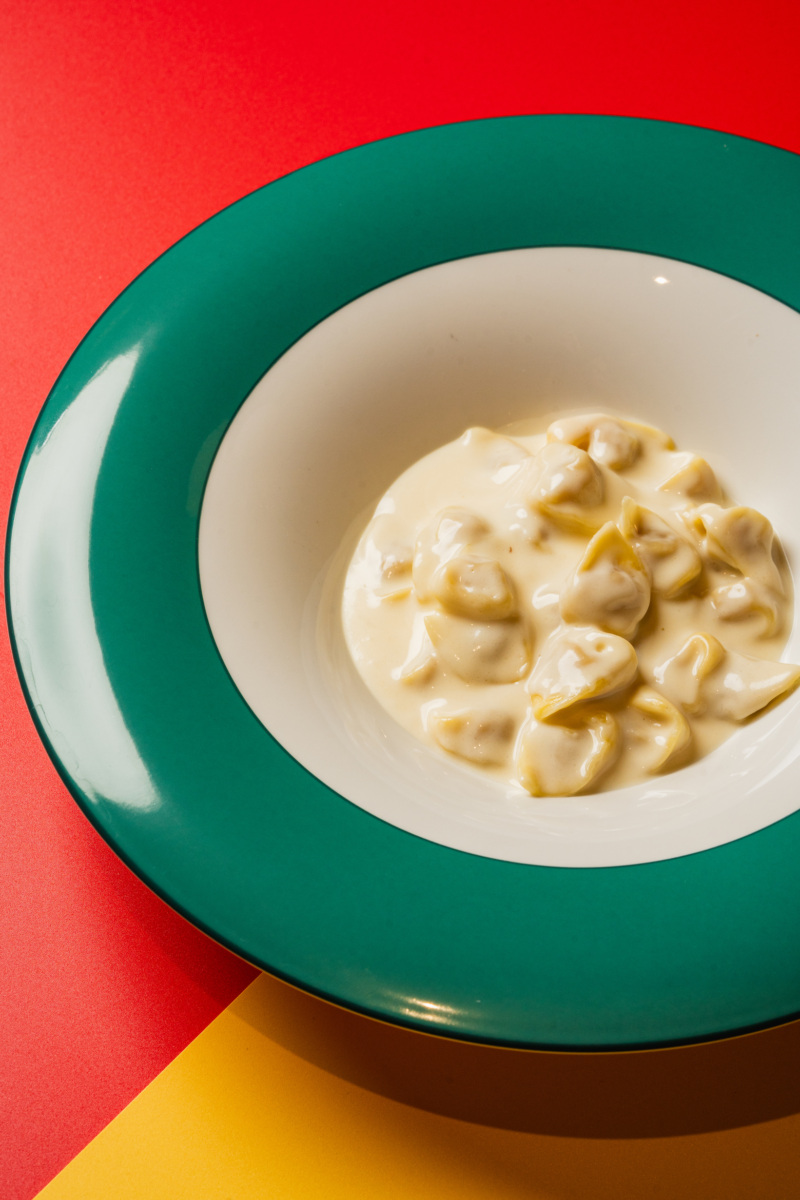
In Bottura’s hometown of Modena, tortellini are traditionally served one of two ways: en brodo (floating in broth), or alla panna (dressed in a rich cream sauce). The debate over which is superior has gone on for generations.
“In Modena we like to say: If you don’t believe in God, you can always believe in tortellini,” Bottura says. “That’s how serious this pasta is for us.”
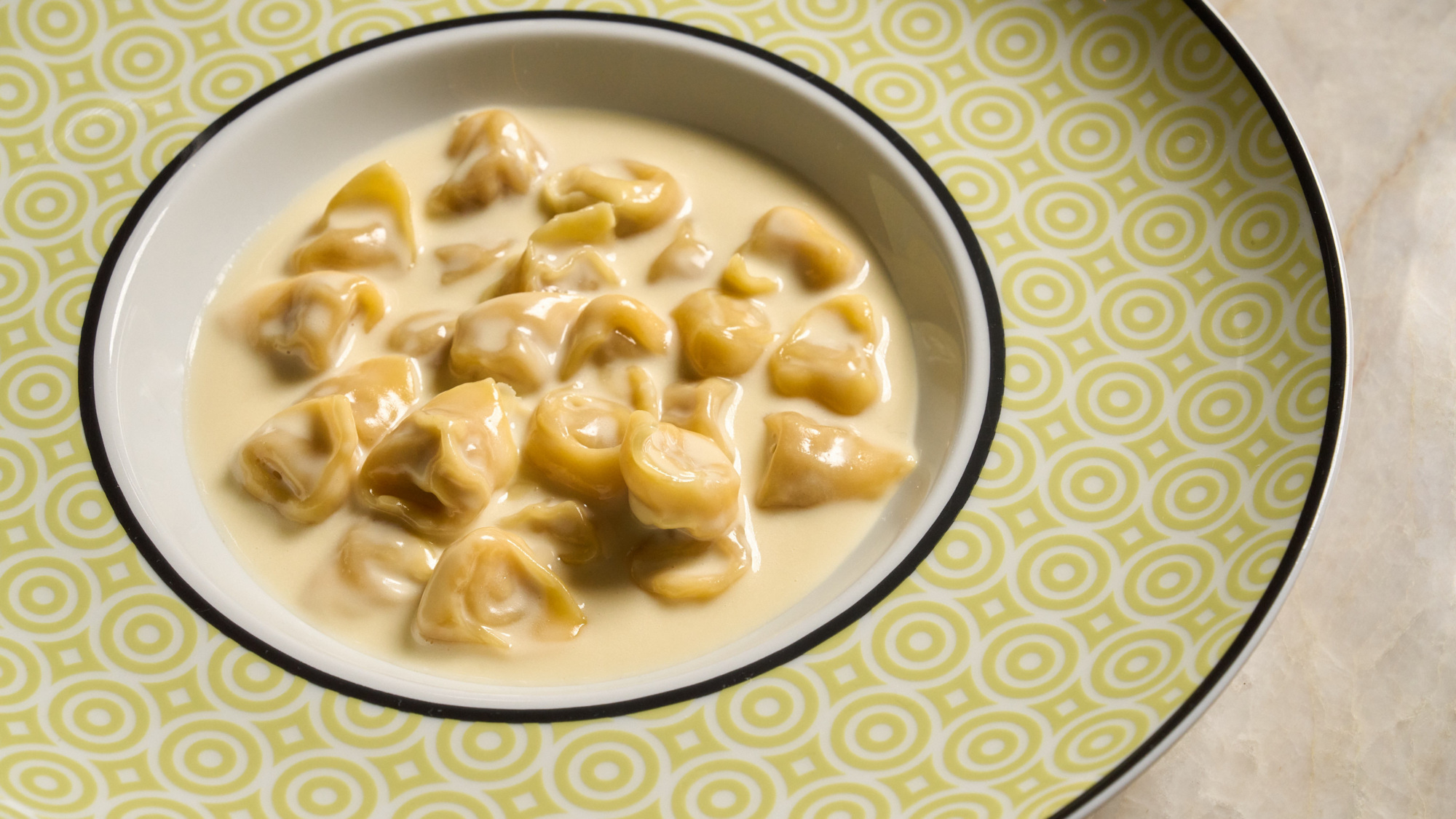
The chef came up with his own solution. His tortellini is first cooked in broth to absorb warmth and depth, then finished in a sauce made from just two ingredients: aged Parmigiano Reggiano and water, no cream, which is a difference that matters.
By emulsifying Parmigiano Reggiano with water, the sauce becomes silky and deeply savory with a more Parmigiano-forward flavor. It amplifies the tortellini filling instead of masking it.
“It’s comforting but not heavy. Contemporary but deeply rooted,” Bottura says. “It has stood the test of time because it’s not a trend. It’s a point of balance between tradition and evolution. When a dish finds that equilibrium, it becomes timeless.”
In Emilia-Romagna, tiny tortellini are a point of pride. They signal patience, discipline, and care.
At Torno Subito, the dish appears on the menu simply as “I Tortellini” – translating to “the tortellini.” “It signals that this is one of our defining signatures, a constant on the menu and always available throughout the year,” Bottura says.
Once found only at Osteria Francescana, copycat versions of tortellini finished in Parmigiano sauce have since spread across Emilia-Romagna, appearing in trattorias and fine-dining restaurants alike. Bottura himself now serves the dish at many of his restaurants, including Franceschetta58, Casa Maria Luigia, Cavallino, Al Gatto Verde, and of course, here in Miami at Torno Subito.
“Having tortellini on our menu is a great responsibility,” says Bernardo Paladini, the head chef at Torno Subito Miami. “Not only because it is always one of our best sellers, but because it represents Massimo’s childhood memories and stands as a symbol of Italian gastronomic excellence.”
Beyond the sauce, Bottura has also created his ideal filling: a blend of coppa di maiale (roasted pork neck), cured ham, mortadella, and Parmigiano, local ingredients that were all central to his upbringing in Emilia-Romagna. The recipe came from memory more than measurement, he explains.
“The filling lives in my mental palate, a place where taste, smell, gestures and emotions are stored long before recipes are written,” Bottura says. “It’s my DNA: Sundays at home, nonne’s hands, the aroma of roast meats, Parmigiano Reggiano aging slowly, nutmeg used with restraint. When the filling finally tasted familiar but inevitable, I knew it was right.”
At Torno Subito Miami, the meats are imported directly from Modena to stay true to the original, Paladini notes. The pork filling is blended with Parmigiano and finished with a touch of nutmeg, aiming for a pâté-like texture.
“From there, everything lies in the details: the thickness of the pasta dough, the technique used to roll it, and the precision required to fold each tortellini,” Paladini says.
Unlike in Texas, smaller is better. In Emilia-Romagna, tiny tortellini are a point of pride. They signal patience, discipline, and care.
“Tortellini are about proportion, not abundance,” Bottura says. “When they are smaller, the balance between pasta and filling is more precise, the bite more elegant. It’s a single bite engineered to deliver aroma, fat, salt, sweetness and warmth all at once.”
The pasta dough starts with ultra-fine Italian double-zero flour and fresh eggs, with close attention paid to yolk color, richness and elasticity. It’s kneaded until it develops tension, the quality that gives the tortellino its snap.
After resting, the dough is rolled thin, but not too thin. “The pasta must be a silk veil around the filling, never a blanket,” Bottura explains. “Too thick and you taste only pasta. Too thin and it breaks.”
The same balance applies to the filling. Too much and the pasta bursts; too little and the bite falls flat.
The true craftsmanship comes in the final step. Each square of dough with filling is folded carefully into a triangle, then wrapped around the chef’s finger and sealed into the tortellini’s signature belly-button shape.
Once the tortellini are boiled in broth, the Parmigiano Reggiano sauce clings to the pasta like satin. The bowl must be served immediately.
“This dish is alive only in the moment,” Bottura says.
Torno Subito is open is open from Monday to Saturday for lunch from 12:30 to 3:30 p.m. and for dinner starting at 6 p.m.
Lyssa Goldberg is a Miami-based freelance writer and content strategist. She loves telling stories about food, wellness and travel, and you can find her byline in Parade, American Way, Mashable, Miami New Times, Time Out and more. Follow her on Instagram and Twitter. Follow Resy, too.