Letter of Recommendation Los Angeles
Jitlada Showed Me Just How Good Life in L.A. Could Be
Published:
I started coming to L.A. in 2010, enchanted by the succulents growing out of cracks in the sidewalk, the 24-hour donut shops, and the smell of a sizzling-hot trompo in a body shop parking lot. I was just starting to write about food professionally and was, like many, obsessed with Jonathan Gold’s reviews of humble strip mall restaurants—appreciated all the more because I myself had very little disposable income. My impression of L.A. was that it was a wonderland of cheap eats: a city where, if you knew where to look and had enough gas to get there, untold culinary wonders lurked in unexpected places. And in my mind, one strip mall restaurant ruled them all: Jitlada.
Jitlada has been around since the late 1970s, the result of a huge wave of Thai immigration to L.A. following the passage of the Immigration and Nationality Act in 1965. It’s changed hands a few times, but since 2007 has been owned by Sarintip “Jazz” Singsanong and her brother, chef Suthiporn “Tui” Sungkamee. Jazz and Tui (it feels wrong to refer to them by their last names—they are Cher/Madonna-level) rose to early internet fame via a semi-secret untranslated menu of Southern Thai dishes printed on the last page of their otherwise pedestrian takeout menu. These fiery, pungent, sour dishes—virtually unheard of in L.A. — quickly became the talk of the nascent food blogging scene, and eventually attracted the attention of Gold, who championed Tui’s regional Thai cooking and helped bring Jitlada to the masses.
MORE FROM RESY
I read about Jitlada and it checked all my boxes: affordable, strip mall, Gold-approved. On a visit to L.A., I corralled a few friends and strategized an order from the restaurant’s famously encyclopedic menu. There was a wait (there’s always a wait), groups loitering in the parking lot, blocking the entrance to the Armenian smoke shop next door. Inside, countless celebrity portraits lining the walls, with personalized notes to Jazz and Tui, lest you forget this is a company town.
Jazz was working the room (as per), in her signature oversized glasses and red lip; waving people to open seats and commandeering orders like the captain of a pirate ship. “No, first time, you want that,” she’d say, pointing toward the crispy catfish salad. She was right. As Gold pointed out in his memorial for Tui, who passed away in 2017, Tui was the quiet one, letting his food do the talking, while Jazz was as loud as his cooking itself. And my god, what cooking it was—a riot of flavors and textures I’d never encountered, ingredients like satur beans and morning glory and dried mudfish. It was a wonderland of contrast, all chile and citrus and flash-fried crunch and crispy raw fruit, while crammed into a plastic-covered table and looking out for alleged regular Ryan Gosling. To me, it was everything that made L.A. alluring.
From then on, I made it a point to visit Jitlada whenever I was in town—always in a group, always a celebratory occasion. It became one of my spots, a place that I (and the countless other Thai food freaks, chefs, and writers) felt belonged to us.

And then, in 2019, I moved to L.A. for real. And then…I stopped going to Jitlada. Not on purpose. It happened slowly, fading out of my rotation as I started exploring other places in Thai Town and beyond. I went steady with Sanamluang for a while, loving the heat in their drunken noodles. Had a moment with Rodded, the dearly departed duck soup specialist. Ventured further afield, to the Thai 2.0 hotspots like Anajak and Holy Basil. Something about being in proximity to the restaurant that had once embodied everything I loved about L.A. made me less inclined to actually go there. I thought about Jitlada occasionally, and always found some excuse—Too crowded. Always a scene. Better with a big group. I saw some native Angelenos roll their eyes when it came up, implying it was a tourist trap, or that the cooking had suffered following Tui’s death.
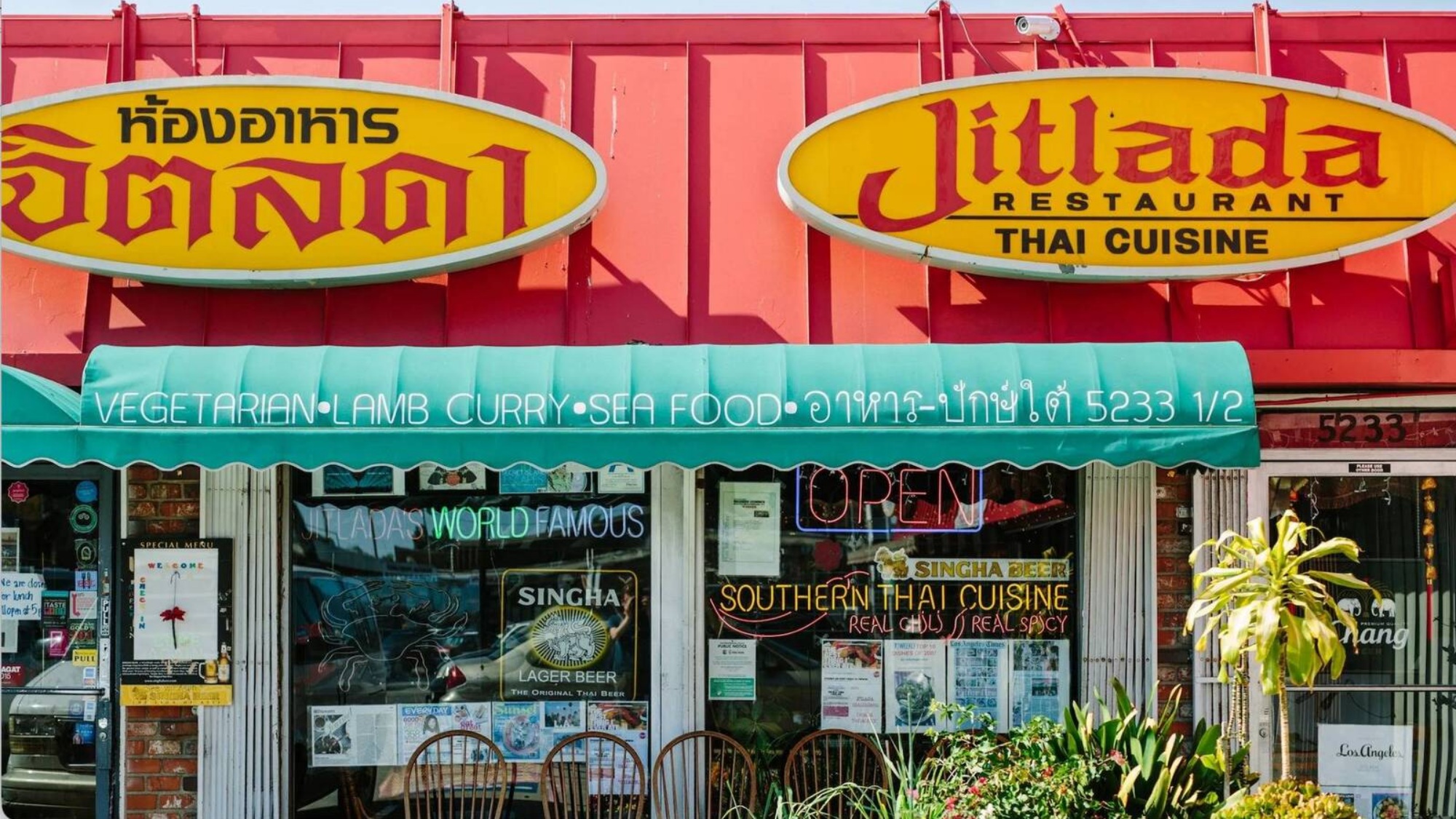
None of this is true. I know, because a few weeks ago, I did finally go back to Jitlada. My partner, who has lived in L.A. for much longer than me, had somehow never been. This felt wrong, like something to correct. So on a random Thursday night, the two of us—just two!—drove to East Hollywood, lucked out with a street spot, and attempted to walk in. The bright cartoon moon-yellow sign glowed the same as it ever has; and there was indeed a wait (this was before the restaurant started using Resy, which, apologies for burying the lede—Jitlada is now on Resy!). Inside, the same framed Matt Groening drawings, same floral plastic tablecloths. And Jazz, of course, still queen of the castle, remembering me from all those years ago.
For Mike’s first time, we ordered classically. Crying tiger pork jowl. Airy puffs of fried morning glory “salad” with tender shrimp and shallots. The once-revelatory kua kling dry curry, none of its heat diminished with time. And a new-to-me crab fried rice showered liberally with hunks of sweet meat, because there’s always something new to explore on a 400+-item menu. And let me tell you: Tui trained his successors well. It hits, still hits, all of it, truly.
It may not be revelatory to revisit a classic, but it was a welcome reminder that the things that drew me here to begin with are still the things I love. Jitlada is an institution for a reason—and time cannot take that away. Even if the chef and the critic who championed him have departed from this earthly plane, Jitlada remains, very much, alive and kicking. So by all means, explore the rest of Thai Town, develop your own personal favorites. But don’t forget about Jitlada. It’s right there, hiding in plain sight.