The Mulberry Brings Modern Korean Bistro Fare to Sawtelle
Published:
After 15 years living in New York and Asia, David Lee and Jennifer Chon landed on Los Angeles’s Westside in 2021. For Lee, who grew up in the area, it was a homecoming. For Chon, who had never lived in California, it was a period of adjustment. But it didn’t take long before the couple, who had worked in some top New York restaurants, started exploring the area, leading them to strike out with a venture to call their own: The Mulberry, a modern Korean bistro in Sawtelle.
When deciding where to plant their flag, Chon and Lee landed on Sawtelle for a number of reasons, chief among them its proximity to their home and the community of nearby restaurants, both Japanese (L.A. City Council officially recognized the area as “Sawtelle Japantown” in 2015) and beyond. And while Chon recognizes the depth and breadth of L.A.’s sprawling K-Town, she says their personal connections to Sawtelle made it a sentimental choice, too.
Chon says they embraced the challenge of creating a space where great hospitality is combined with amazing Korean food and drink, where “you immediately sense that you’re going to have a good time.” For Chon, this meant establishing a neighborhood restaurant casual enough for people to feel as comfortable popping in for a quick end-of-day drink as they would settling in for a four-hour dinner. “People are craving a place to be, a place to linger,” Chon says. “I want Mulberry to be that place.”
Here’s everything else you need to know about the Mulberry.
MORE FROM RESY
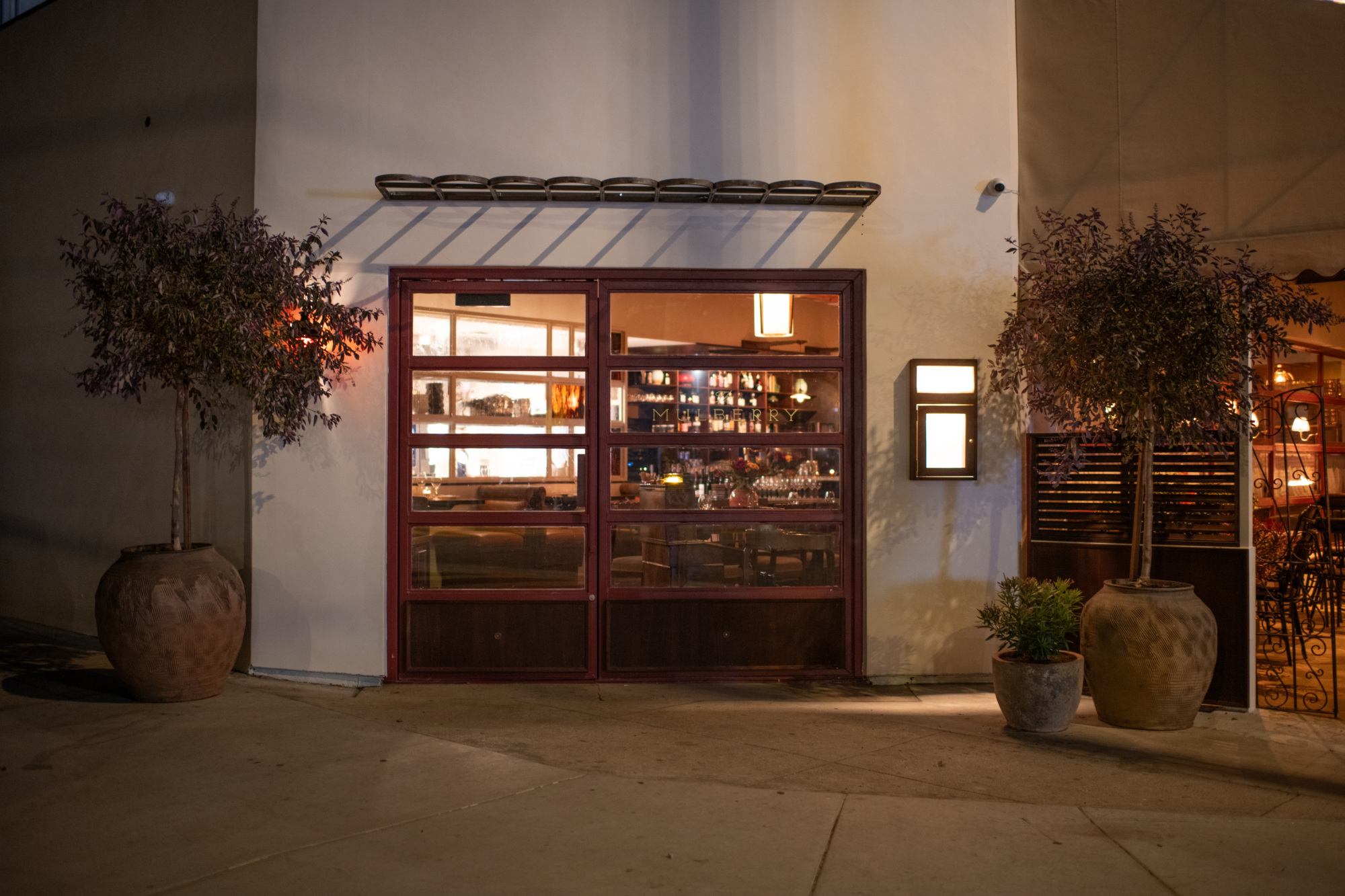
A World of Inspiration
The Mulberry’s menu is largely Korean in nature (and the restaurant itself is named after hanji, the paper that comes from the mulberry tree), but research and development took them all over the world. “We tried a remote fondue restaurant in Chamonix that Anthony Bourdain loved,” Chon says, adding that they also ate their way through Japan, Korea, and Aspen. And because the couple was regularly in New York while conceptualizing this restaurant, Chon says Polo Bar served as a major point of reference. “It always feels like a beautifully curated experience,” she says, “and I knew that if I went there, I wouldn’t be disappointed.”
And that might be Lee and Chon’s loftiest ambition for the Mulberry — to be somewhere people go to over and over again, trusting that they’re in for a great time with each visit. “If Polo Bar had a younger sister, and she lived in Sawtelle, and she happened to be Korean American,” Chon laughs, “maybe she’s the Mulberry.”
Mix-and-Match Interiors
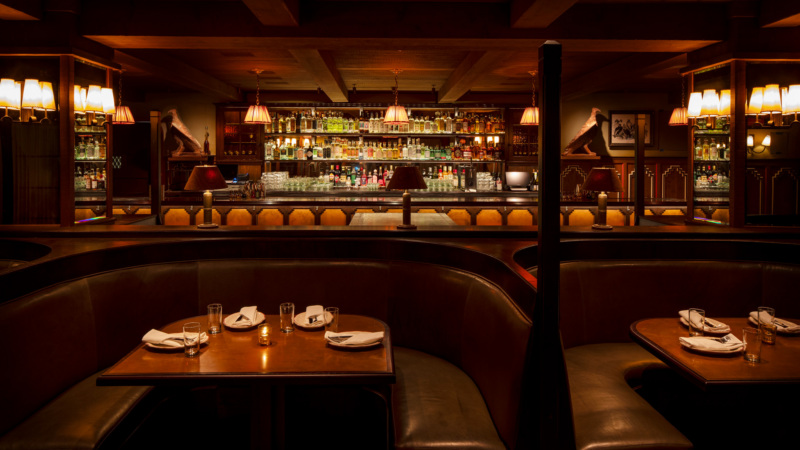
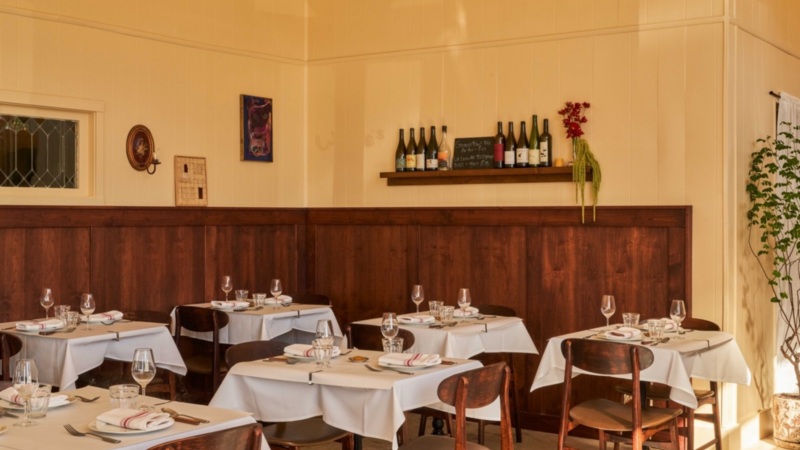
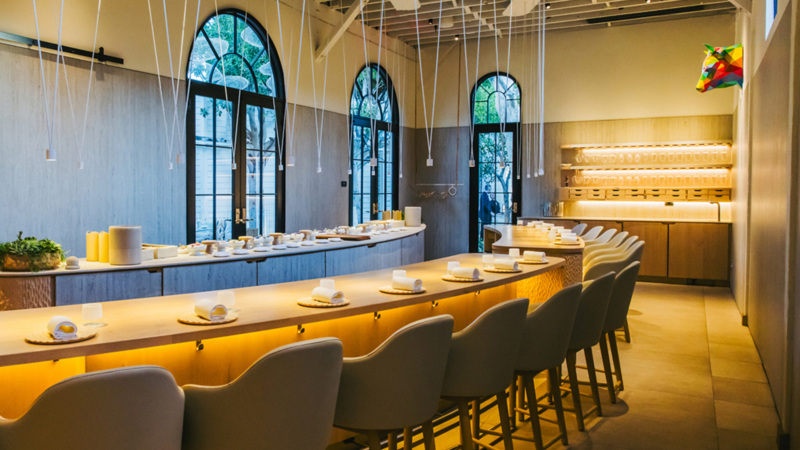
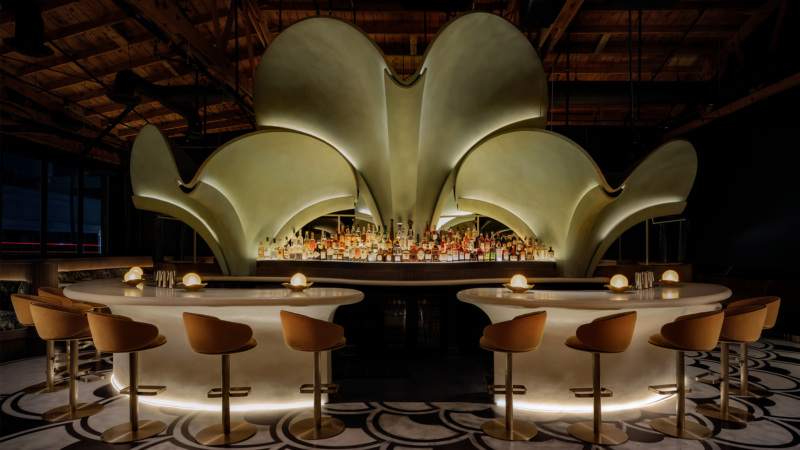
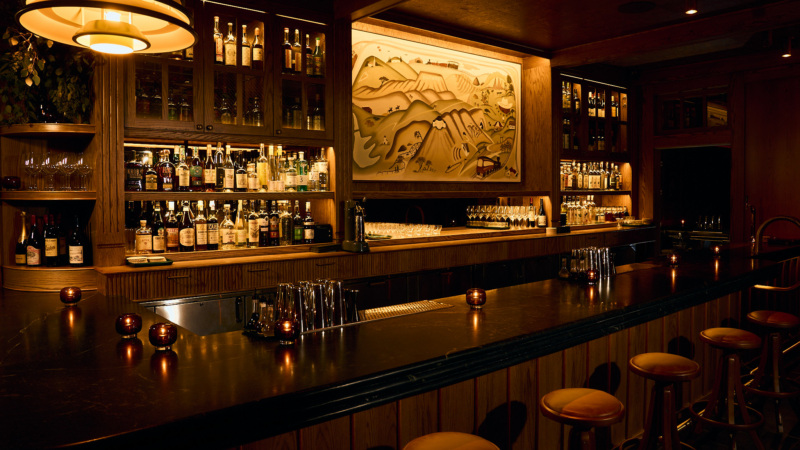
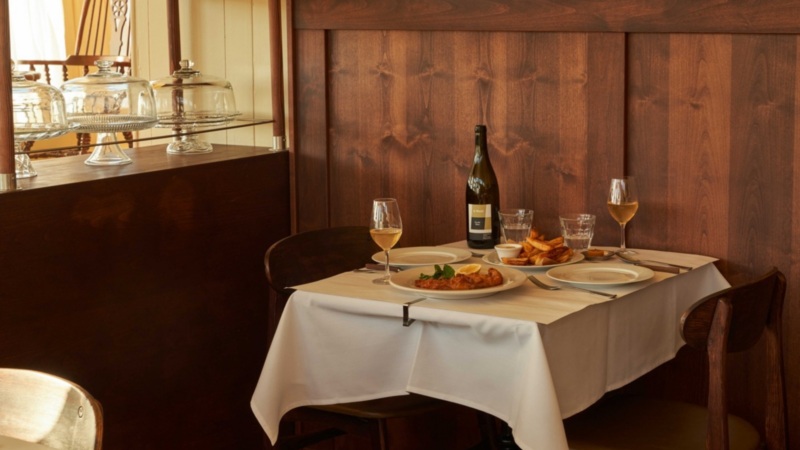
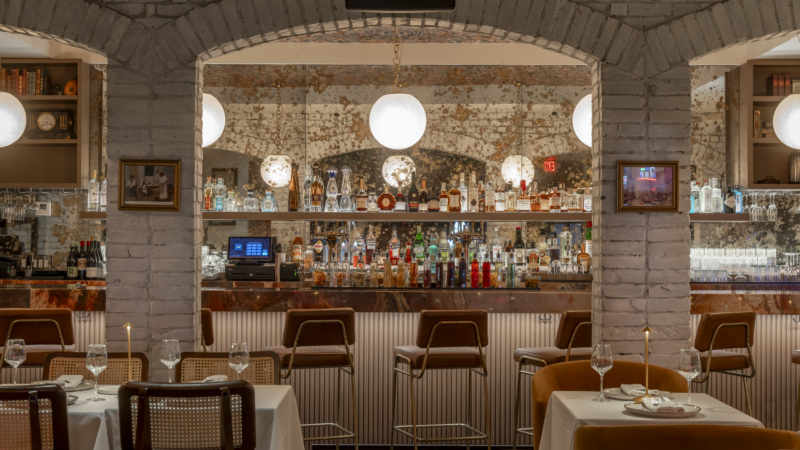
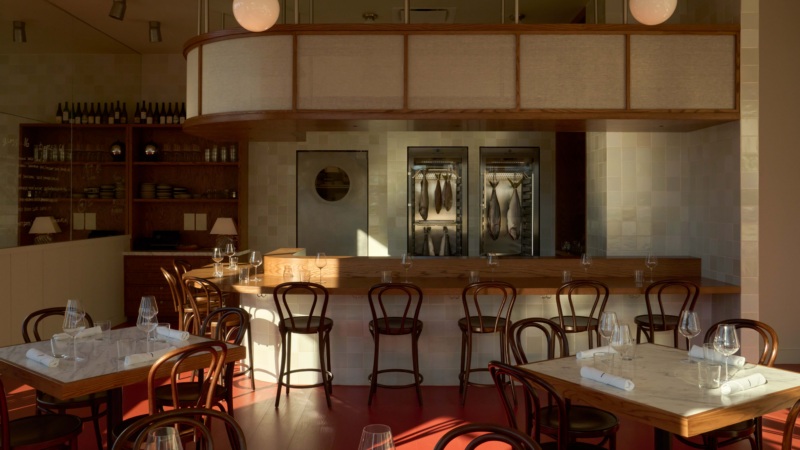
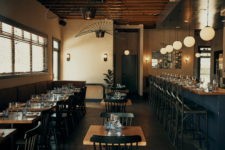
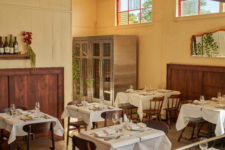
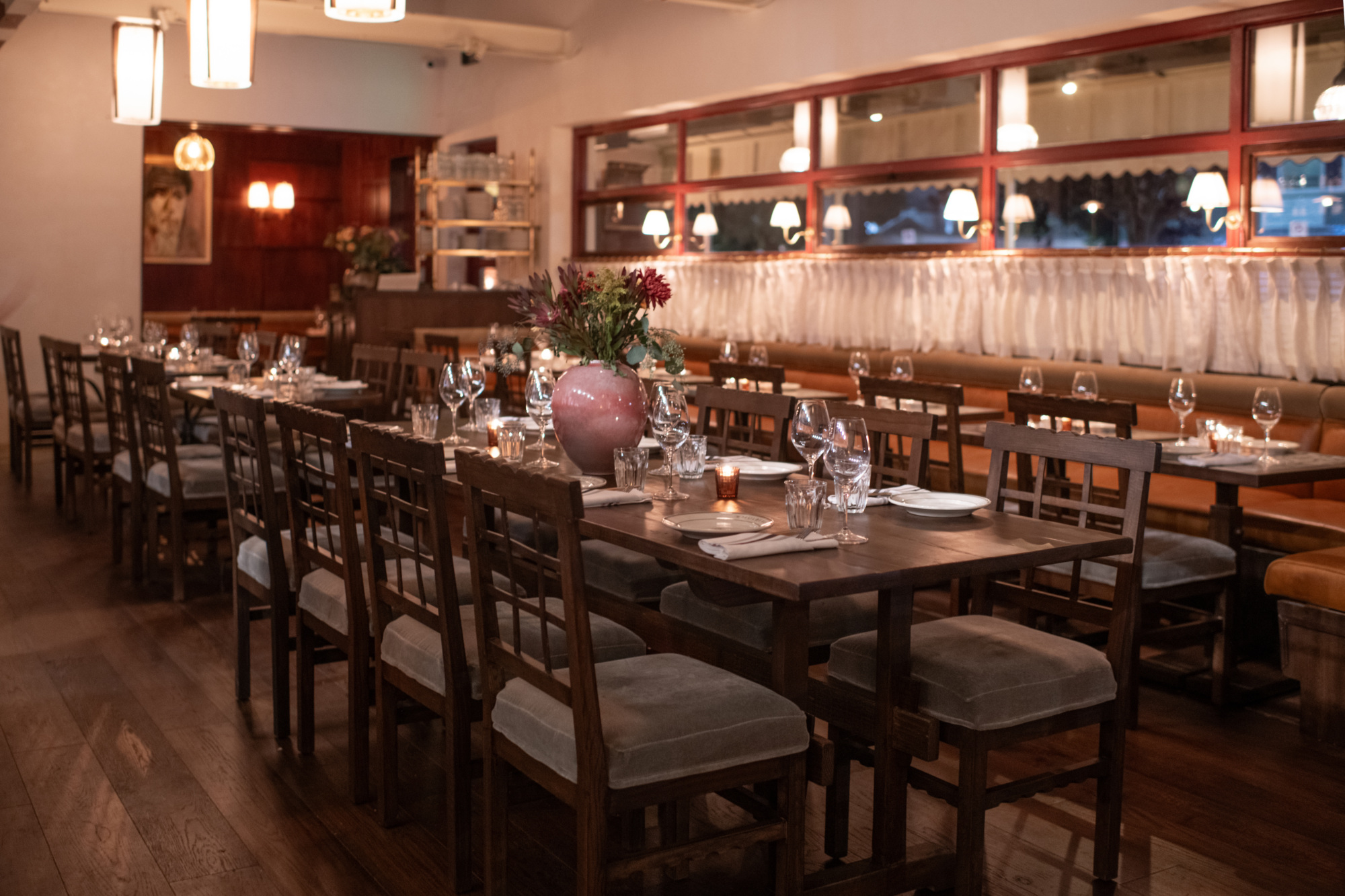
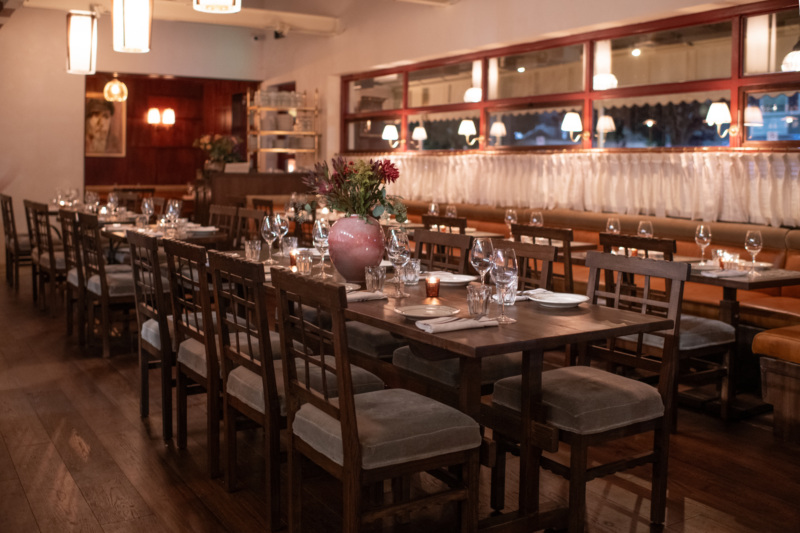
Chon and Lee worked with Matt Winter — the designer behind RVR, Manuela, and Max & Helen’s — to create a space that’s layered, artsy, and a little sexy. Moody lighting via mixed fixtures and plenty of textured surfaces — from the marble table tops and the supple leather banquettes to rustic-chic cherry wood — help create that visual warmth Chon was going for. But there’s also a lived-in quality: the selection of mid-century Korean photography, the wispy white curtain along the banquette, the quirky objet d’art scattered throughout, and the potted plants and flowers that seems to be on every table. Chon is particularly taken with the way the open kitchen is framed with a patchwork of textured, clear, and colored glass, mimicking the age-old Korean art form of pochagi. Everything feels considered and intimate but still easy-going enough that the Mulberry can suit any type of dinner.
Honoring Korean Flavors (Without Being Too Rigid)
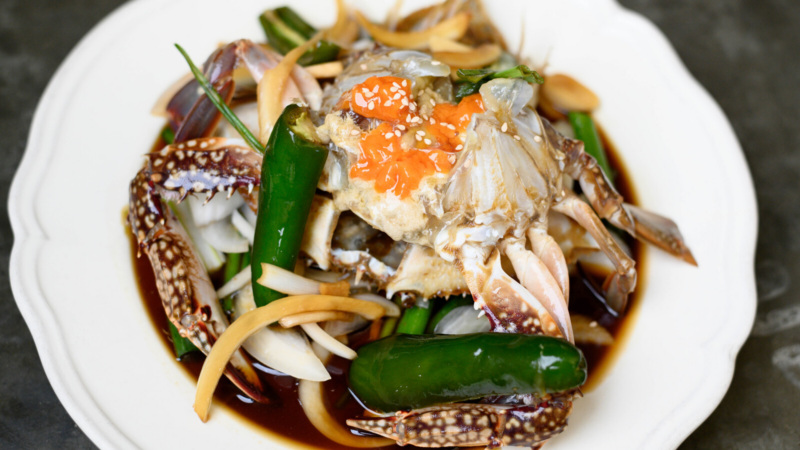
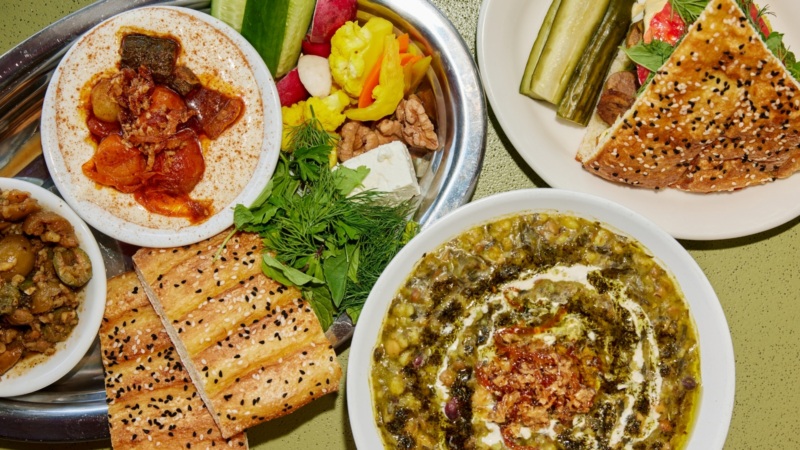
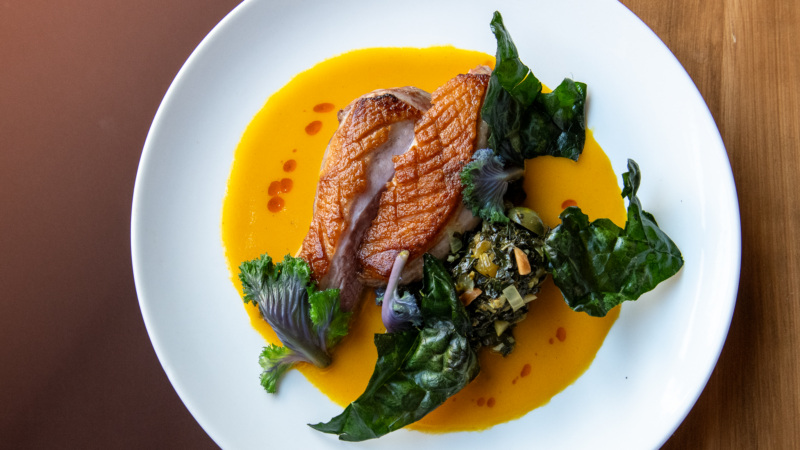
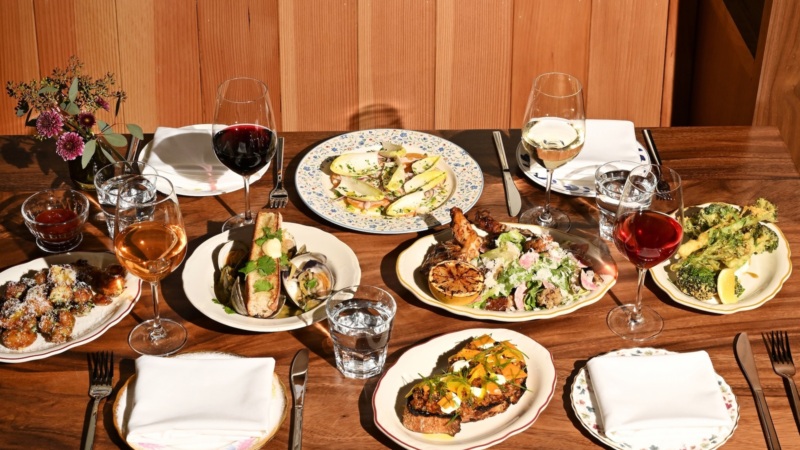
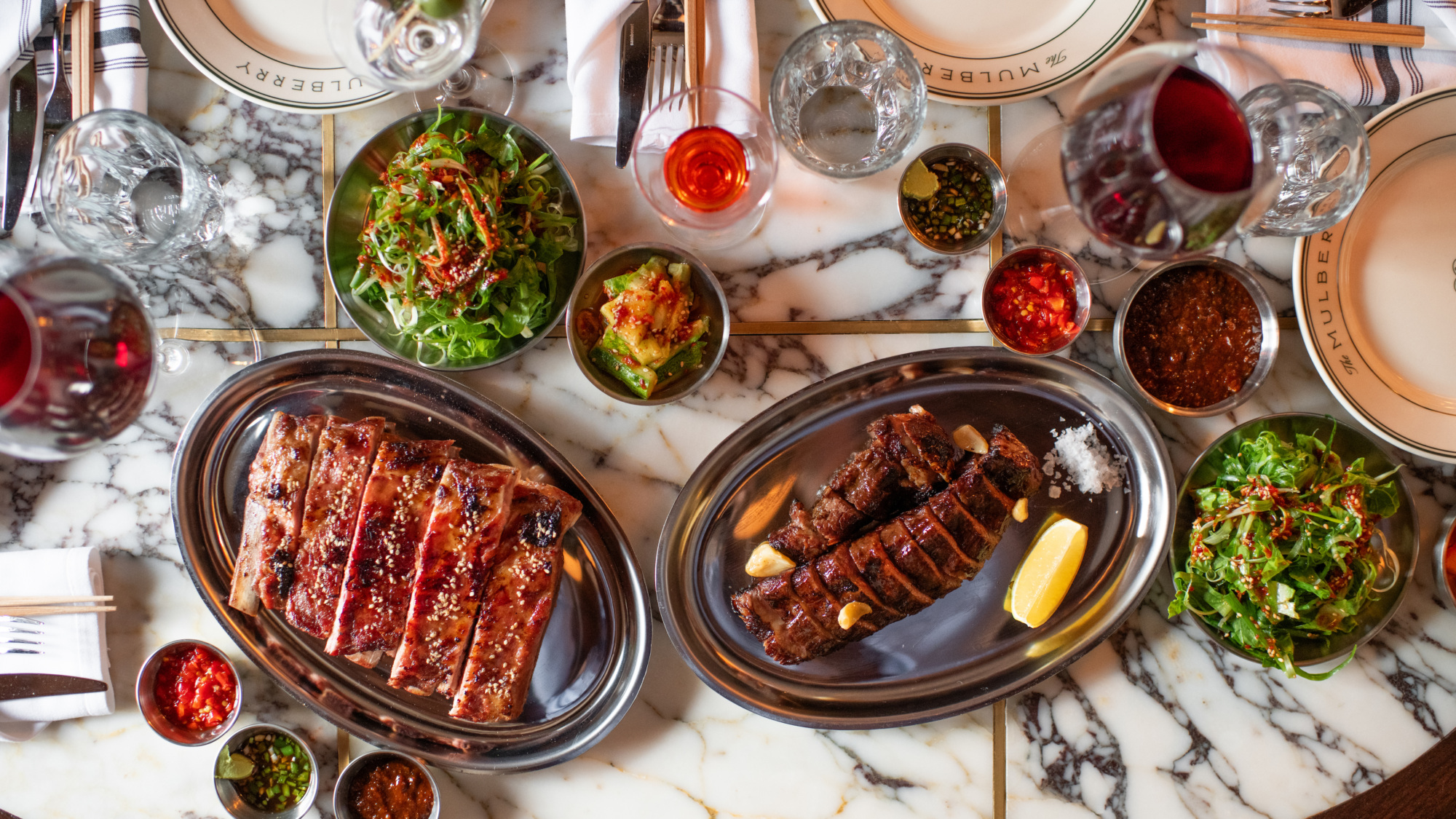
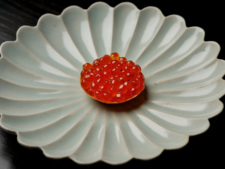
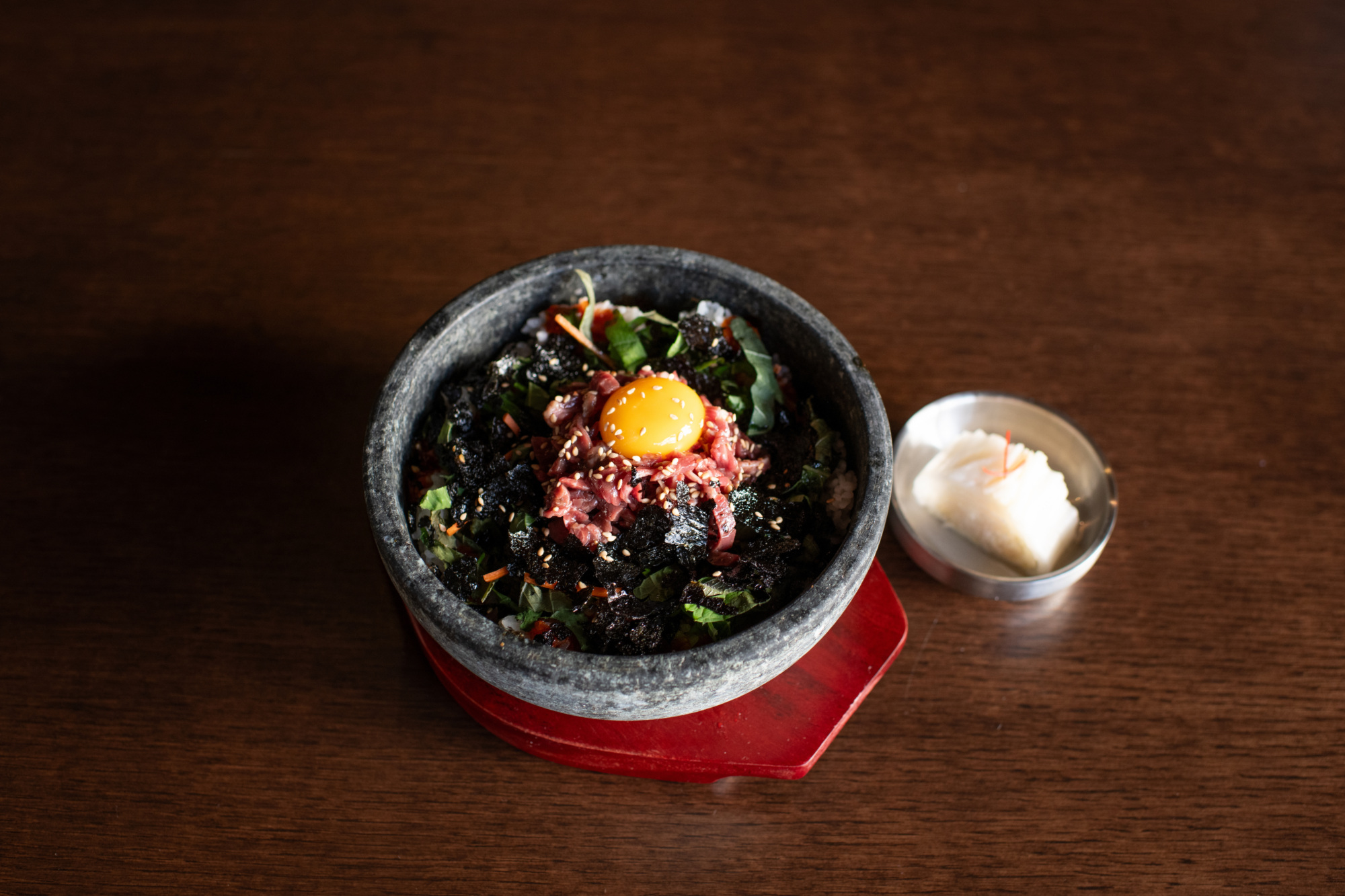
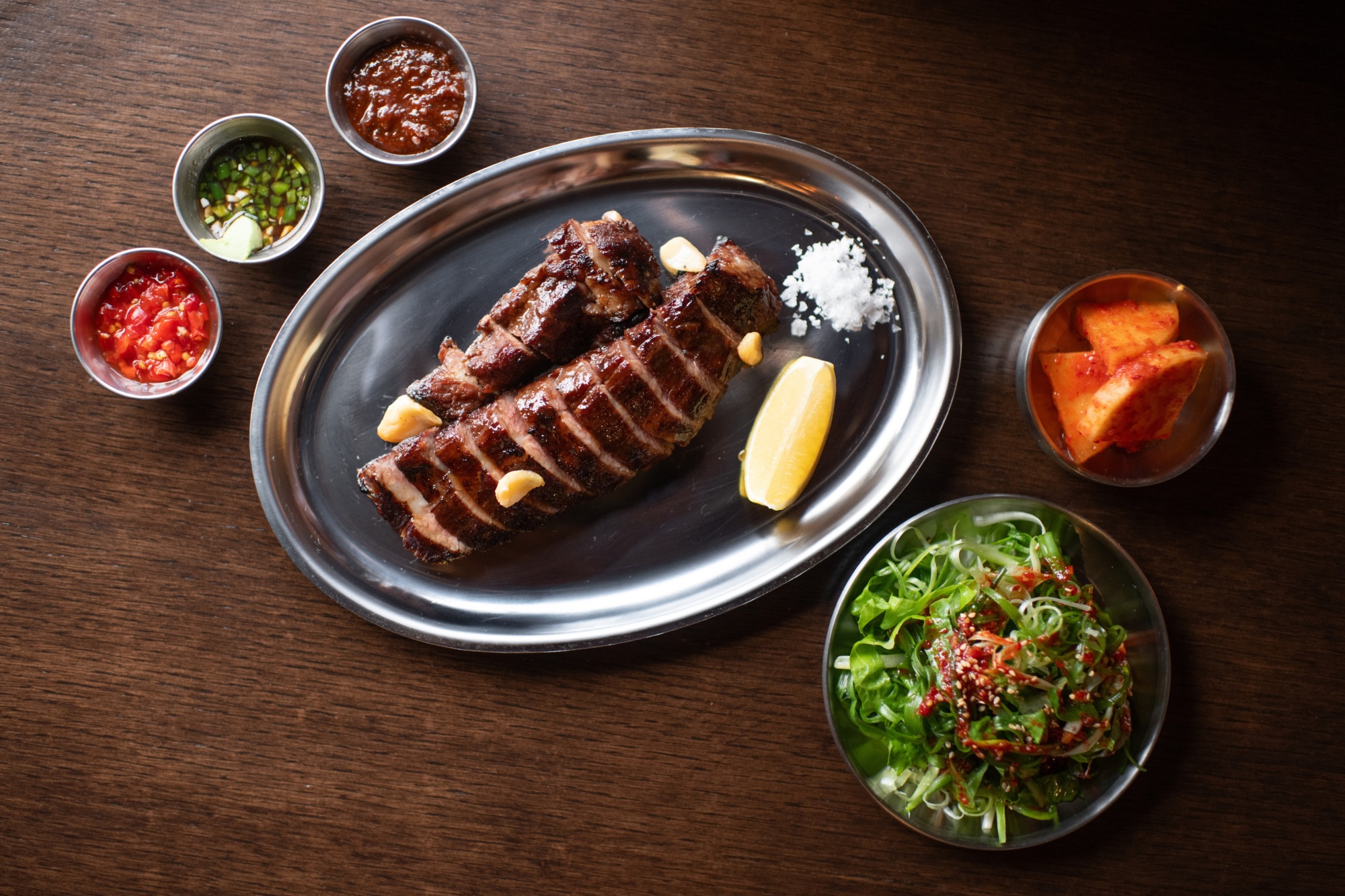
With a kitchen led by chef Curtis Park (formerly of Benu, Commis, and Daniel) and a bar program by Zak Kellum (RVR), seasonality plays a big role in what you’ll find on the menu. But as a whole, there’s a comforting quality to the dishes here. Classic favorites like pork-and-chive dumplings, soy-garlic chicken wings, a spicy stew with silken tofu and wagyu share menu space with more whimsical choices, including a tilefish aguachile swimming in a cold kimchi broth and a Caesar salad made crunchy with puffed rice. And for dessert, there’s a cinnamon-y hotteok paired with vanilla ice cream.
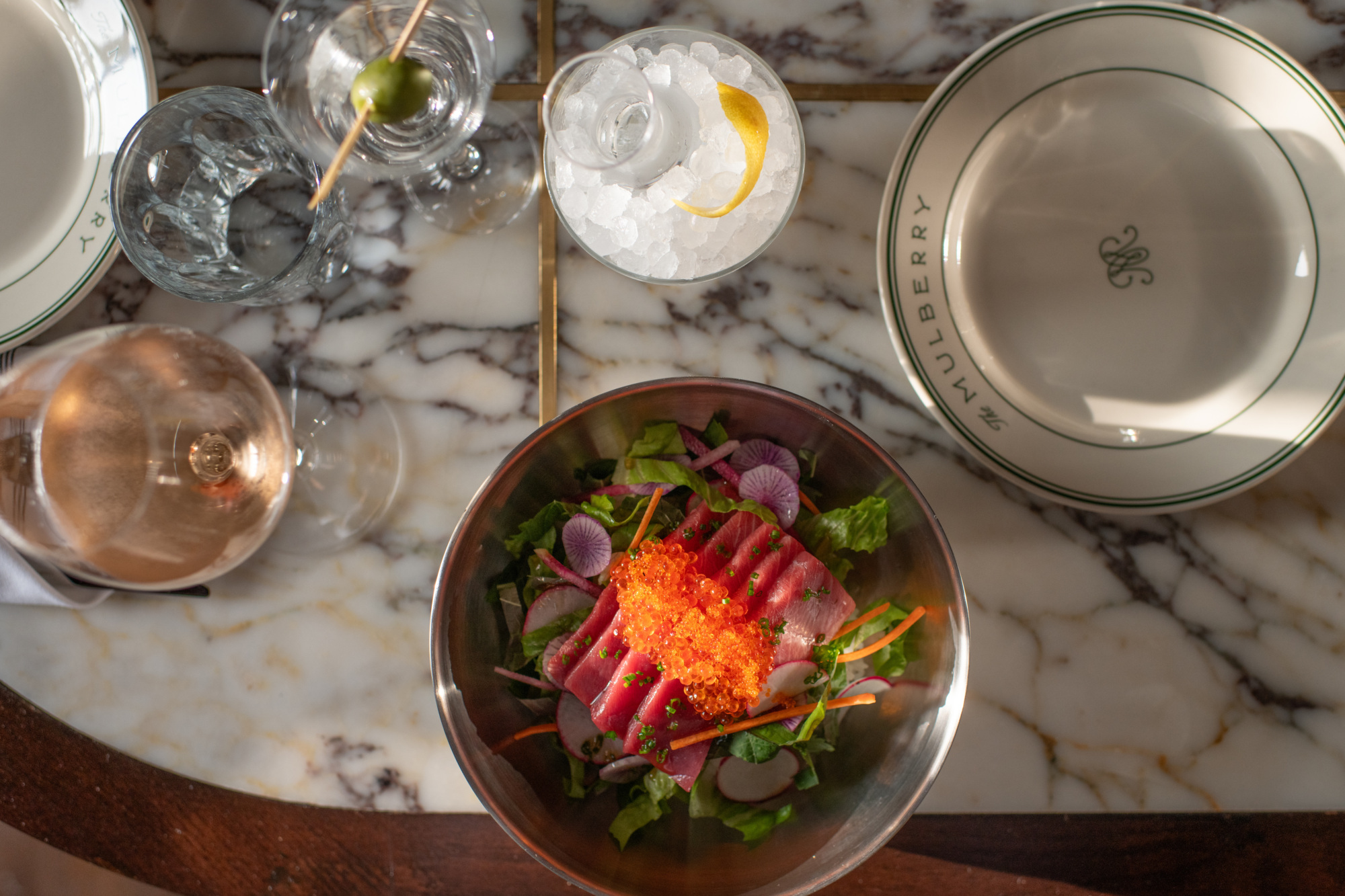
Much of what happens in the kitchen informs what happens at the bar. Chon says that Kellum uses a lot of the seasonal ingredients in the pantry to build Korean-inspired drinks, but there isn’t a stringent focus to give every cocktail a Korean twist. One of the playful standouts from the list is the Banana Milk, a boozy take on a popular kids’ drink in Korea; here, it mixes walnut milk, Clement Bana Canne (a rhum and banana liqueur), and Sang Makgeolli to create a rich frozen beverage. There’s also the Baesuk White Negroni, a mezcal-based cocktail with Asian pear and Antica Torino’s Bitter Bianco.
The Mulberry Is For Everyone
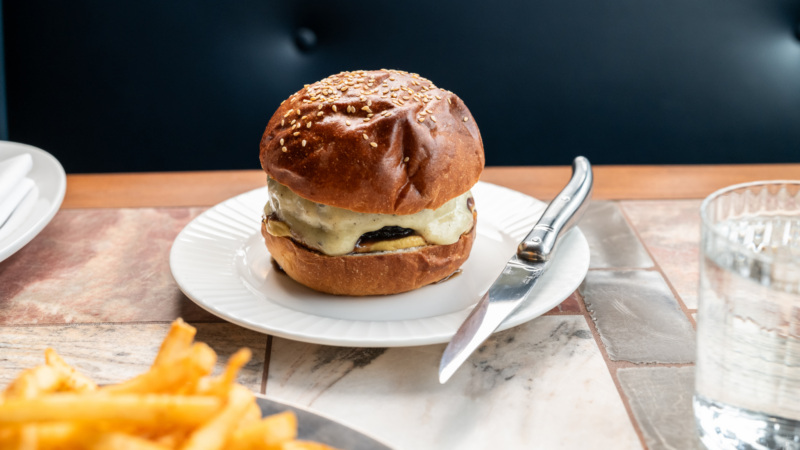
Chon, a mother of two, understands how challenging it can be to find a restaurant you want to hang out in that also feels family-friendly. So it was important that the Mulberry adopt a casual, everyone-is-welcome atmosphere. She says the restaurant has naturally evolved to accommodate families with young children earlier in the evening, when invariably, the fried chicken, dumplings, and burgers fly off the line.
But establishing the restaurant as a neighborhood hangout was equally crucial to her vision, especially given the investment into the drinks program. “Having a local customer base is really important to us,” she says. “We need people to be able to walk in, come into the bar, and enjoy a drink or two,” Chon says, with the goal of ultimately creating a steady stream of regulars: “We love when people come in, see someone they know, and they catch up at the bar. It creates a convivial environment that you can’t really manufacture.”