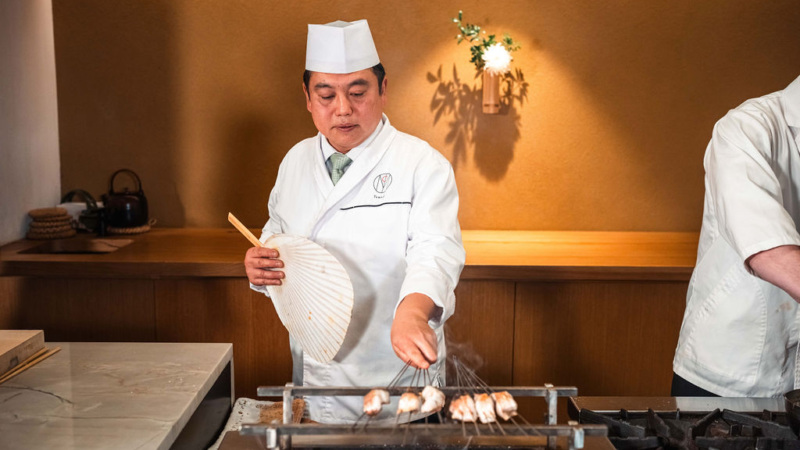
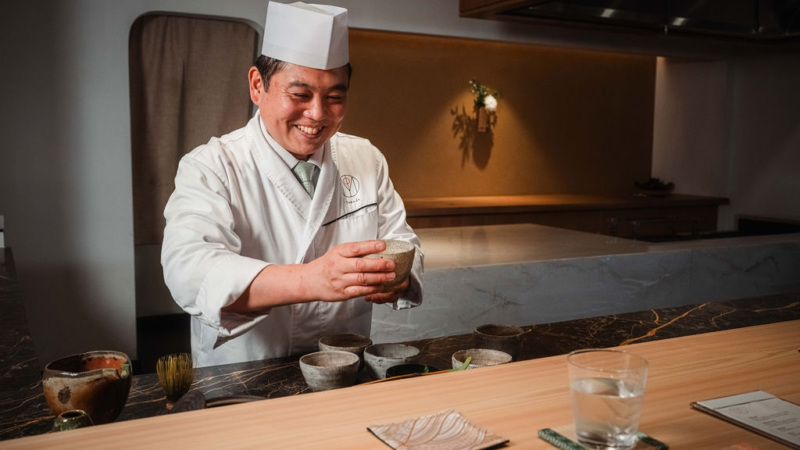
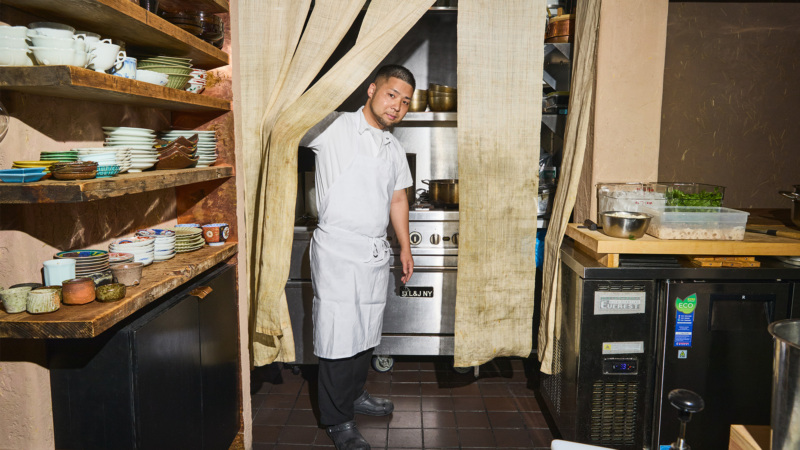
Isao Yamada at the counter of his namesake restaurant.
Isao Yamada at the counter of his namesake restaurant. Photo by Ben Hon for Resy

Behind the LineNew York

12 Hours at Yamada: Everything That Goes Into a Single Kaiseki Service

Published:

If you’ve ever wondered what it’s like behind the scenes of a restaurant, this is for you. In Behind the Line, photojournalists take you inside the kitchen for a unique perspective on everything that goes into a single day of service, and the people who make it all happen.
 
In this edition, we get a glimpse into a day at New York’s Yamada, a kaiseki restaurant from a veteran of the craft, from the lens of photographer Ben Hon, also known as @stuffbeneats on Instagram.


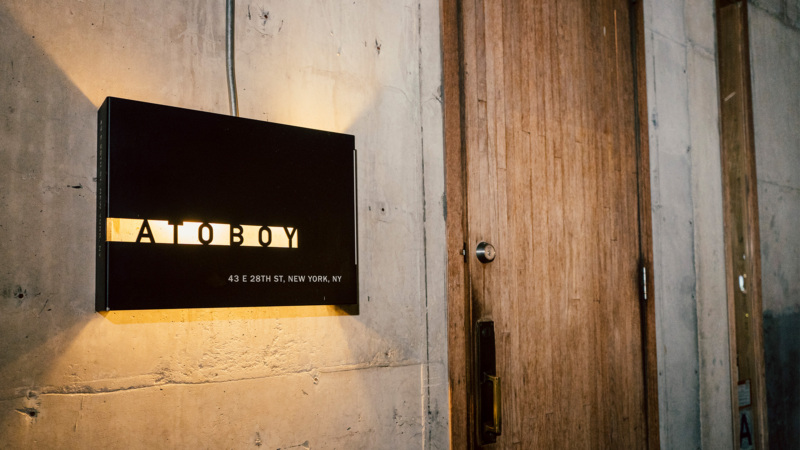
In the heart of Chinatown, behind an unassuming door, chef Isao Yamada quietly crafts the food that has defined his life. Born in Fukuoka, Japan, and trained in the legendary kitchens of Kyoto Kitcho and Hanzuiryo, he has spent decades perfecting kaiseki, a multi-course, hyper-seasonal Japanese style of fine dining, from running his own restaurant in Kyushu to introducing New York to kaiseki at Brushstroke with David Bouley, where he earned a Michelin star. Now, at his namesake counter, Yamada blends the elegance of that tradition with a deeply personal touch. Every element, and each ingredient is the result of relationships he’s built over years with fishermen, farmers, and artisans who share his commitment to quality.

Yamada’s $295 per person seasonal kaiseki tasting menu is served in just two seatings each night at 5:30 and 8:30 pm, with no more than 11 guests at a time for a total of 22 lucky diners each evening. The kitchen team is small, but every member is exceptionally talented and completely focused, moving with quiet precision from one course to the next. After spending a full day behind the scenes, witnessing that dedication unfold, I can assuredly say we are lucky to have a place like this, a restaurant where every detail tells a story and every plate carries the weight and beauty of a life devoted to the craft.

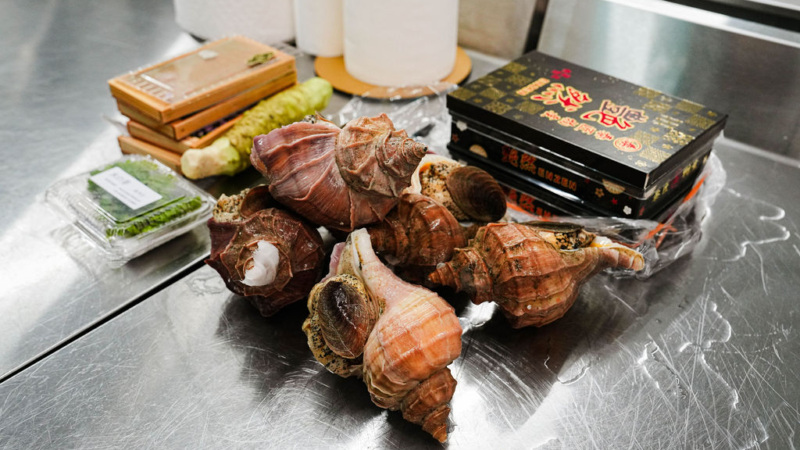

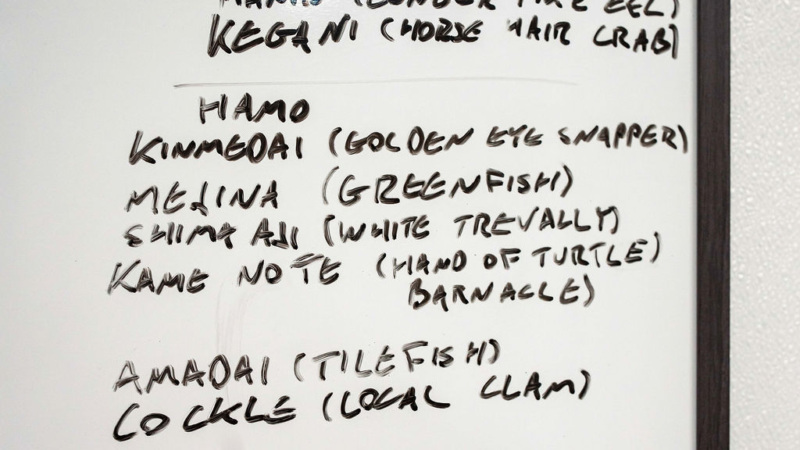
Photo by Ben Hon for Resy

8:07 a.m.

Before chef Yamada even gets to the restaurant, the morning delivery arrives. It’s a mix of local finds and specialties flown in from Japan. Prep cook Nelson Wu sorts everything by type, getting it ready for Yamada’s inspection before labeling and prepping for service.

Photo by Ben Hon for Resy

Photo by Ben Hon for Resy

9:03 a.m.

Fresh off the subway from Brooklyn, chef Yamada navigates Chinatown’s lively morning bustle. On some days, he detours for flowers or peak-season produce, small stops that quietly set the tone for the service ahead. As someone who personally loves this neighborhood, I couldn’t help but smile, thinking how lucky I’d be if this was my daily commute.

Photo by Ben Hon for Resy

Photo by Ben Hon for Resy

9:21 a.m.

Sous chef Troy Cavins lists the day’s fresh arrivals, a mix of Japanese and local seafood, so the entire team knows what is on the menu. Since not everyone speaks Japanese, the board becomes a clear, shared reference point for the kitchen.

Photo by Ben Hon for Resy

Photo by Ben Hon for Resy

9:38 a.m.

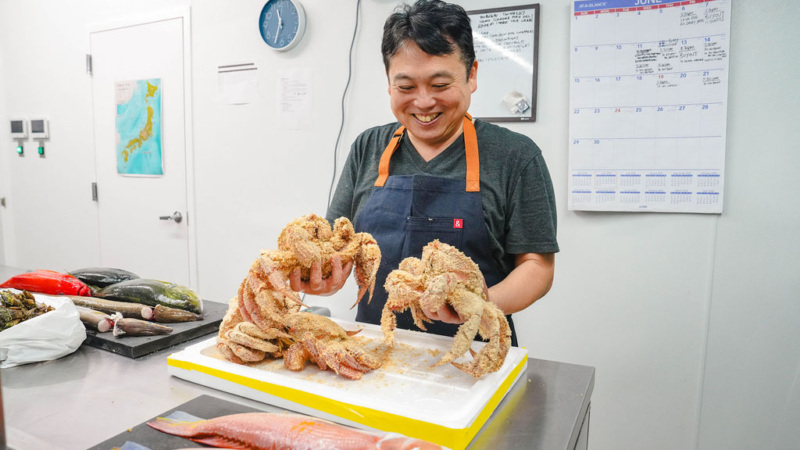
It’s very clear there is no room for error in this kitchen. Yamada depends on the absolute best from his suppliers because he can’t make a quick trip to a nearby market if something isn’t perfect. Here, he inspects a shipment of live hairy crab (kegani) from Hokkaido, along with the morning’s other seafood, checking which ingredients are still alive, from crabs to cockles, to ensure everything is at peak freshness before service.
Photo by Ben Hon for Resy

Photo by Ben Hon for Resy

9:42 a.m.

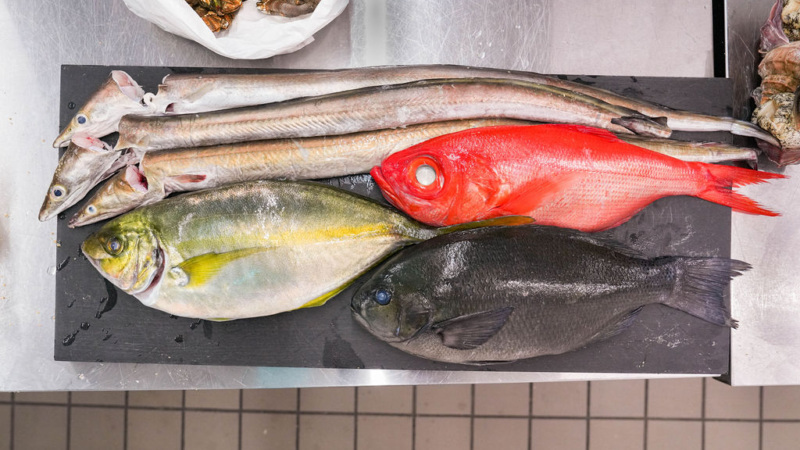
A colorful lineup of the day’s catch includes hamo (summer pike eel), shima aji (amberjack), kinmedai (golden eye snapper), and mejina (greenfish), along with abalone and kame no te (Japanese goose barnacle). The freshness is remarkable, and each fish looks immaculate. Still, Yamada examines each one for telltale signs of quality: bright eyes, intact scales, a clean scent, and healthy fat content that promises deeper umami.

Photo by Ben Hon for Resy

Photo by Ben Hon for Resy

10:45 a.m.

During seafood prep, abalone is meticulously cleaned, then marinated in sake and kombu seaweed. From there, it is gently steamed for three hours at 100 degrees Celsius, a slow process that transforms it into something tender and deeply flavorful by the time it reaches the plate.

Photo by Ben Hon for Resy

Photo by Ben Hon for Resy

11:03 a.m.

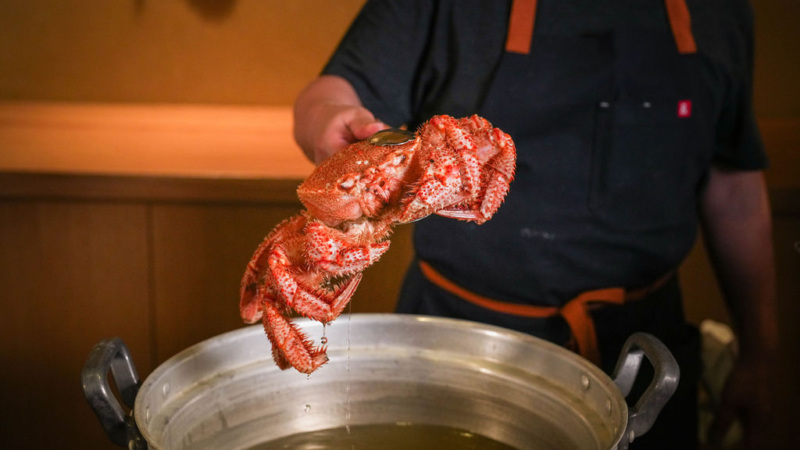
The Hokkaido kegani, or horsehair crab, is carefully boiled in salted water for exactly 10 minutes. Once cooked, it is immediately plunged into an ice bath to stop the cooking process and lock in its sweet, delicate flavor. Then, with patience and precision, the meat is carefully extracted from the shell — a meticulous process that takes about 45 minutes from start to finish.

Photo by Ben Hon for Resy

Photo by Ben Hon for Resy

11:48 a.m.

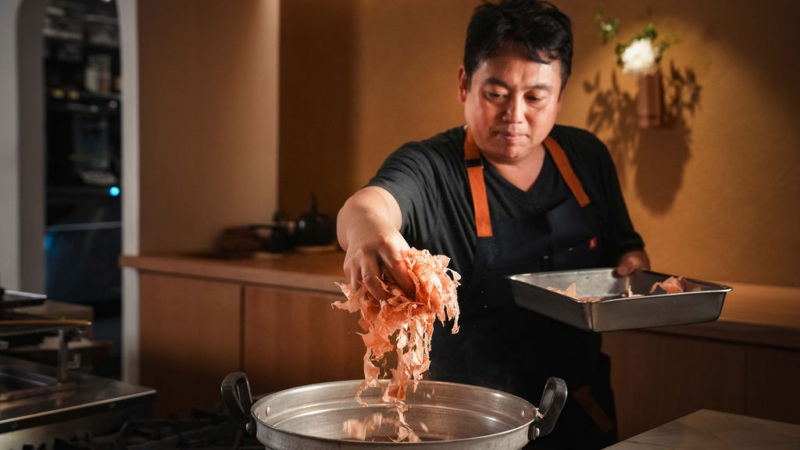
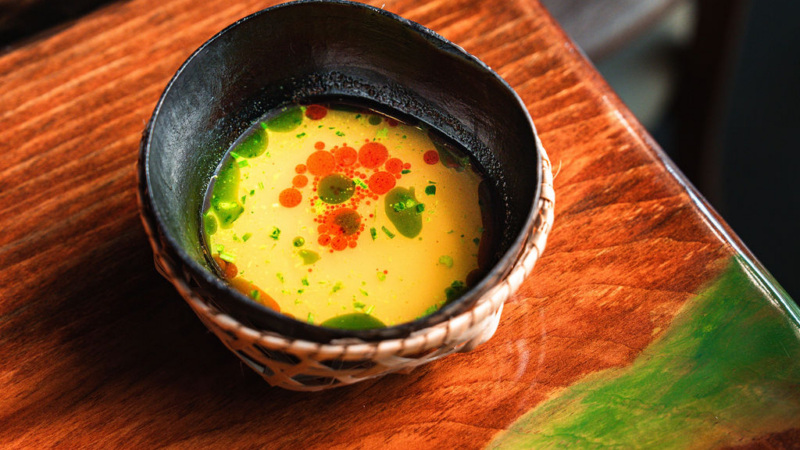
Dashi is a cornerstone of Japanese cooking and a foundational element in many kaiseki dishes. For the dashi at Yamada, the chef adds katsuobushi (dried bonito flakes) to the pot, creating a clear, umami-rich broth that will quietly support much of the evening’s menu.

Photo by Ben Hon for Resy

Photo by Ben Hon for Resy

12:21 p.m.

Chef Yamada slices and skewers the amadai, or tilefish, preparing it for the grill. Seeing how deliberate and precise he is with each cut really highlights the care that goes into every step. This prep ensures the fish cooks evenly and develops a crisp skin, resulting in a well-balanced, flavorful bite.

Photo by Ben Hon for Resy

Photo by Ben Hon for Resy

1:08 p.m.

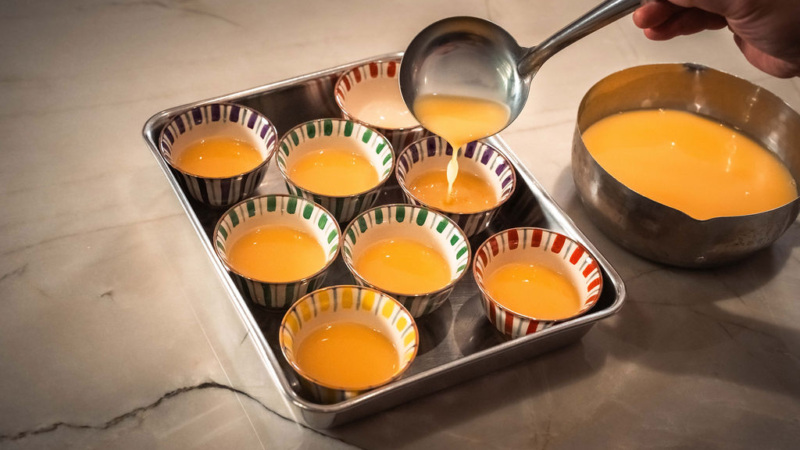
Chawanmushi looks deceptively simple, but watching chef Yamada prepare it reveals the incredible skill and precision behind each bowl. This delicate Japanese egg custard is made from a mix of egg, dashi, and soy sauce. It is gently pre-steamed at 92 degrees Celsius to set, then finished during service at 86 degrees Celsius, a careful process that keeps it soft, smooth, and perfectly set when it reaches the table.

Photo by Ben Hon for Resy

Photo by Ben Hon for Resy

1:32 p.m.

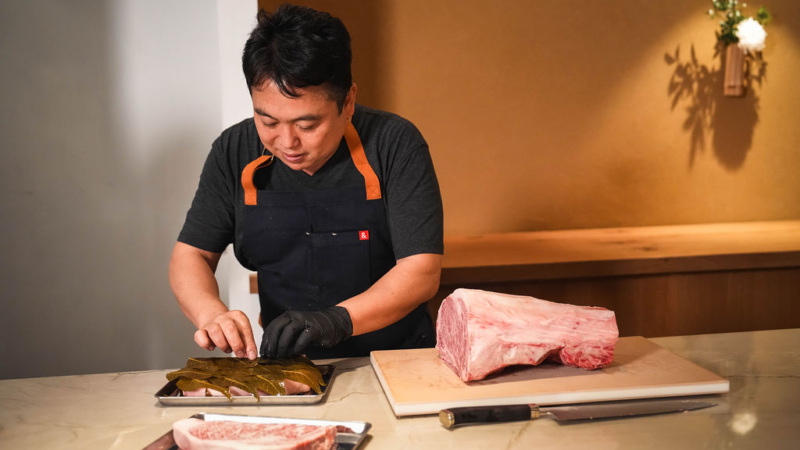
After finishing the fish prep, Yamada turns to Japanese A5 wagyu from Eda Organic Farm in Miyazaki, prized for its rich marbling and depth of flavor. He wraps the beef in cherry leaves (sakura leaves) and leaves it to rest for about three days, allowing the gentle aroma and subtle floral notes to infuse into the meat before cooking.

Photo by Ben Hon for Resy

Photo by Ben Hon for Resy

2:13 p.m.

Hamo, or pike conger, is prized in Japanese cuisine for its delicate flavor and firm, tender texture, but it is also notorious for its countless fine bones. Preparing it requires a specialized technique called honegiri where precise cuts break the bones without damaging the flesh. It’s fascinating to watch Yamada prepare the hamo, working through the fillet, opening the stomach, removing the backbone, and softening the texture so the hamo could be enjoyed without the sharp bite of its bones.

Photo by Ben Hon for Resy

Photo by Ben Hon for Resy

2:28 p.m.

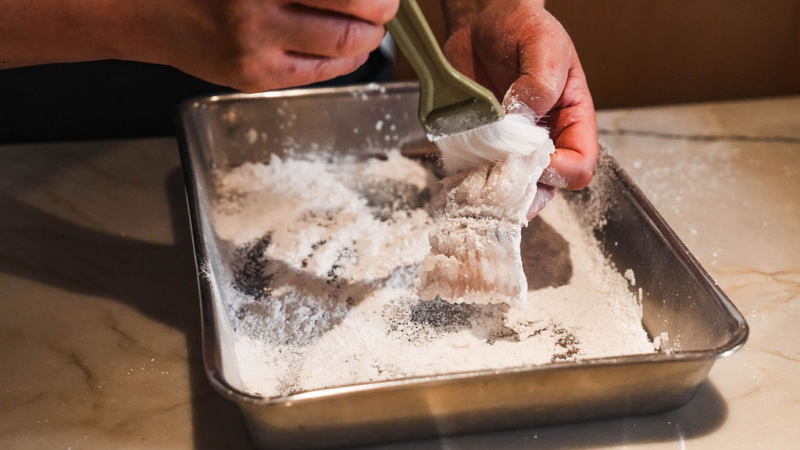
The hamo gets sliced into portions and then lightly dusted with kuzu starch (kuzuko), made from Japanese arrowroot. This fine coating protects the delicate flesh, seals in flavor, and creates a softer texture once cooked, while also giving the surface a smooth, refined finish that’s ideal for presentation.

The prepared hamo is briefly blanched in a mix of water, sake, and sea salt for just a few seconds to set the flesh and enhance its delicate flavor. It will be steamed again during service to finish cooking and preserve its tender texture.

Photo by Ben Hon for Resy

Photo by Ben Hon for Resy

2:40 p.m.

Wagashi, traditional Japanese sweets, are crafted here from white bean paste. The pink version is tinted with dragonfruit powder, while the blue gets its color from butterfly pea powder. Small red bean paste balls form the center, and Yamada uses a bamboo strainer to press the bean paste into delicate shreds, a meticulous step that defines both the look and texture of the finished sweet.

Photo by Ben Hon for Resy

Photo by Ben Hon for Resy

3:21 p.m.

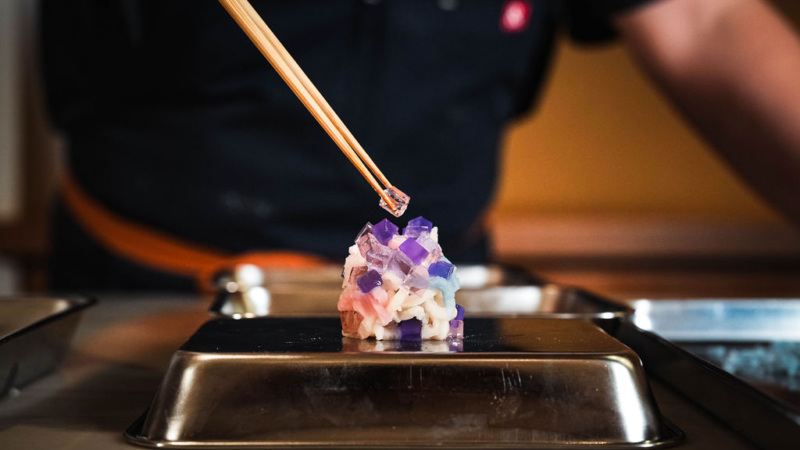
The final touches are made to the wagashi, topping it with gem-like gelée cubes colored with butterfly pea powder and dragonfruit powder. The result is a vibrant and eye-catching finish to the delicate, hand-crafted sweet.

Photo by Ben Hon for Resy

Photo by Ben Hon for Resy

4:13 p.m.

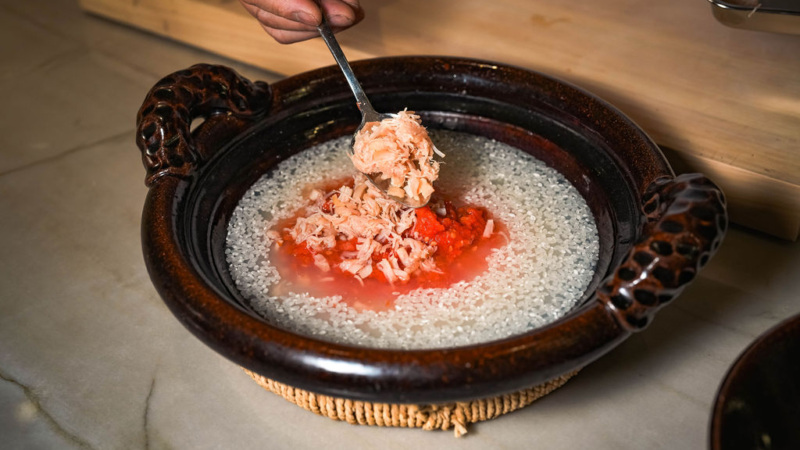
Chef spoons dried scallop and rich tomato paste into the donabe, the base of a dish built on layers of flavor, and one of the final courses of the night. Using fragrant Tsuyahime rice, he sets the stage for a slow, gentle cook that will bring out the natural sweetness and umami of the seafood along with the rich depth of the tomatoes.

Photo by Ben Hon for Resy

Photo by Ben Hon for Resy

5:00 p.m.

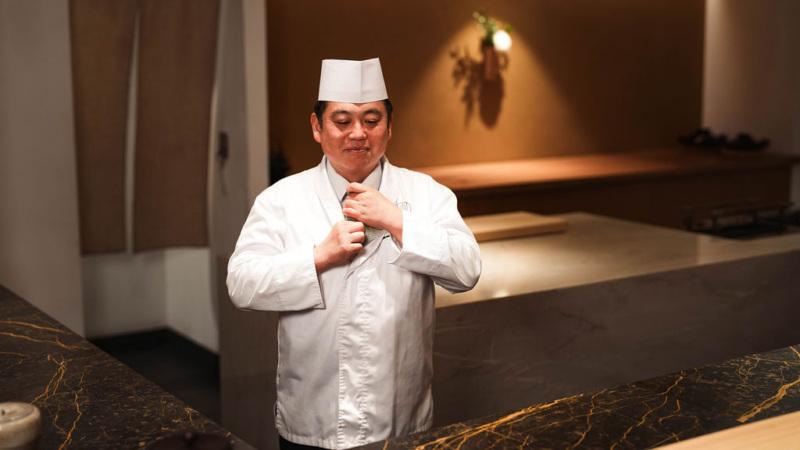
At 5 p.m., Yamada changes into his crisp white uniform, a quiet, daily ritual that marks the shift from afternoon prep to the focus and rhythm of evening service.

Photo by Ben Hon for Resy

Photo by Ben Hon for Resy

5:15 p.m.

Yamada fires up binchotan, the prized Japanese white charcoal made from Ubame oak. Dense and long-burning, it reaches searing temperatures with almost no smoke or odor, allowing ingredients to cook quickly while keeping their flavors pristine. As the sparks fly, it signals the grill will soon be ready for service.

Photo by Ben Hon for Resy

Photo by Ben Hon for Resy

5:51 p.m.

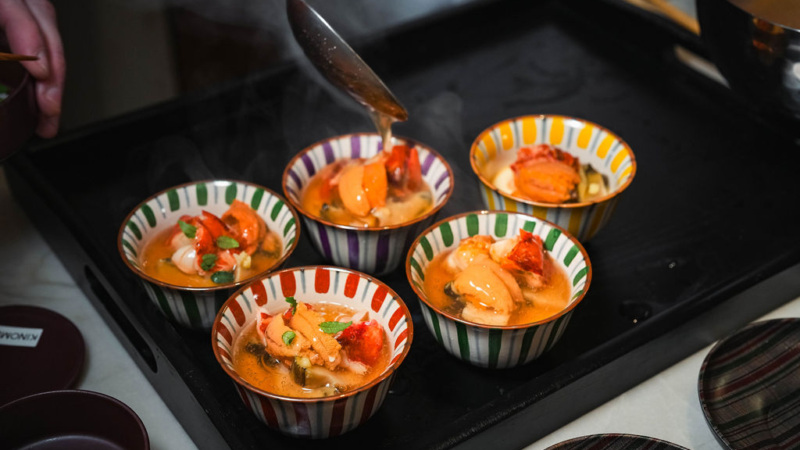
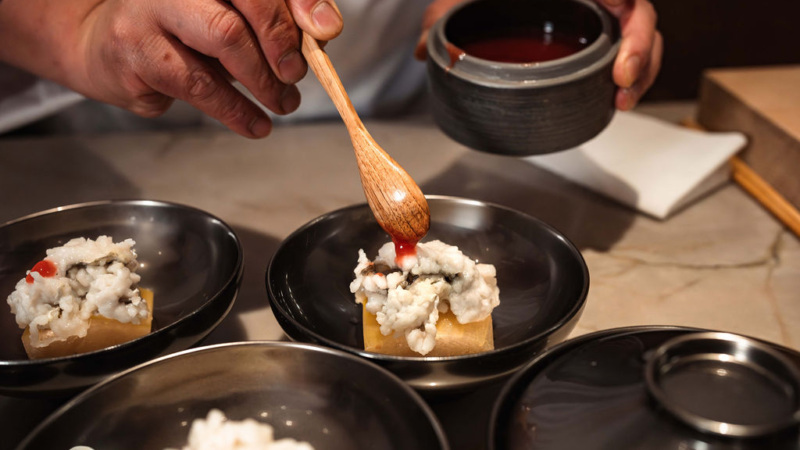
For service, the chawanmushi gets a gentle second steam before being topped with Maine lobster, Hokkaido uni, and steamed Santa Barbara abalone. A warm dried scallop ankake made with dashi is spooned over the top, along with sweet English peas, adding richness and color to the delicate custard.

Photo by Ben Hon for Resy

Photo by Ben Hon for Resy

6:03 p.m.

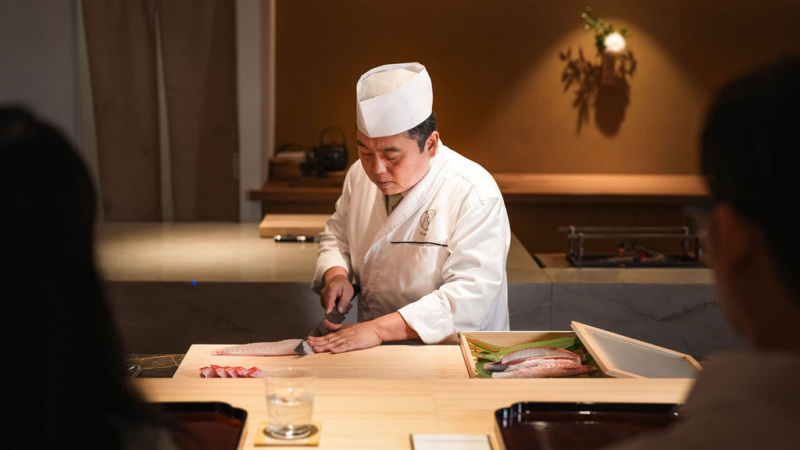
Yamada slices kinmedai for the sashimi course, part of a selection that typically features three to four different fish. The preparation happens right in front of the guests, adding an element of theater to the service.

Photo by Ben Hon for Resy

Photo by Ben Hon for Resy

6:23 p.m.

During service, the hamo is steamed in the combi oven for two minutes, then placed over tender fuzzy melon sourced from the farmer’s market. A spoonful of ume purée is added on top, with a warm bonito broth to be poured over just before serving.

Photo by Ben Hon for Resy

Photo by Ben Hon for Resy

6:43 p.m.

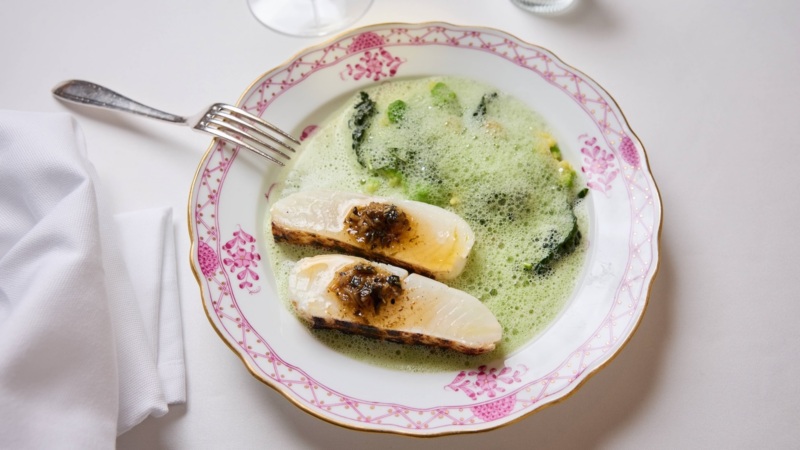
Yamada grills the amadai (tilefish) over the intense heat of binchotan, carefully turning the skewers for about 10 minutes. With a fan in hand, he adjusts the airflow to control the heat, coaxing out perfectly even cooking and a skin that crackles with crispness.

Photo by Ben Hon for Resy

Photo by Ben Hon for Resy

7:02 p.m.

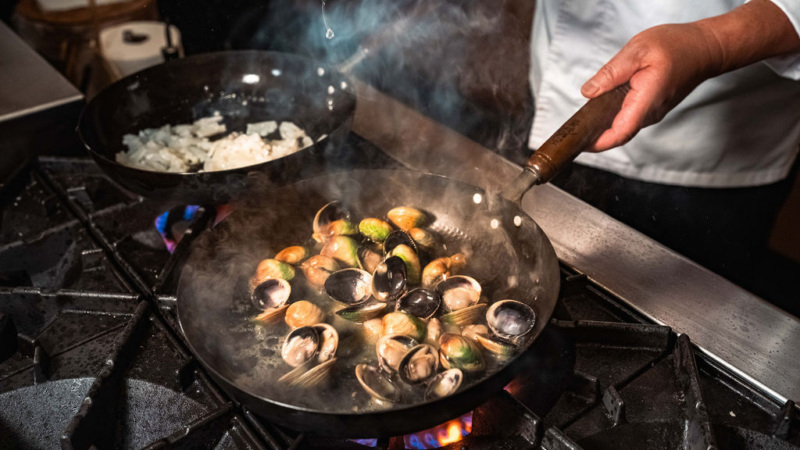
Yamada cooks fresh cockles and squid for the donabe course, coaxing the shells open as they release their briny, ocean-sweet juices. The squid turns tender in the pan, soaking up the seafood’s richness and adding another layer of flavor to the dish. The aroma is so overpowering and so good, I nearly started drooling, thankfully managed to keep it together.

Photo by Ben Hon for Resy

Photo by Ben Hon for Resy

7:22 p.m.

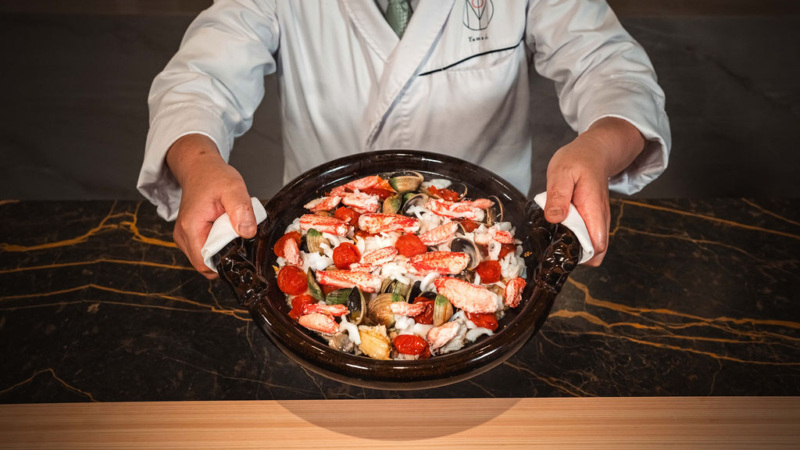
The finished donabe is presented to the guests, brimming with vibrant colors from the crab, cockles, squid, and tomatoes. As steam curls gently from the pot, I find myself completely mesmerized. The rising warmth carries a subtle scent that promises this will be delicious.

Photo by Ben Hon for Resy

Photo by Ben Hon for Resy

7:50 p.m.

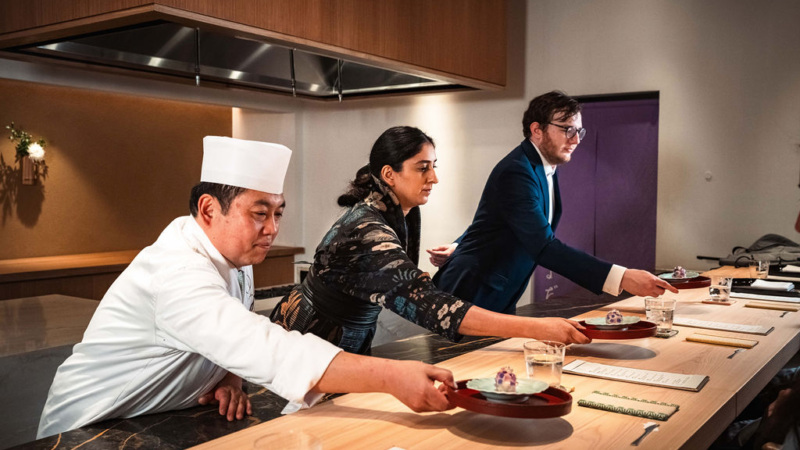
Front-of-house team members Sabrina Scott (center) and Eli Gold join the chef in presenting the final course, wagashi, to the guests. The handcrafted sweets mark a graceful close to the evening’s kaiseki experience.

Photo by Ben Hon for Resy

Photo by Ben Hon for Resy

8:01 p.m.

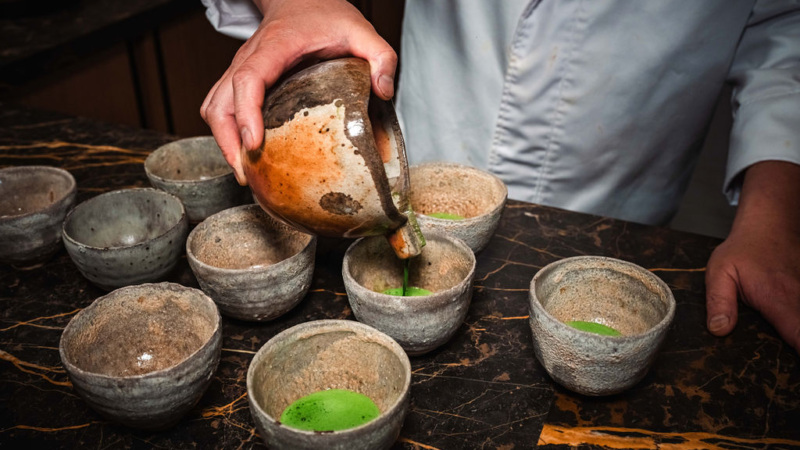
After the wagashi dessert, usucha is prepared using matcha sourced from a renowned tea producer in Uji, Kyoto. The vibrant green tea is measured with care before being whisked into a smooth, frothy finish. The matcha is poured into each cup, its rich aroma filling the air. Cherished for centuries in Japanese tea culture and central to traditional tea ceremonies, it brings a sense of quiet tradition and grace to the end of the meal.

Photo by Ben Hon for Resy

Photo by Ben Hon for Resy

8:05 p.m.

Serving the matcha with a genuine smile, Yamada closes the meal with a moment that feels both like a heartfelt farewell and a celebration of tradition. It reminded me that food is more than taste. It’s a connection and a feeling that lingers long after you leave the restaurant.

Photo by Ben Hon for Resy