Ten Years Later, Niu Kitchen’s Cold Tomato Soup Is Still the One to Beat
Published:
It may look like gazpacho, but the cold tomato soup at Niu Kitchen doesn’t behave like any Spanish gazpacho — or starter, for that matter — that you’ve ever had before.
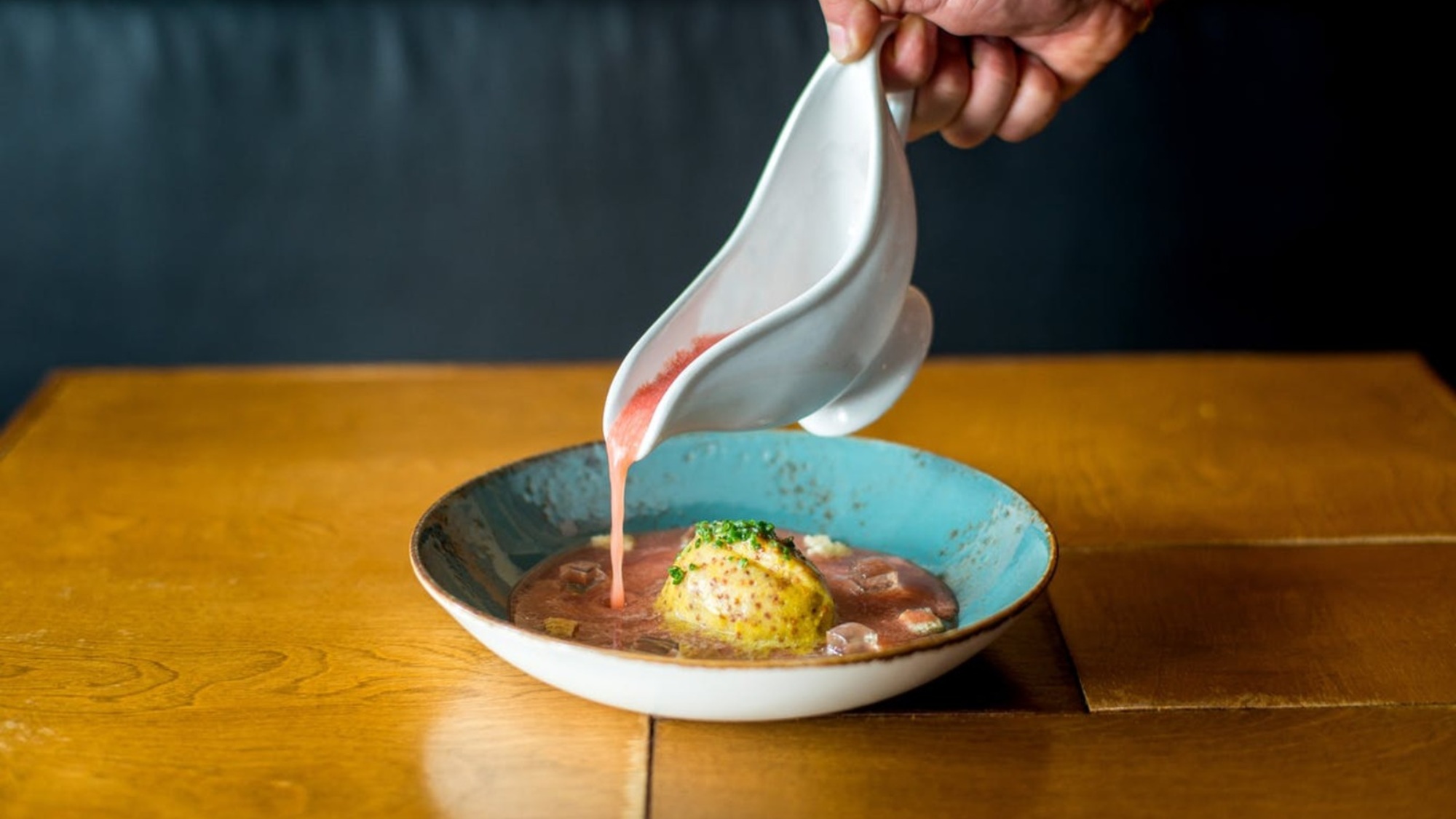
The broth is nearly translucent, lightly tinted red and poured tableside or served with a scoop of shimmering yellow sorbet floating in the center. Basil oil drifts across the top in slow-moving ribbons, and cubes of toasted bread cling to the edges. Light and traditional at first glance, it’s the kind of dish that stops conversation after the first bite.
“I wasn’t thinking about gazpacho,” says chef Deme Lomas. “It was winter in Spain, but here it was so hot. I wanted something really cold that respected the product.”
That product is tomato: fresh, ripe, and raw. Lomas peels and seeds heirloom tomatoes, blends them with salt, and strains the mixture into a clear, acidic broth. Depending on the season, the tomatoes come from California or Mexico, but ripeness and flavor matter more than geography. The result tastes pure, removed of anything unnecessary.
The most unexpected element and the true star of the dish is the unique mustard sorbet. It’s not made in-house, but that’s intentional. “You don’t have to make everything yourself,” Lomas says. “If there’s a professional baker making the best bread, let them make your bread. If there’s a professional gelato maker creating great gelato, work with them.”
One Great Dish
Lomas collaborated with a local Italian chef to test more than 30 gelato variations before landing on the final formula that guests now see in the dish. The gelato is composed of green mustard, champagne vinegar, lemon juice, sugar, and salt. It’s tart and sinus-clearing on its own, but once it melts into the soup, it brings an unexpected mix of creaminess and bite.
The sorbet is meant to melt into the broth, mellowing its sharpness and giving the soup a silkiness without any cream. “When I make a tomato salad, I usually make a mustard vinaigrette,” Lomas says. “So for me, it’s like two ingredients that they might find themselves.”
The soup is finished with basil-infused oil and cubes of toasted bread. The oil is made in-house by gently steeping basil leaves in neutral sunflower oil for several hours. “You can make it with olive oil, but olive oil is too strong,” Lomas says. “I want to highlight the flavor of the tomato.” The bread adds contrast, a crisp crunch that cuts through the broth and melting sorbet. “It gives you something to chew,” he says.
It’s not about technique. It’s about letting the ingredients speak.— Deme Lomas
The dish has stayed on the menu since the restaurant opened in 2014, even as nearly everything else has rotated out. “It has been 10 years now,” Lomas says. “But every time I take out any of the dishes we used to make, the customers are like, ‘Why did you do that?’”
For Lomas, the soup sums up what Niu Kitchen is about. “It’s not traditional, but it’s something I would make in Barcelona,” he says. “It’s not about technique. It’s about letting the ingredients speak.”
Naturally, first-time diners are encouraged to begin with the dish. “It allows you to start with something that will open your mouth for other things,” he says. “If you eat heavy dishes, after two or three things, it’s more than enough. But this lets you keep going.”
Surrounded by gazpachos, Niu Kitchen’s cold tomato soup still feels its own. Confident in its simplicity, and exactly what you want when it’s too hot to think.
A fourth-generation Miamian, Olee Fowler knows every corner of the city. She spent a decade as the editor of Eater Miami, and now as a freelance writer, she captures the stories that make Miami unique. When she’s not exploring Miami’s newest restaurants and bars, you can find her at home with her dogs, Foster and Peanut, or cheering on her beloved Florida Gators. And yes, that’s probably a Coke Zero on her desk.