Why Sora Craft Kitchen Is a Singular L.A. Restaurant, in Five Dishes
Published:
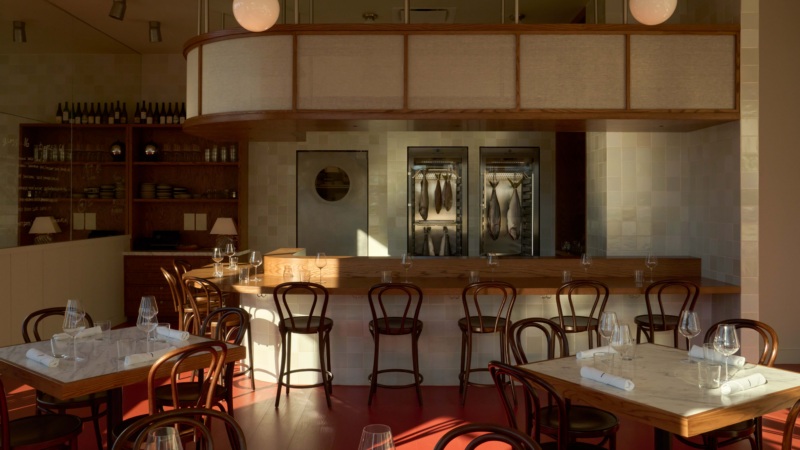
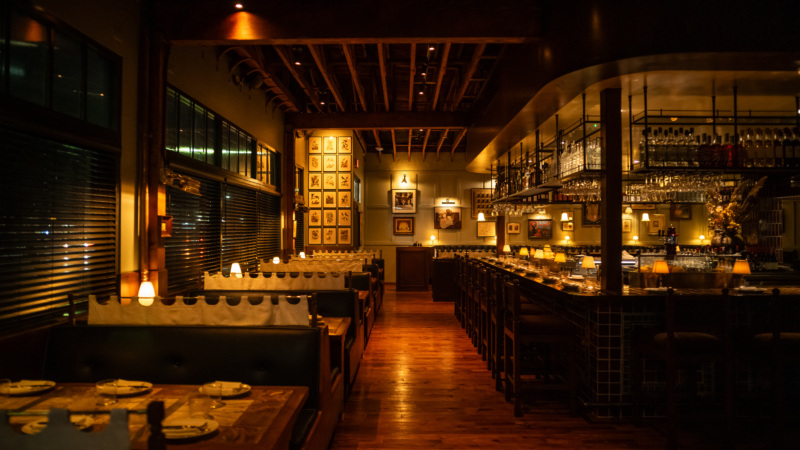
Set in a quiet, industrial strip of Downtown’s Fashion District, flanked by computer repair and packaging shops, Sora Craft Kitchen occupies an unassuming storefront, to say the least. But once you reach the dark-green facade and enter through a pair of curtains, you’re quickly transported to another place and time.
Soulful jazz blasts on a pair of towering vintage Pioneer speakers that frame the open kitchen, where Turkish chef and owner Okay Inak grills kebabs over tall flames.
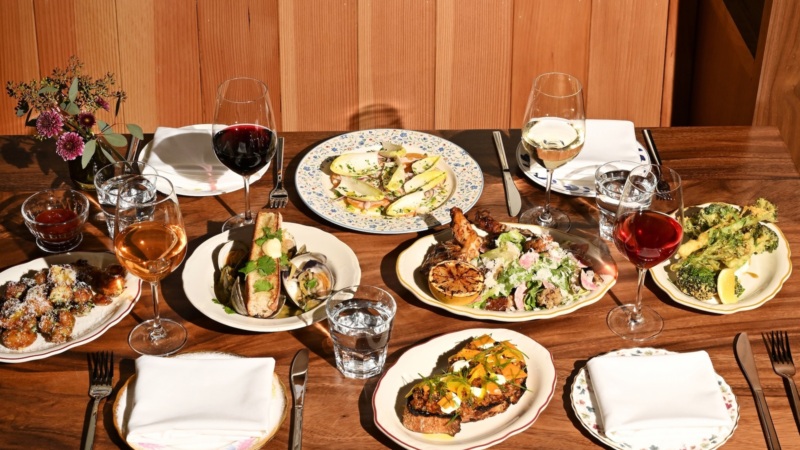
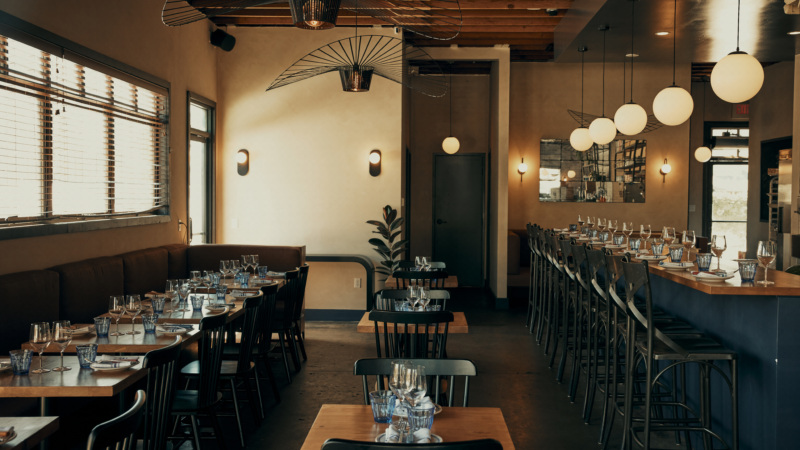
Shelves are lined with glass jars of fermented vegetables, turmeric, and togarashi, plus cookbooks on French and Andalusian cuisines. A tablet sits on a stand at the entrance for self-ordering, and diners seat themselves on minimalist, Copenhagen-made Mulgeo box chairs made from recycled cardboard. Inak weaves through the space to greet guests and brings out beautiful plates (custom-designed with ceramicist Selin Diktas from Studio Molin) of shrimp, delicately adorned with vibrant pink radish slices and mint leaves.
The 14-seat restaurant is truly a one-man operation. While Inak’s wife, Sezen Vatansever, is a partner, she’s busy at her full-time job as a physician-scientist. This leaves Inak to play the roles of chef, server, dishwasher, and interior designer, as a means to lower the high costs of operating. Sora is Inak’s chance to present a chef’s table in his own way — one that incorporates French and Japanese techniques and flavors into dishes that pay homage to his culture.

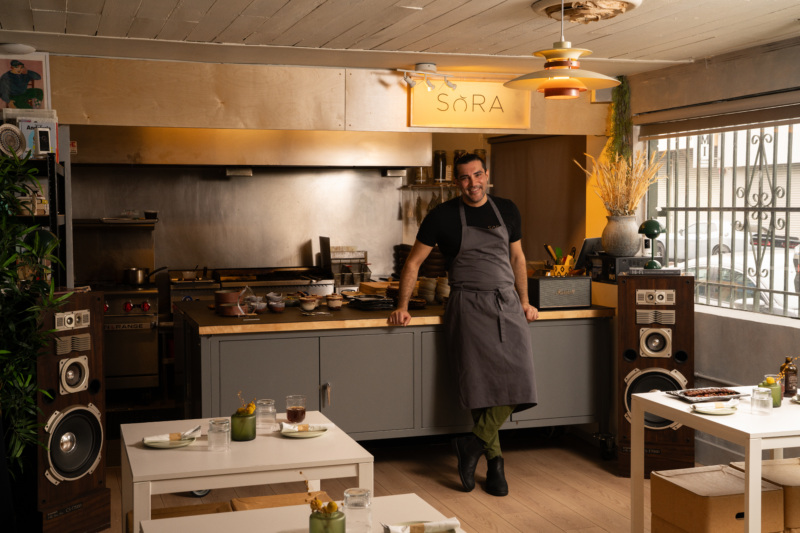
In the intimate 1,000-square-foot space, there are no barriers between Inak and his guests. He glides from kitchen to table, pausing to wash a few dishes in between, in a way that feels entirely natural. “He’s very happy because it gives him a chance to talk directly with guests,” says Vatansever of the setup.
In many ways, Sora, which means “sky” in Japanese, is Inak’s life’s work. A spearfishing hobbyist who grew up in the seaside town of Tekirdağ (a two-hour drive west of Istanbul), Inak was first introduced to the culinary world through his family’s seafood restaurant and teahouse. But at home, his mother whipped up regional Turkish dishes that leaned on fermentation and hours-long preparations — elements that he incorporates today.
In the intimate 1,000-square-foot space, there are no barriers between Inak and his guests.
In Turkey, Inak cooked at high-end restaurants, including Japanese ones, with the dream of one day working at a Michelin-starred spot. (At the time, Michelin reviews did not yet exist in the country.) But a decade ago, when Vatansever accepted a job offer to work in New York, Inak moved with her and attained his long-held ambition, landing a role as chef de partie at the acclaimed Eleven Madison Park.
Then the pandemic hit, and it halted Inak’s work. He pivoted to long-haul truck driving for a year, before eventually getting hired at Per Se. Another new job opportunity for Vatansever led the couple to move to Los Angeles, where Inak’s work at Mélisse — also a 14-seat chef’s table restaurant — provided a glimpse into actualizing his dreams of opening his own place.
Soon after Inak opened Sora in May 2024, he suffered from an on-the-job injury when a glass water dispenser shattered, rupturing a tendon in his hand. It put a kink in his plans. A doctor told Inak he couldn’t work for three months—a blow financially, but a blessing in that it gave him time to pause and conceive his dinner menu.
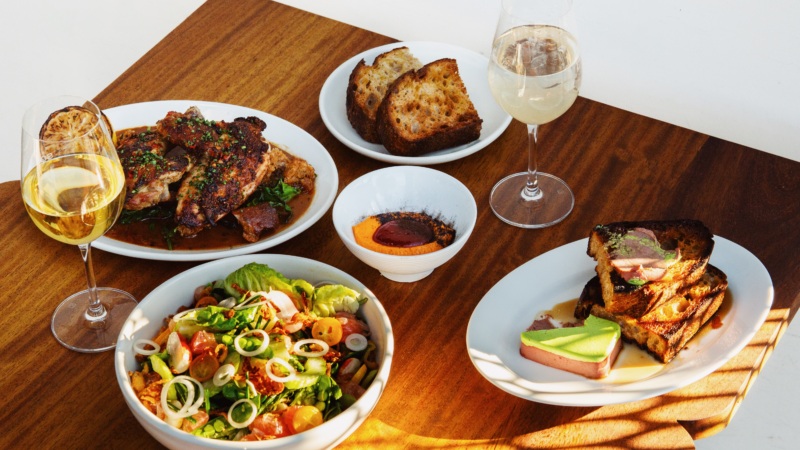
Here, Inak and Vatansever walk us through that menu, highlighting five standout dishes that best embody their ethos.
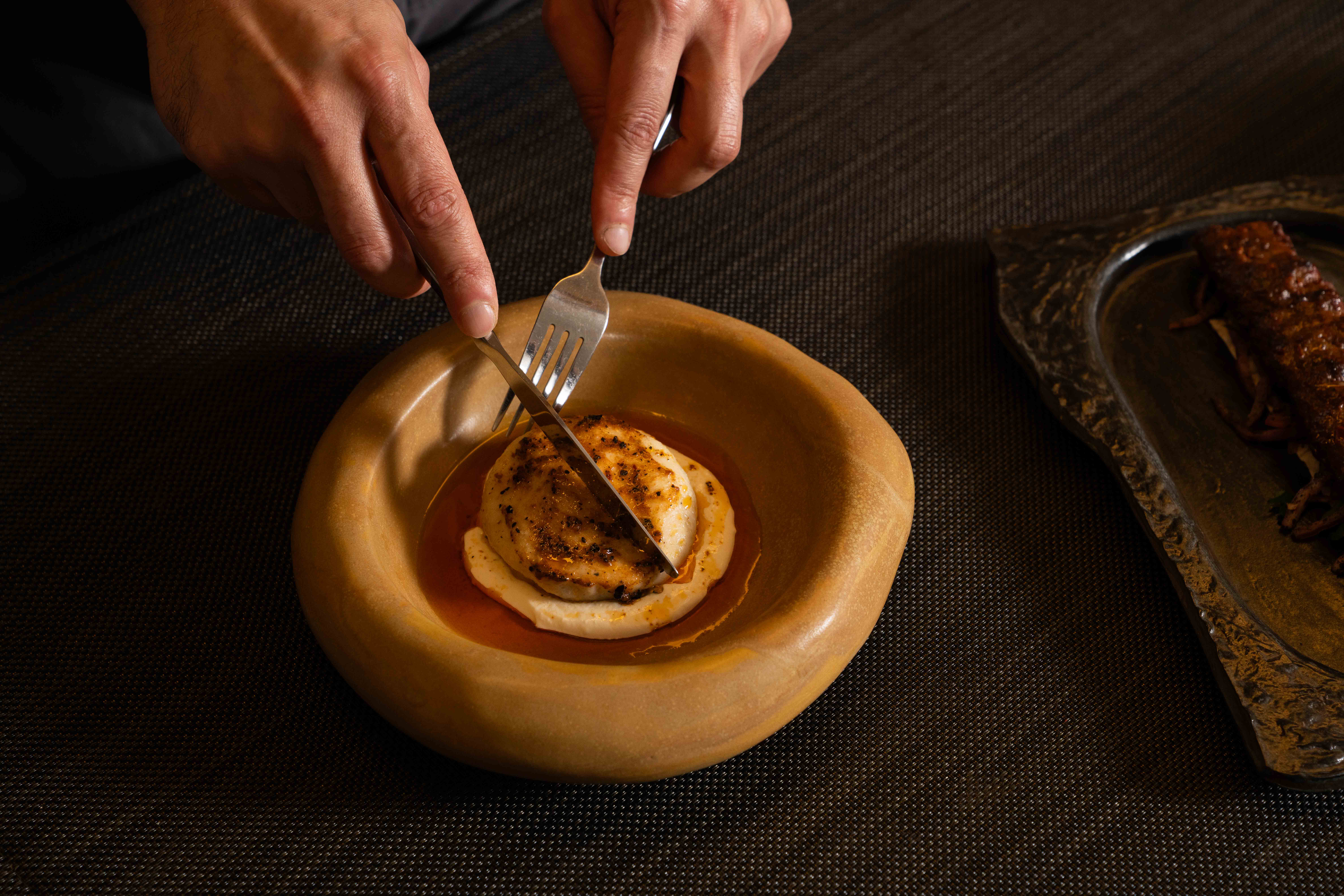
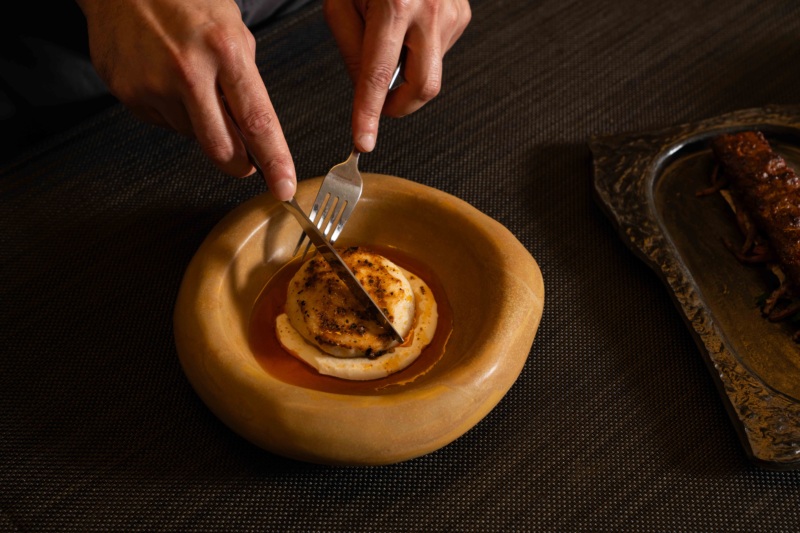
Içli Köfte (a.k.a. Kitel)
“Içli köfte is very special and hard to make,” says Inak, who spends hours working on days the restaurant is closed to prepare enough of these Turkish dumplings to last the week. It’s a specialty item that’s often reserved for home cooking and celebrations, which makes its appearance on Sora’s menu a rare sighting in L.A., says Vatansever. While there are many regional versions of içli köfte, Inak was inspired by his mother’s Southeastern Turkey iteration.
The delicate dough is made from fine bulgur wheat, a staple of Anatolian cooking, and is wrapped around a filling of slow-cooked onions and ground beef spiced with smoky Isot peppers (a.k.a. Urfa biber), Tellicherry black peppercorns, and Turkish allspice. The finished dish is dazzling in its presentation: The silky, cream-hued dumpling is covered in a vibrant red Aleppo pepper butter, lashed with house-made savory yogurt and encircled with a vibrant green chimichurri.
A breakdown of the amount of labor it takes to create this dish illustrates Inak’s devotion to perfection. He kneads the dough for an hour straight until it reaches the right texture. Bulgur dough is a finicky medium: If you leave it out for too long, it dries out and tears during the shaping process. That’s why once Inak’s finished rolling the dough, he immediately starts simmering the meat-and-onion filling, a process that takes four hours. By the time he’s assembled the kitel, much of the day has passed.
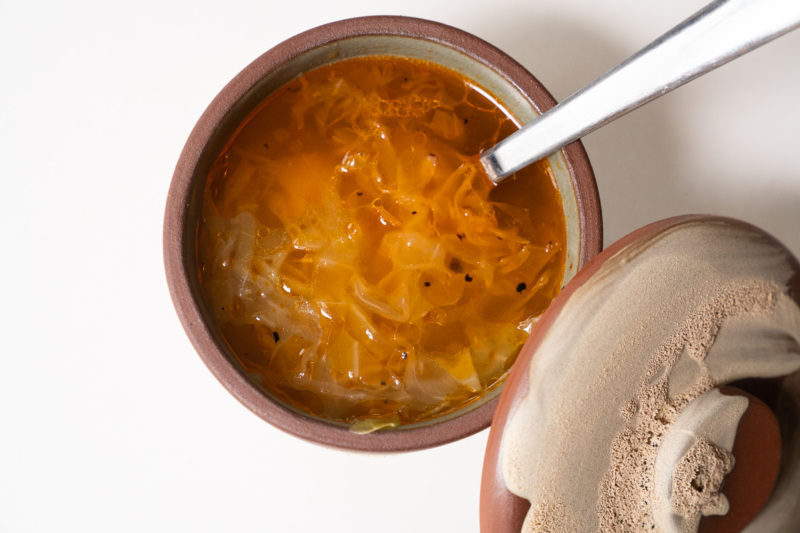
Çorti Taplaması
What does one do with extra bulgur dough? Make çorti taplaması, in keeping with the zero-waste philosophy of much Anatolian cooking. The regional mahogany-hued soup from Inak’s mother’s hometown is punctuated with the acidity of housemade lacto-fermented cabbage and its juice, softened with Isot pepper butter, and made heartier with marble-sized bulgur balls.
Unlike the French pickling method that employs acids like vinegar or lemon juice, the Turkish style relies on brine and a slow fermentation process. One of the key ingredients in Inak’s cabbage brine is cave salt, found underground near the Turkish town of Çankırı. (Whenever Inak’s friends are visiting from Turkey, he requests they bring him some.) To add a layer of umami, he includes chickpeas and sourdough bread for the starter. The fermentation requires the most time — two months — while the simmering of the soup takes about an hour and a half. “It’s a very special recipe,” says Vatansever. “In Western Turkey, nobody knows this soup. It’s specific to the region where his mom was born.”
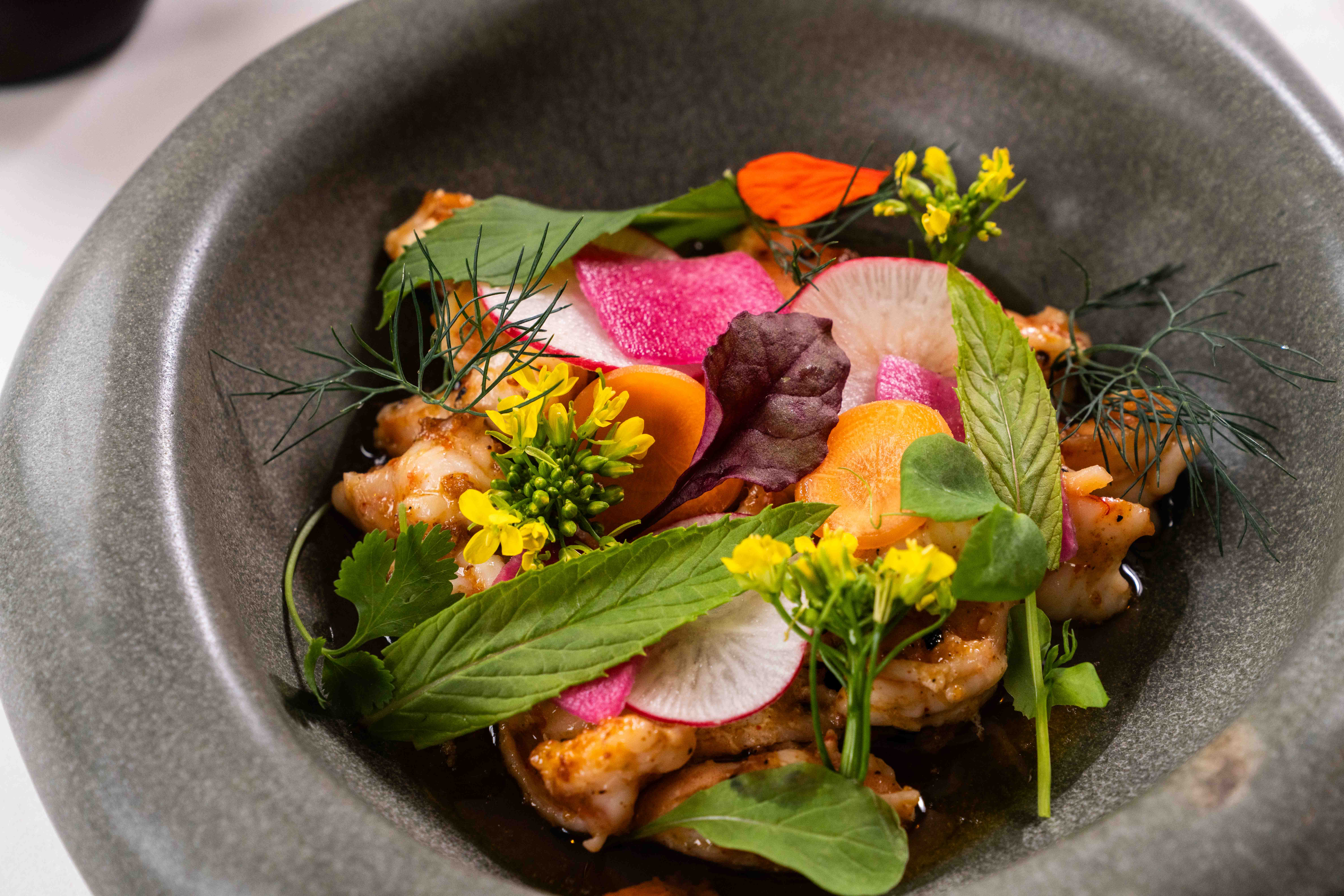
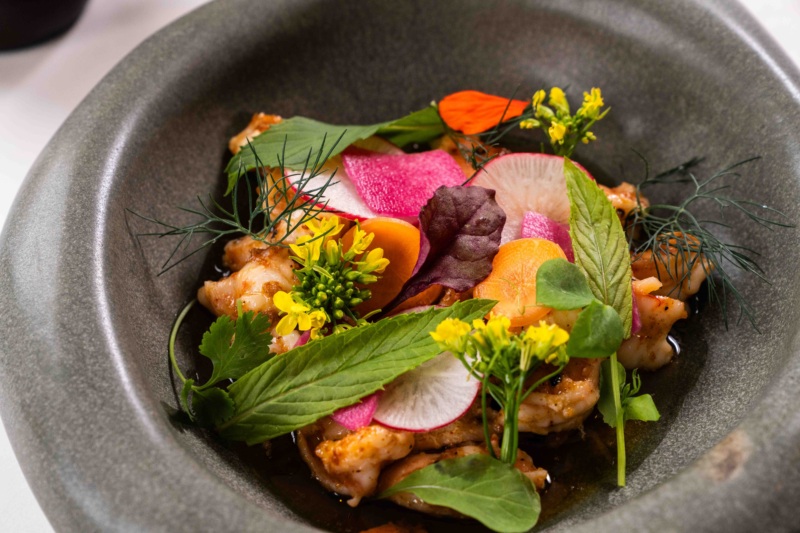
Shrimp in Tarhana Butter
Again, fermentation plays a major role in Sora’s shrimp in tarhana butter, an Inak original that blends Japanese and Turkish flavors. Inspired partially by a customer’s gift of homegrown yuzu, it illustrates the chef’s talent for combining Turkish and Japanese flavors.
Inak uses tarhana in an unconventional way by infusing tarhana — a popular Turkish dry soup mix made from a fermented mixture of yogurt and flour, seasoned with red pepper, tomatoes, and onions — into butter. (Typically, tarhana powder is rehydrated into a thick and creamy soup.) The shrimp is sautéed in the tarhana butter over low heat, and dressed with housemade yuzu koshu (that Inak ferments for two weeks), togarashi, and lemon and lime juices and zest. A side of fluffy pita serves as a vehicle to sop up the savory sauce left in the bowl.
“The inspiration also comes from Turkey, because we make shrimp and other seafood in pans, and slow cook it for hours and hours,” says Vatansever. “And then you share it with friends, dipping the sauce with good bread or pita.”
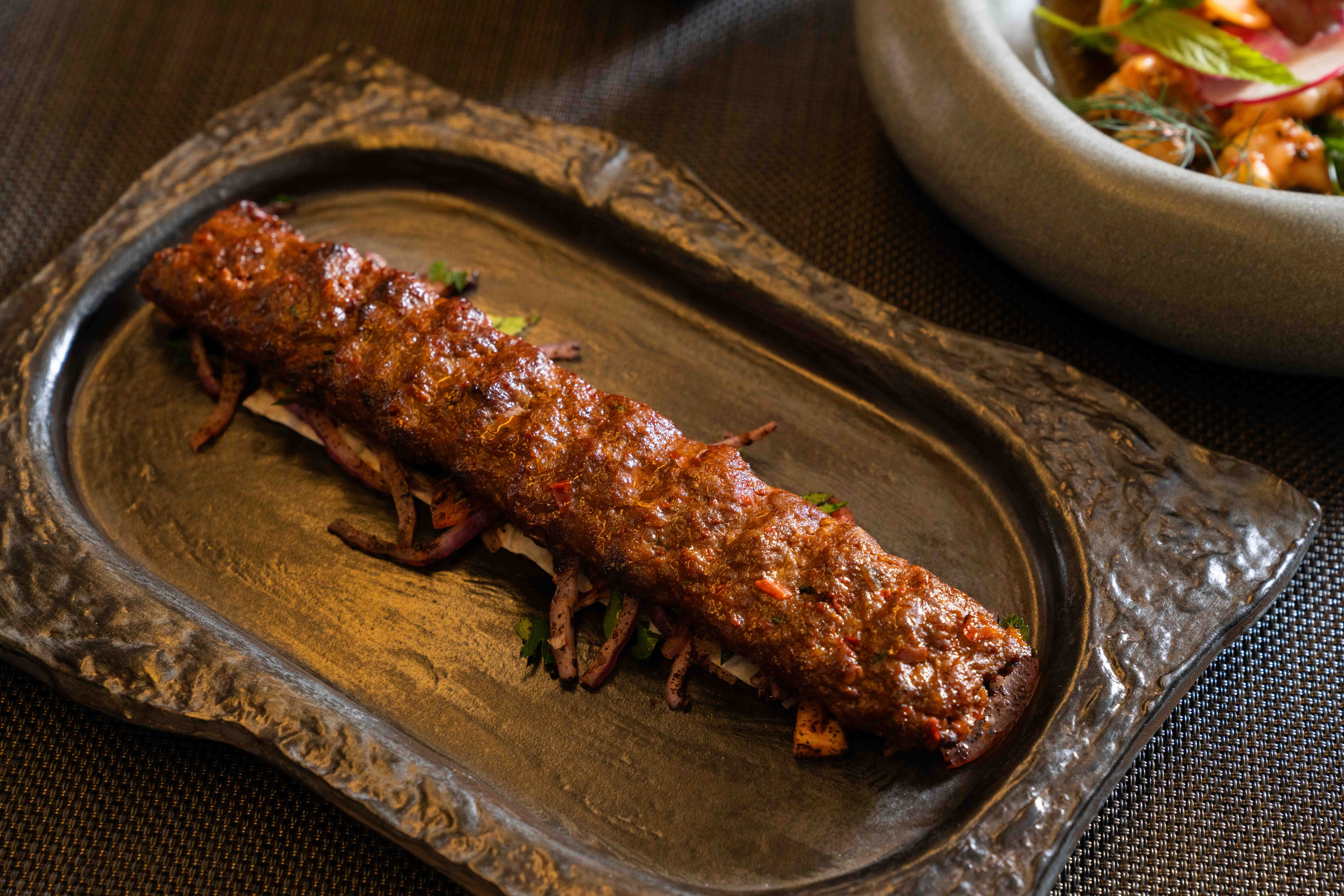
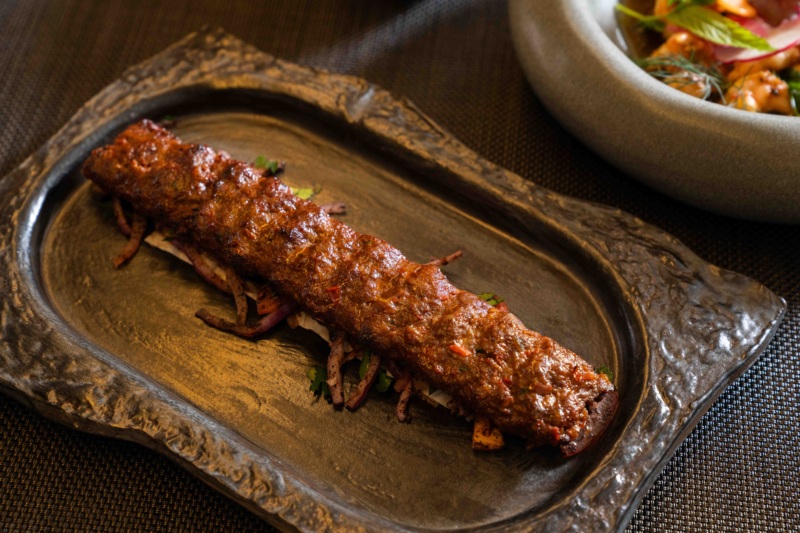
Garlic-Spiced Kebabs
“In Turkey, [premium] kebabs are served in fine dining restaurants with white tablecloths, and you pay a lot for them because they’re made with high-quality meats,” says Vatansever. At Sora, Inak takes a similar approach, minus the fine-dining trappings.
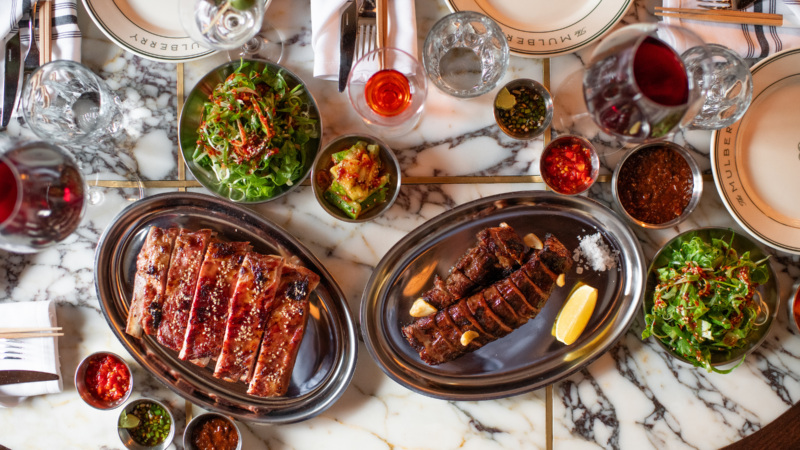
The perfect fat-to-meat ratio is important to achieve succulent and juicy results. Inak grinds beef rib meat and mixes in 30- to 40-percent high-grade beef fat he procures from a ranching partner of Victorian Farmstead Company in Sonoma County. In very traditional preparations of Southeastern Turkey’s Adana kebab, Inak explains, garlic typically isn’t added to the meat mixture, but he includes it here as a nod to the L.A. palate. “When I moved to L.A., I saw that every restaurant had garlic sauce, garlic purée — everything garlic,” says Inak.
The kebabs, spiced with Turkish paprika, are grilled over an open flame, and served over a bed of traditional sumac-laced tomato and onion salad, and a side of warm lavash. “In Turkey, we always eat tomato and onion salad with kebab — and no rice,” says Vatansever.
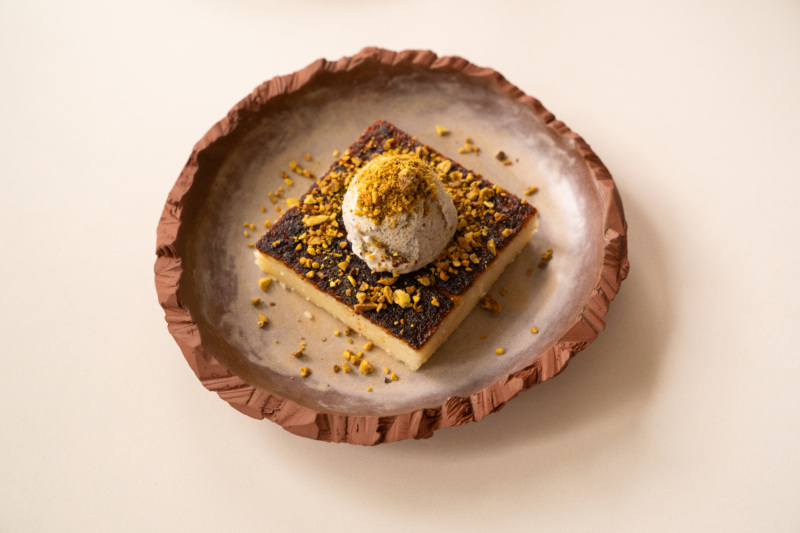
Peynir Helvası (Cheese Halva with Yuzu and Black Sesame Ice Cream)
When Inak was living in Tekirdağ, he would drive two hours southwest to Çanakkale, the ancient city of Troy, to get a taste of the cheese halva that’s only found in that region. In his recreation of this memory, he stays true to the traditional recipe — one that results in a sweet and lightly salty slice of what could be considered a denser, chewier cheesecake with a crispy, caramelized crust — but updates it with the addition of a scoop of housemade yuzu and black sesame ice cream.
Also a labor of love, Inak makes his own cheese, which takes two to three days to ferment, and then cooks it with semolina and sugar before baking it on a sheet pan. The cheese halva is brought to the table warm, juxtaposed by the coolness of the ice cream, à la mode-style.