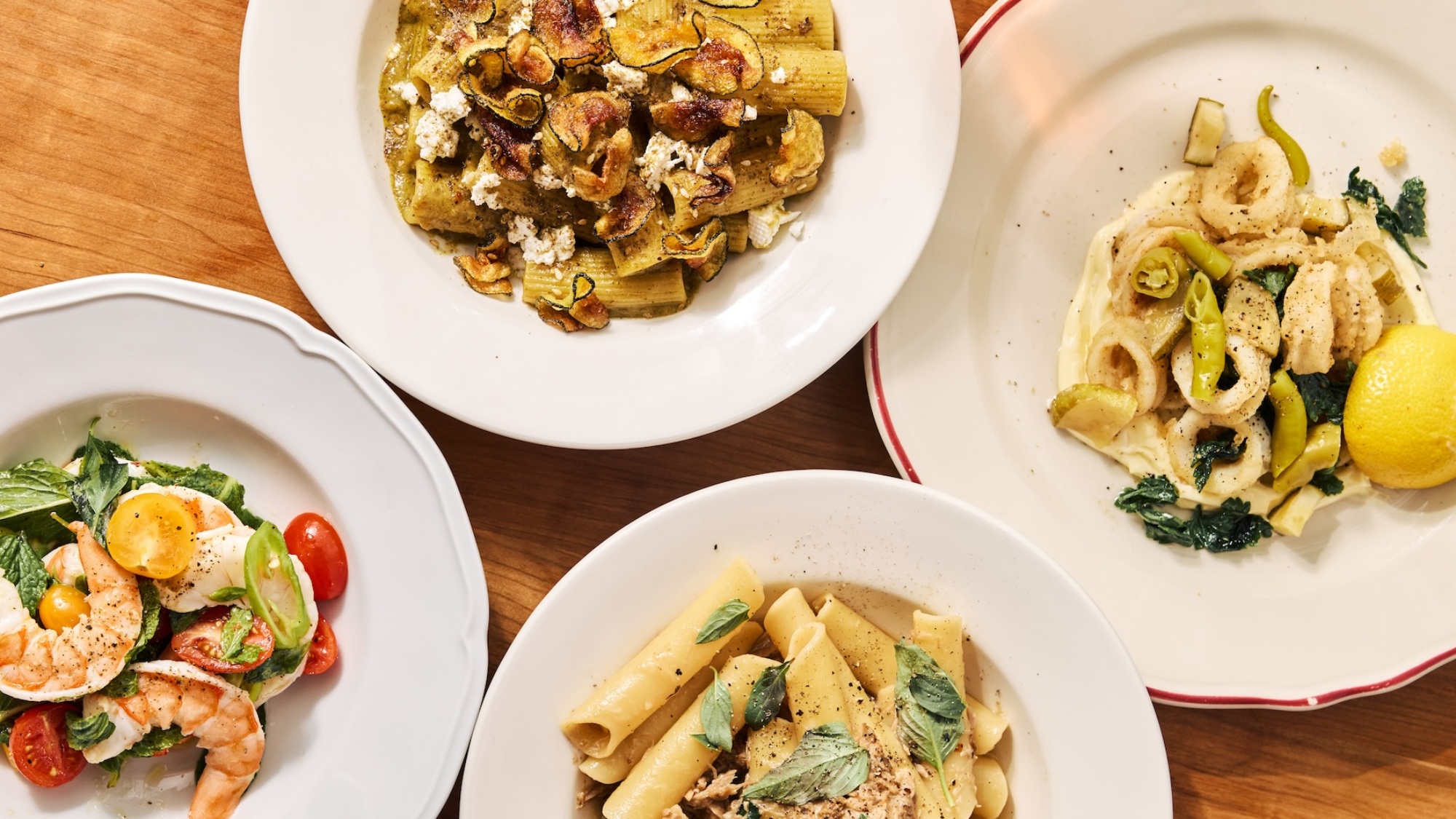
The Dishes You’ll Want to Order at Scampi
Published:
In just a few years, Scampi chef and owner Liz Grothe went from cooking for fun at home to running one of Philadelphia’s most talked-about restaurants. Since 2024, the self-described “unserious” chef — whose résumé includes working as a sous chef at Fiorella — has been serving serious Italian food through an intimate $80 BYOB tasting menu.
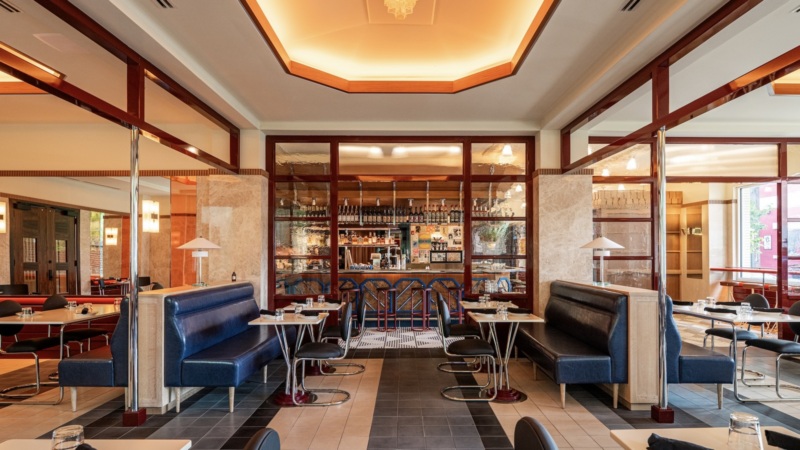
Now, however, Grothe, along with business partner Joe Ling, a veteran Outback Steakhouse manager, is embarking on a new chapter for Scampi. She’s expanding beyond the tasting format with an à la carte menu of about 10 dishes, adding a bar program, and opening the twinkle-lit, greenery-filled “Scampi Garden” for patio dining.
The biggest change may be what’s in your glass. Scampi is no longer BYOB. Instead, Grothe has partnered with Camuna Cellars to pour Philadelphia-made wines, alongside local vermouths, amari, beers, and a handful of playful cocktails. “We’re figuring it out as we go,” she says of drinks like a Pennsylvania Spritz.
That spirit of figuring things out has defined Grothe’s career. The Oklahoma-born daughter of Filipino immigrants moved to Philadelphia while working for Tyson Foods. “In 2018, Philly had just won the Super Bowl, and Gritty had just been born,” she says. “It was a golden year of Philly lore building. I was like, ‘I’ve got to be in that city.’” She transferred to a Philly cheesesteak meat plant, started washing dishes at River Twice, worked her way through Oloroso and Fiorella, and launched the wildly popular Couch Cafe supper club from her apartment on her days off.
At Couch Cafe, Grothe cooked whatever excited her: usually Italian food, plenty of fresh pasta, and clever riffs on chain restaurant classics. She introduced every course herself with the same irreverent, self-deprecating humor that now makes dinner at Scampi feel as much like a dinner party as a restaurant.
Whether you book the tasting menu or build your own meal from the expanded à la carte offerings, these five dishes best capture why Grothe has become one of the city’s most exciting young chefs.
The Resy Rundown
Scampi
-
Why We Like It
Liz Grothe cooks hearty Italian food with irreverent Philly flair. Whether you order the tasting menu or go à la carte, expect housemade pasta, bold flavors, and a chef who doesn’t take herself too seriously. -
Essential Dishes
Scampi; Caesar toast; Oklahoma onion burger; tiramisù; and (in winter) Lizagna. -
Must-Order Drinks
A Pennsylvania Spritz or a glass of Grüner Veltliner from Camuna Cellars. -
Good to Know
The tasting menu is available indoors Thursday through Saturday. The à la carte menu is offered Tuesday through Saturday and only on the patio Thursday through Saturday.
-
Who and What It’s For
Scampi is as entertaining as it is delicious. Come for Grothe’s signature humor, stay for the pasta. It’s ideal for gluten lovers, tiramisù fanatics, anyone curious about a true Oklahoma Onion Burger, and diners who enjoy putting themselves in a chef’s capable hands. -
How to Get In
Reservations drop 30 days in advance at noon. -
Pro Tip
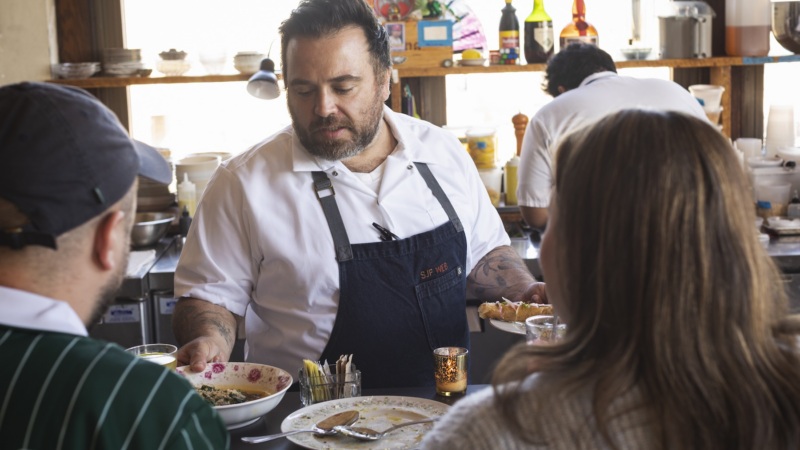
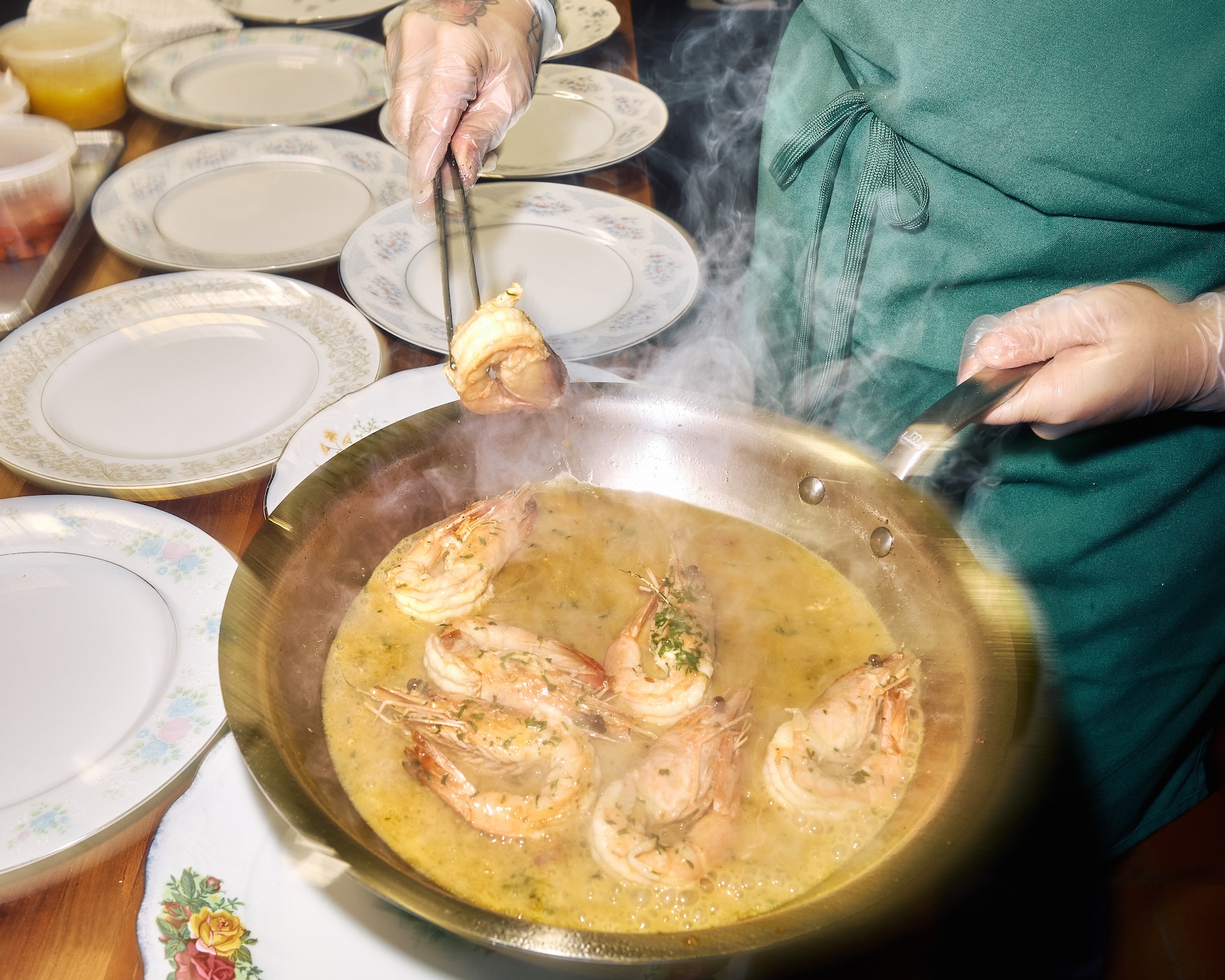
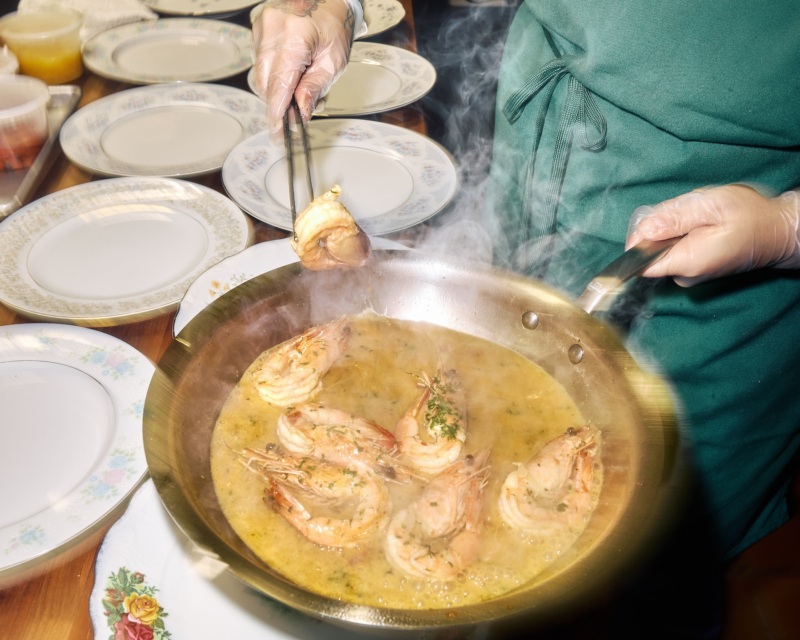
Scampi isn’t listed on the à la carte menu, but if you’re craving the restaurant’s namesake dish, ask for it “secret menu style.” If the kitchen has prawns on hand, Grothe (pictured here) is happy to make it for you.
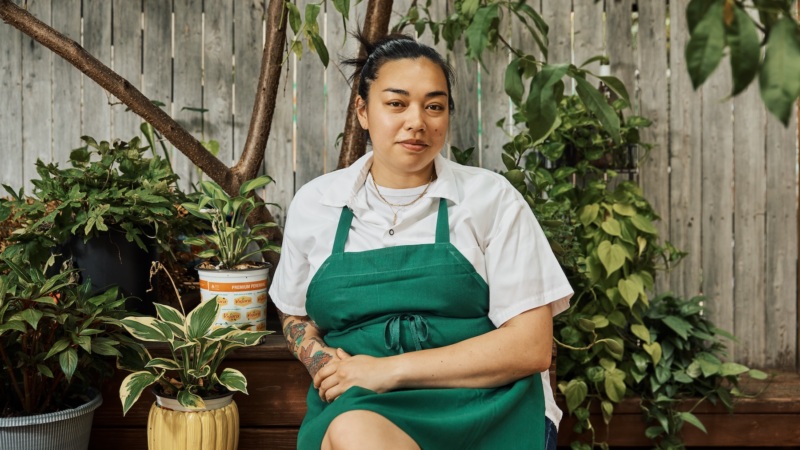
Photo by Ed Newton
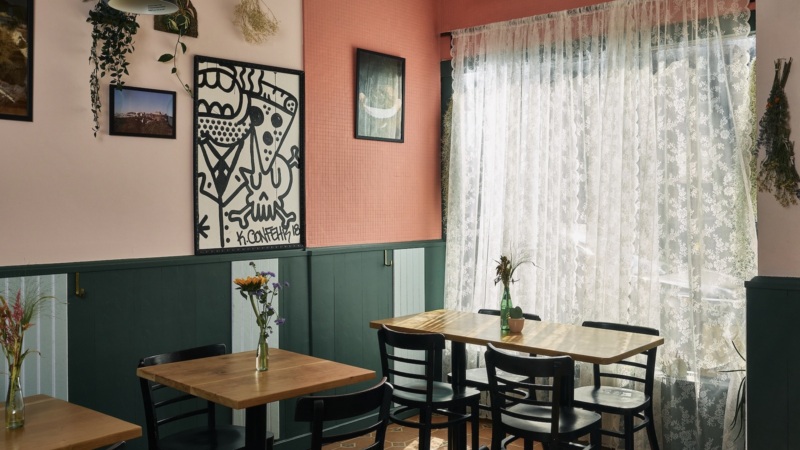
Photo courtesy of Scampi
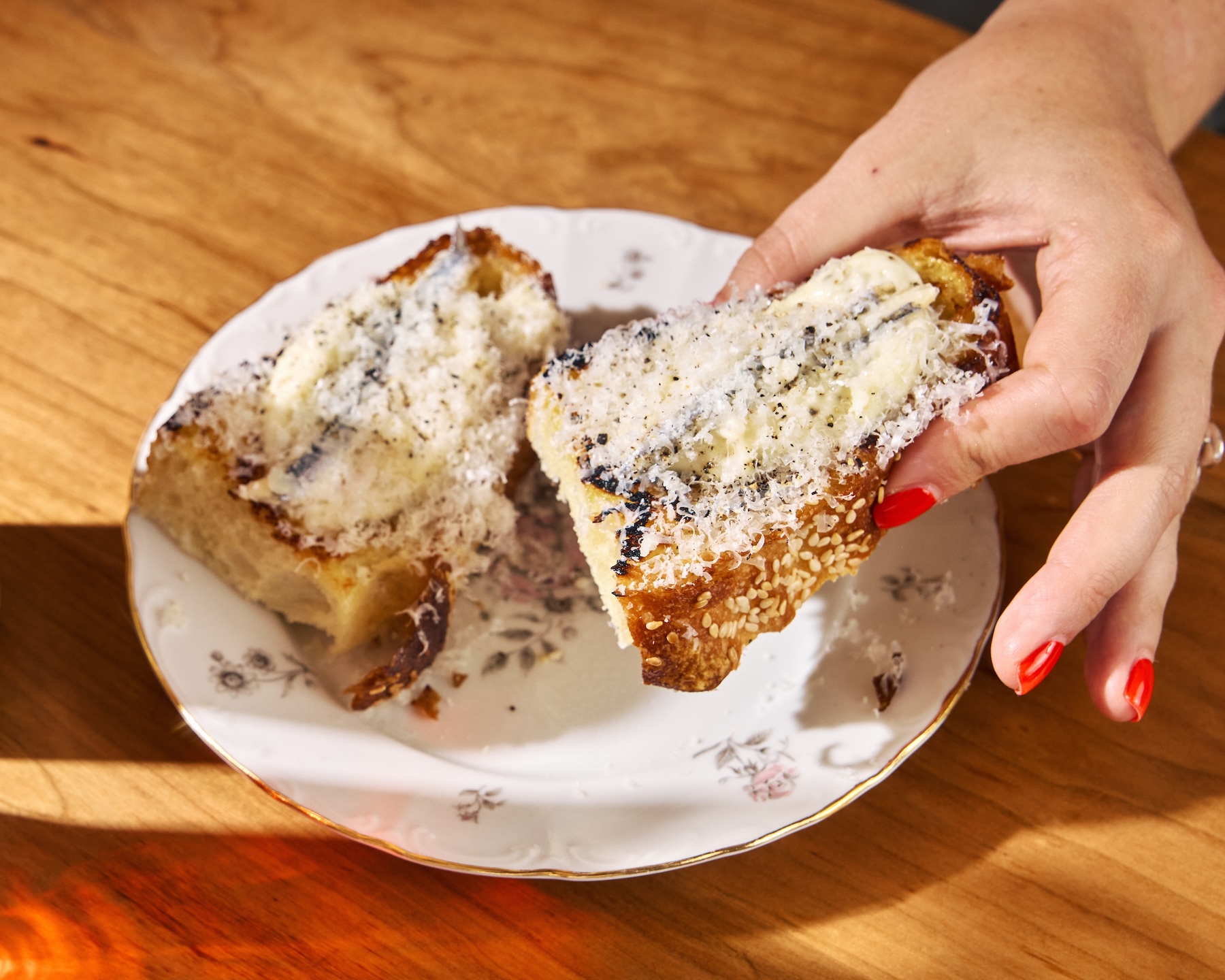
Caesar Toast
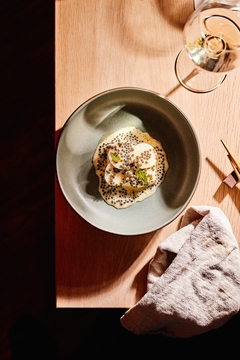
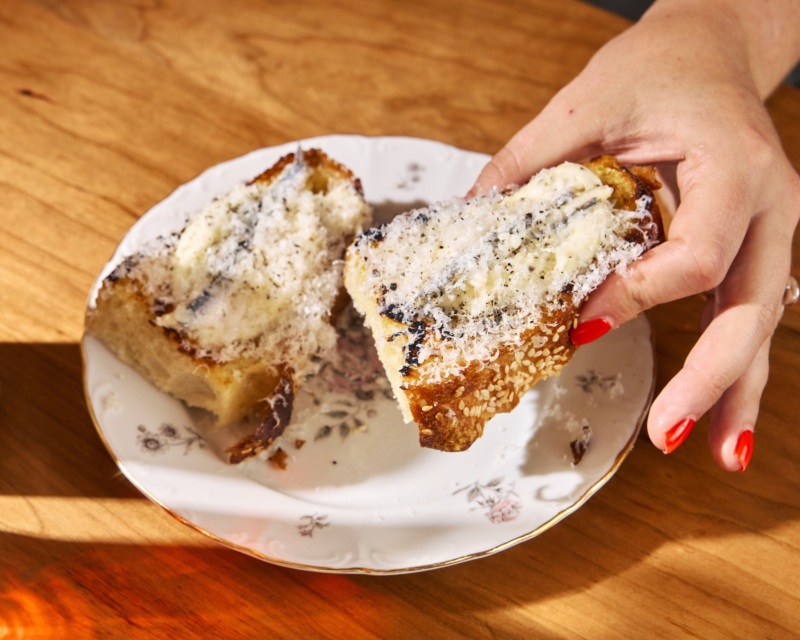
Grothe likes to call Scampi’s Caesar Toast her idea of a salad: one without “all the green stuff.” The dish was born by accident during her Couch Cafe days. She’d planned to serve it with lettuce but realized mid-service that she’d forgotten to buy any. It didn’t matter. Guests loved it, and a lettuce-free Caesar was born.
The “really intense flavors” come from a housemade dressing of colatura, anchovies, egg yolks, and Parmigiano Reggiano. (Grothe is quick to point out that it’s the real stuff, not just any old parm.) The dressing is spread over pillowy housemade focaccia toasted in olive oil, then topped with boquerones and a few grinds of black pepper.
Available only on the à la carte menu, each order comes with two slices. If you’re ordering the tasting menu, just ask, however; the kitchen is happy to work it in. “Caesar nerds love it,” Grothe says. “People who are anchovy averse will be scared of this dish, but I really think the balance is there.”
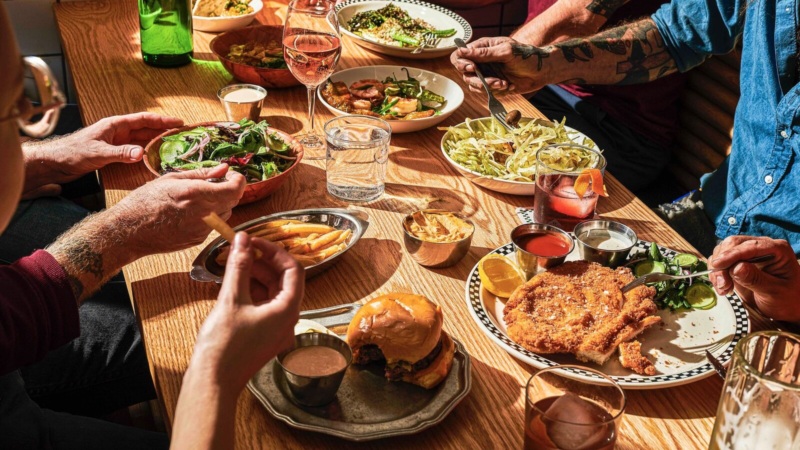
Oklahoma Onion Burger
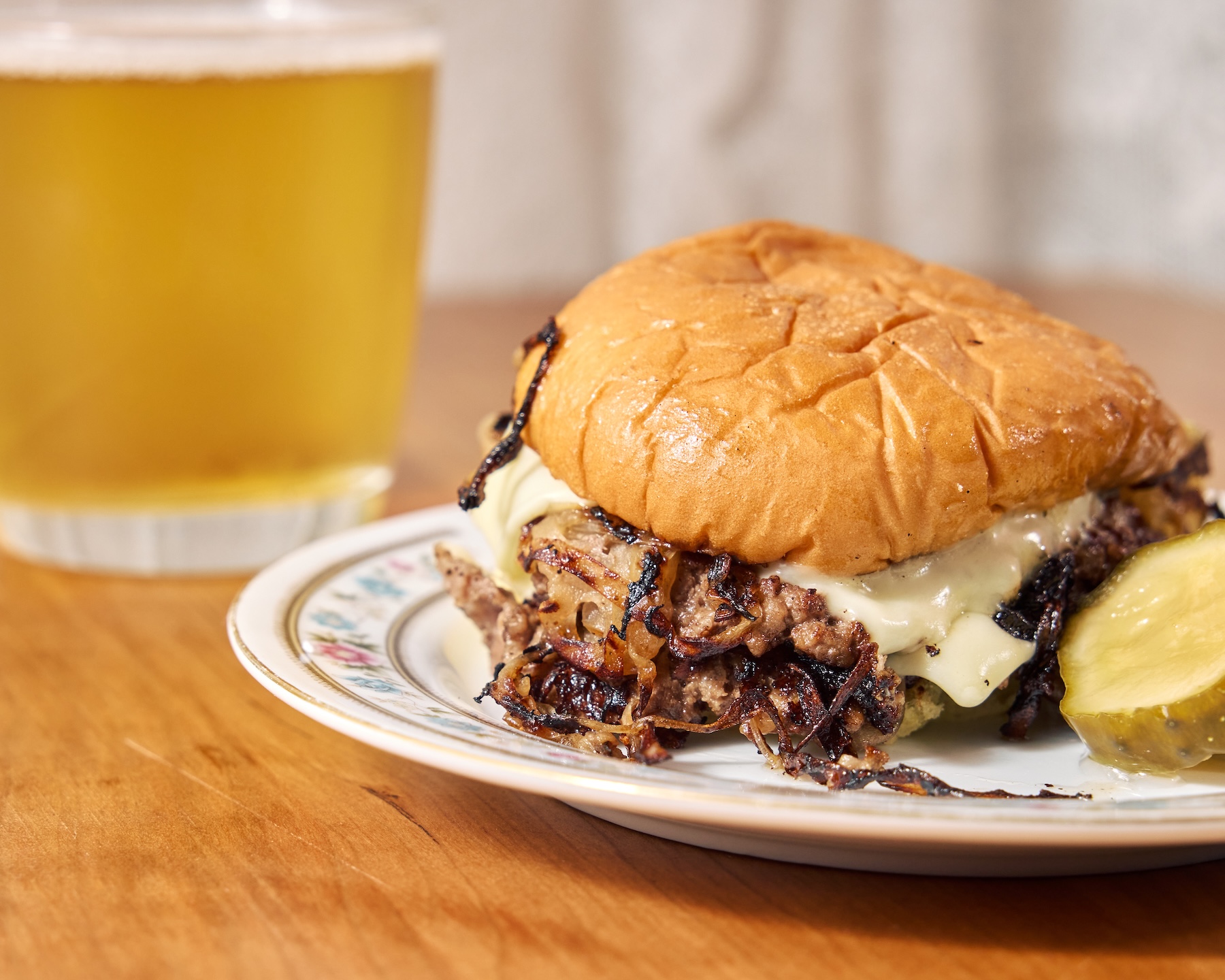
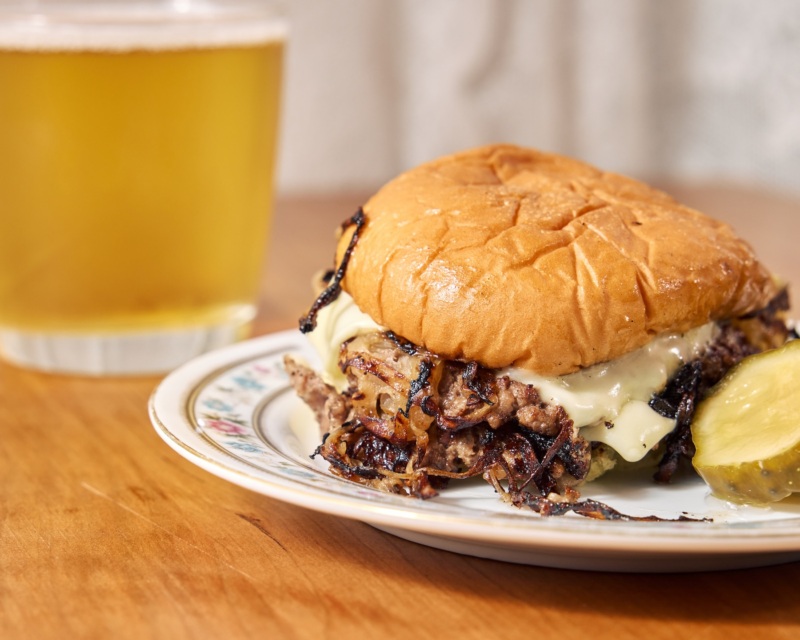
Grothe has strong opinions about the Oklahoma Onion Burger, her favorite dish on Scampi’s à la carte menu. The Depression-era specialty was born when cooks stretched expensive beef by piling thinly sliced onions onto the griddle with the patties. Many restaurants, she says, get the technique wrong by simply piling caramelized onions on top.
“I’ve seen a lot of disrespect happening to the Oklahoma burger and I don’t like it,” she jokes.
At Scampi, Grothe starts with two mounds of razor-thin raw onion slices on the flattop before smashing 80/20 beef patties directly into them. As the burgers cook, the onions soften, crisp, and blacken in the rendered beef fat, creating a lacy crust. They also keep the thin patties juicy. She finishes the burger with American cheese — a departure from the classic cheese-less version — on a potato bun that’s steamed on the griddle for a minute, plus seasonal housemade pickles.
“Smash patties are a thing that people really like to f—- up,” Grothe says. “They [usually] need a lot of sauce to make it not so dry, but onion solves the problem.” As a purist, she skips ketchup and other condiments unless guests ask. “People have been bastardizing the Oklahoma burger forever,” she says. “You can get one from other places, but if you want to get it from a certified Oklahoman, you need to go to Scampi.”
Tiramisù
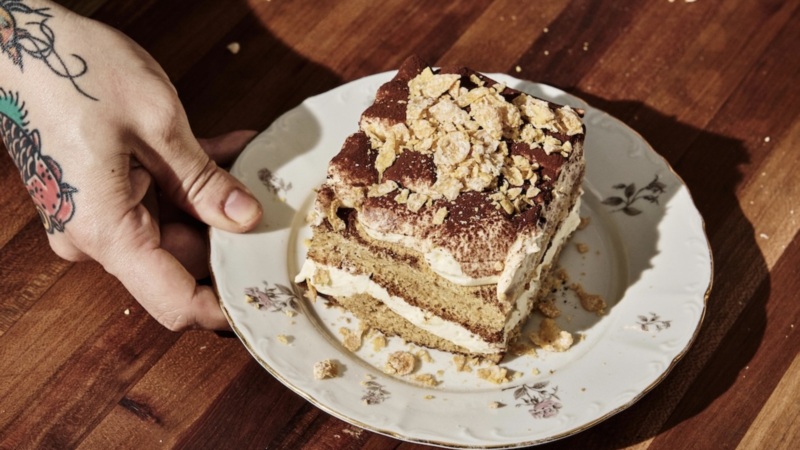
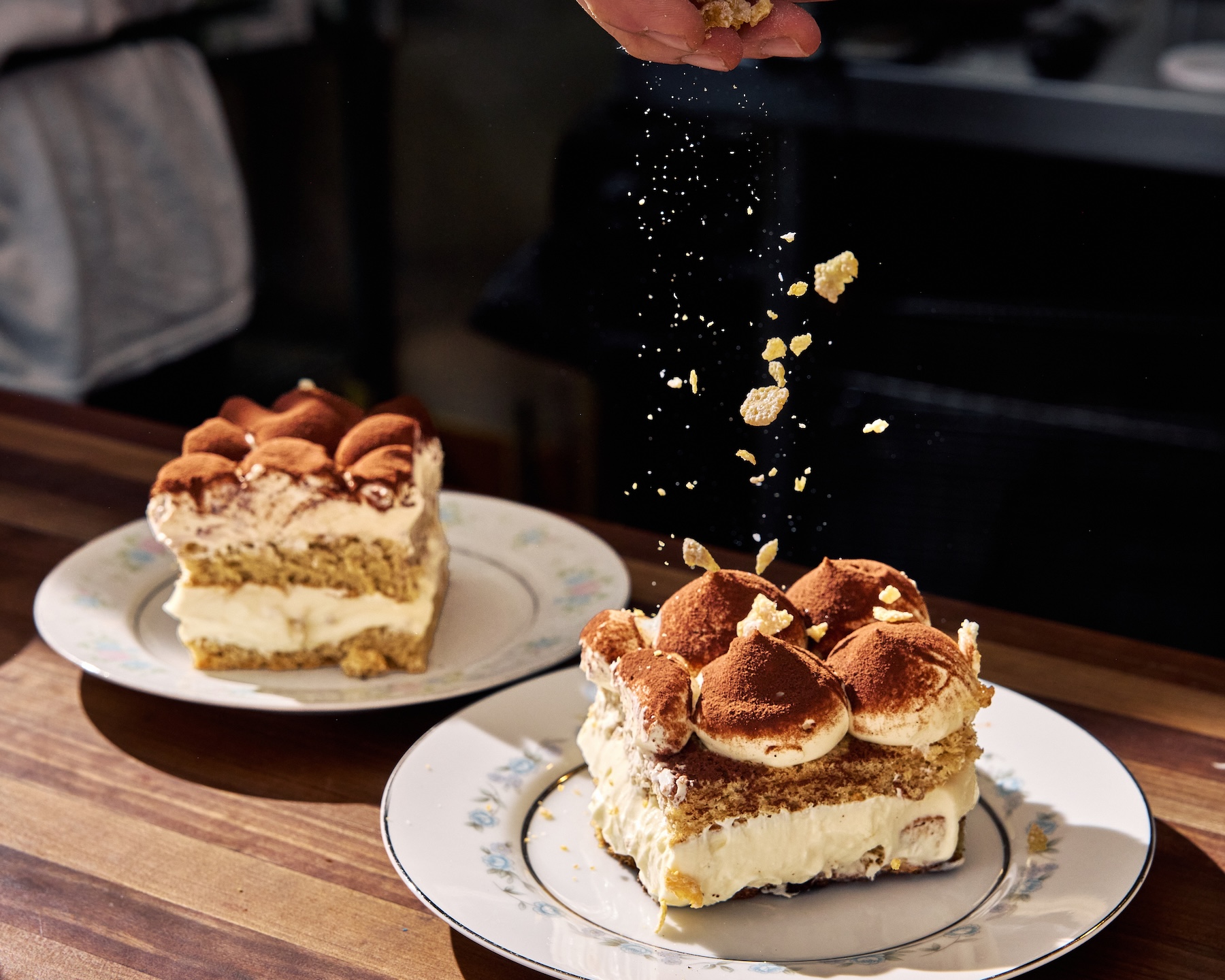
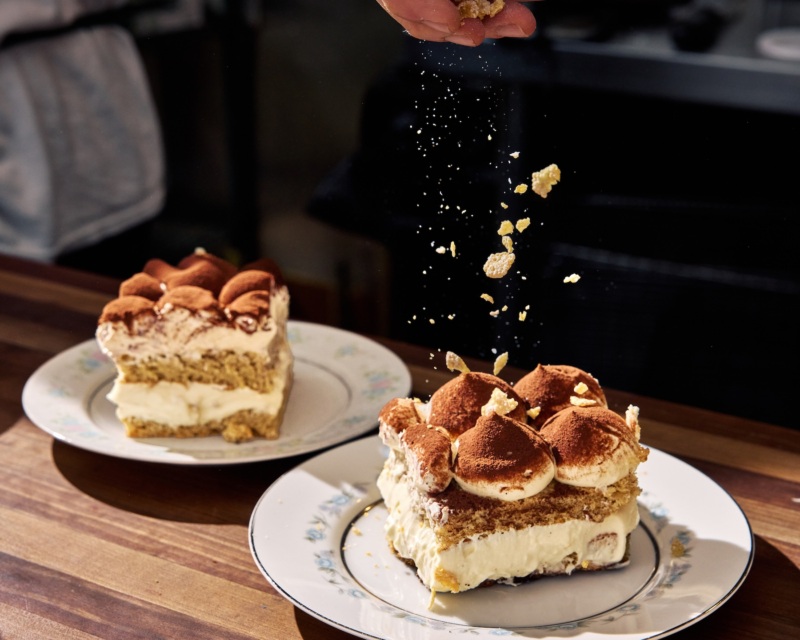
What’s the worst part of a typical tiramisù? Grothe doesn’t hesitate to call it out: the ladyfingers. “I have a problem with super-dry pastries,” she says. “The texture is bad and they don’t bring anything. They crumble in espresso. They would be nothing without mascarpone and espresso.”
Instead, she turned to one of her mom’s favorite treats: mocha chiffon, a light, airy Filipino coffee-and-chocolate sponge cake sold at bakeries like Goldilocks. “I’d eat it as a child,” she recalls. “It’s a good sponge for coffee and is structured enough for the dish.” Scampi’s coffee-and-olive-oil version is baked in-house, soaked with coffee (from Ox Coffee across the street), layered with fluffy whipped mascarpone, and topped with Frosted Flakes. “The crispiness breaks up the softness of the dessert,” she says.
The tiramisù has become one of Scampi’s signatures and is one of two desserts served during the tasting menu. “It wouldn’t be Scampi without it.”
Lizagna
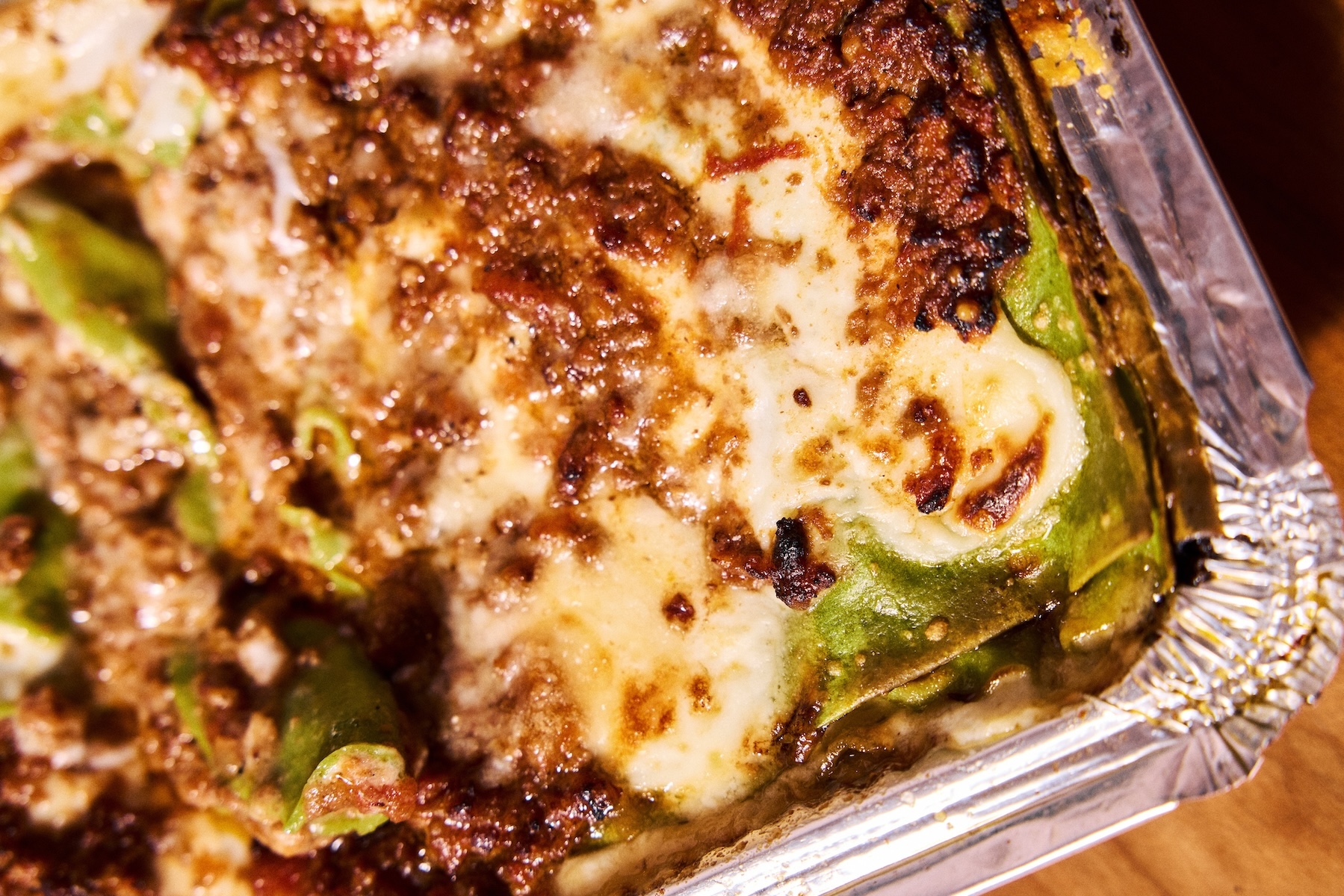
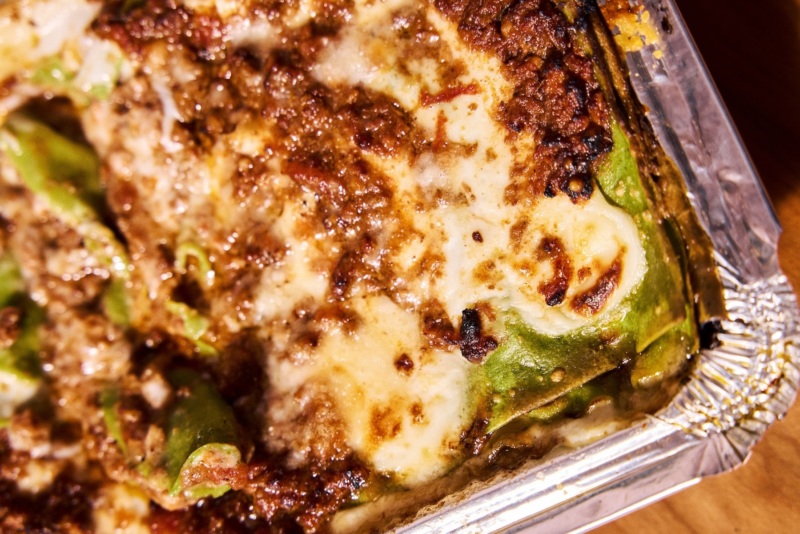
Of her popular lasagna, Grothe jokes that “we spell it Lizagna because we’re extremely unserious people.” In winter, when there’s room in the restaurant’s cold storage, Scampi will bring back its beloved lasagna to both the tasting and à la carte menus, while also selling frozen trays to take home. “It’s a dish, and it’s an event.”
The flagship version is a classic lasagna Bolognese layered with sfoglia verde (green spinach pasta), béchamel, and plenty of Parmigiano Reggiano. The star is an Emilia-Romagna-style Bolognese that braises all day with pancetta, prosciutto, mortadella, ground beef, and pork. “It’s extremely delicious,” Grothe says. “People go nuts over it.”
Lizagna season also gives the kitchen a chance to riff on the classic with rotating versions like Roman-style oxtail, spinach and artichoke, Neapolitan, Genovese, squash, and mushroom. Each eight-by-six-inch tray costs $35 and feeds two — or, as Grothe wisecracks, “one Liz.”
Scampi
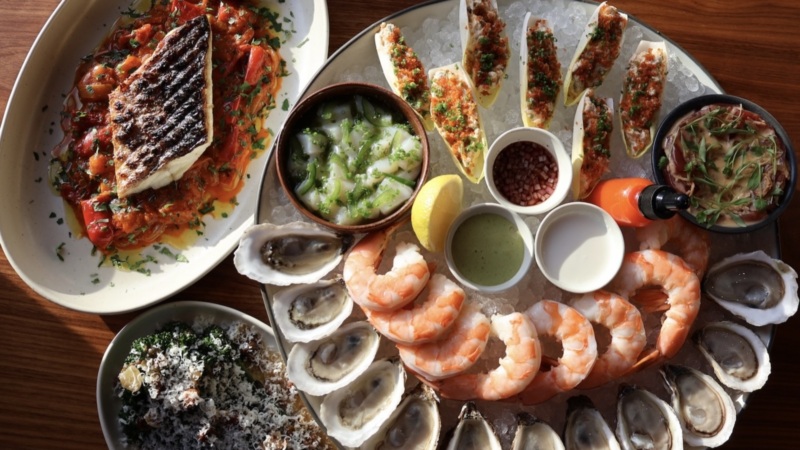
Most Americans think of scampi as pasta tossed with shrimp in a buttery, lemony sauce. But Grothe points out that scampi is simply the Italian word for langoustine. “In Italy, they would eat langoustines, lightly cooked or raw, with lemon, olive oil, chile, and parsley,” she says. Her version bridges both traditions, swapping in head-on Australian prawns but skipping the pasta. “They are big boys, served in all their glory, swimming in sauce,” Grothe says. “People don’t really care about the pasta at that point.”
The prawns themselves are a point of pride. Grothe prizes the Australian variety for their sweetness, tenderness, and meaty tail-to-head ratio. She sears them before adding roasted garlic brown butter, deglazing the pan with Italian lager, and building the sauce with Filipino fish sauce (patis), lime juice, Calabrian chile, and cilantro. The tasting menu includes two prawns per person, while the à la carte version comes with about five, depending on market price.
Grothe’s affection for prawns started long before Scampi. Growing up, her family regularly bought 10 pounds of Gulf shrimp from “some guy with a cooler” in Galveston, Texas, then drove 10 hours home to clean and freeze them for future meals. “I’ve always had an affinity for prawns because of that,” she says.
For Grothe, the dish also represents her own story. “As Italians became Americans, the dish transformed from a word for langoustine to the scampi that we serve here in the States,” she says. “That was a really beautiful discovery for me. When people fully embrace and accept new cultures, the sum is greater than its parts. I’m not really that Filipino, and am definitely not Italian. Being American is this idea that I’m able to be anyone I want. I’m not bound by cultural standards.”