Photo by Aaron Richter for Resy

Behind the Line   Philadelphia

Inside the Bakery That Fuels Parc (and Philly) With Bread

Published:

If you’ve ever wondered what it’s like behind the scenes of a restaurant, this is for you. In Behind the Line, photojournalists take you inside the kitchen for a unique perspective on everything that goes into a single day of service, and the people who make it all happen.

In this edition, we get a glimpse into a day at Philadelphia’s Parc bakery, from photographer and journalist Aaron Richter.


Ariel Einhorn is not yet covered in flour. But give it 10 minutes, and her apron will soon be well dusted. It’s 6 a.m. on a Tuesday. The streets of Philadelphia are empty. A light rain glistens the entryway tile to Parc restaurant in Rittenhouse Square as executive baker Einhorn cracks open the front door.

“I like being here early while it’s still quiet and peaceful,” she says, as we follow her toward the morning activity, which has been underway for several hours.

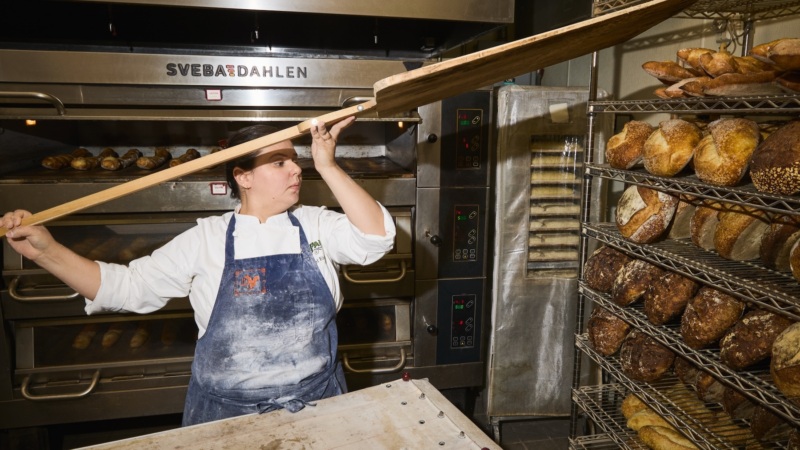
The baking operation here is set up, quite literally, in a wide hallway that corners between the French bistro’s main and prep kitchens. The arrangement of equipment — a three-door oven, a mixing station, moveable racks, and workbenches — is efficient and adaptable, minimizing extraneous movement to keep the day’s mixing, shaping, and baking schedule rolling.

Parc is owned by Stephen Starr, and its bakery is the hub of the iconic restaurateur’s bread production in Philly. This small but mighty outfit churns out crusty loaves for the chefs to build and anchor delectable dishes at Starr’s other dining destinations, including Italian eatery Borromini, modern steakhouse Barclay Prime, and The Dandelion Pub.

During an average week, the Parc bakery produces 2,900 baguettes, 840 sourdough boules, 1,100 cranberry walnut loaves, 250 semolina rolls, 1,200 burger buns, 300 slider buns, 140 brioche Pullman loaves, 500 ciabatta rolls, 160 country white loaves, 110 loaves of beer bread, 45 Dandelion brioche loaves, 45 buttermilk loaves, 50 pistachio cherry loaves, 45 seed bread loaves, 200 Pugliese rolls, 45 whole wheat sandwich loaves, and 100 various pieces for bread of the day.

Here at Parc, the bread itself is kind of a big deal; just a few months ago, The Atlantic named Parc’s cranberry walnut loaf as “the best free restaurant bread in America.” Parc’s executive chef, Eric Starkman, notes, “Parc would not be Parc without Ariel’s bakery department.”

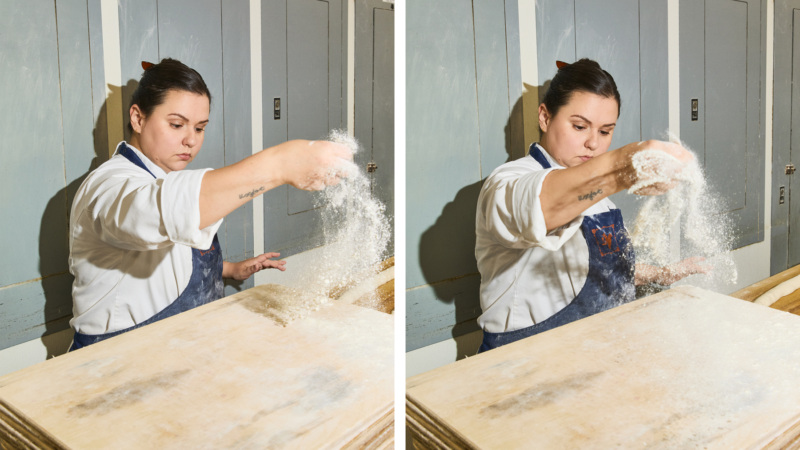
But Einhorn takes all this adulation in stride as she dons her personalized kitchen whites and blue apron. After all, there’s work to be done today. She pulls a large workbench away from the wall, lets a handful of flour fly across the surface and starts rolling out ciabatta dough. It’s time to get a little messy.
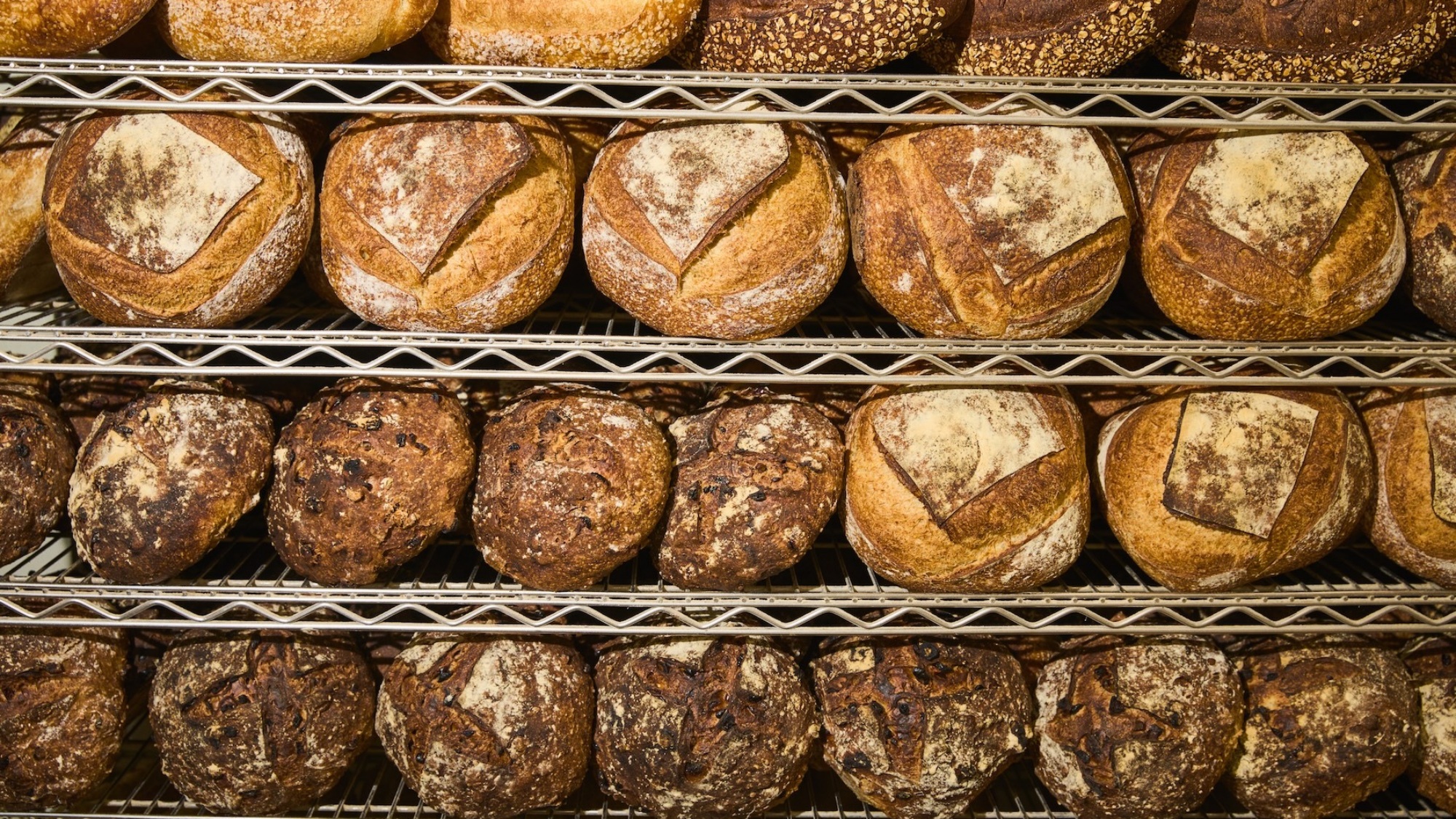
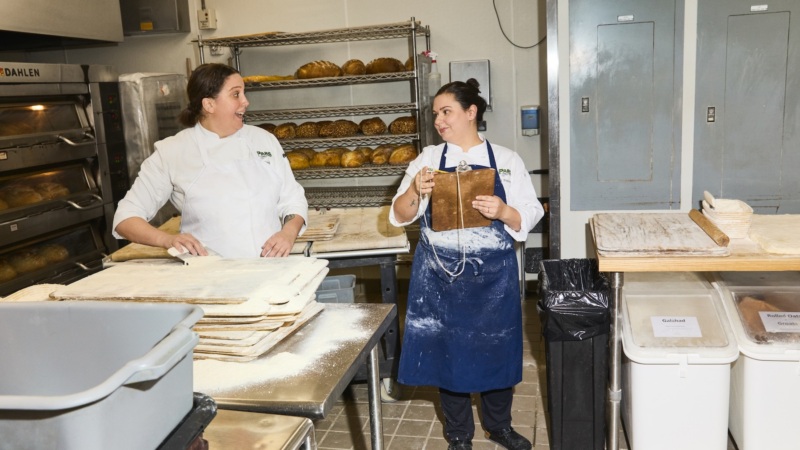
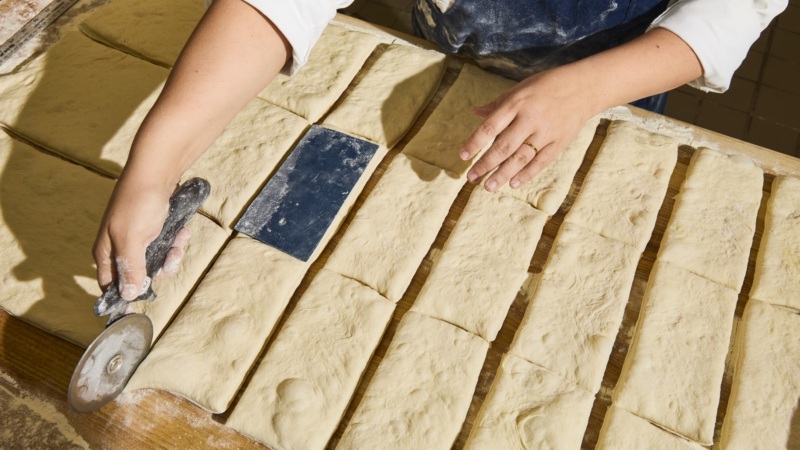
Photo by Aaron Richter for Resy

6:11 a.m.

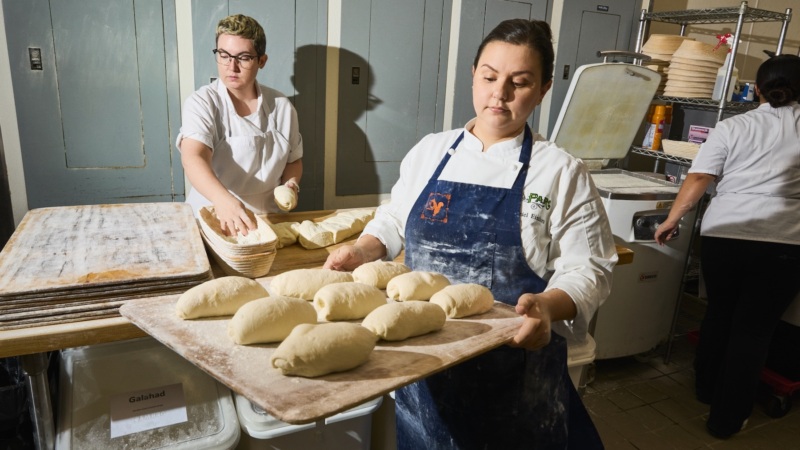
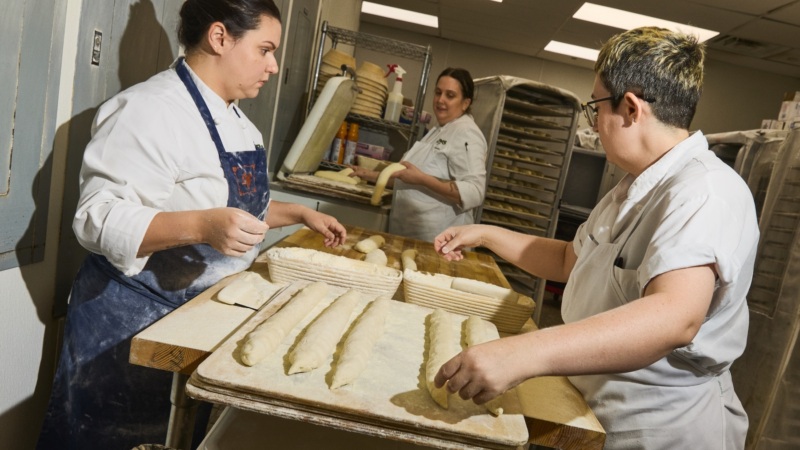
Einhorn (right) grabs a clipboard with notes for the day’s jam-packed baking schedule. She checks in with assistant head baker Jess Sands, who’s been here since 3:30 a.m., when Parc’s baking operations begin. The bakery doesn’t run its ovens overnight, so an early morning start is essential. Sourdough for tomorrow, needing an overnight ferment, is mixing away thanks to baker Amaral Lopez-Miguel, who arrived at 5:30 a.m.

Photo by Aaron Richter for Resy

Photo by Aaron Richter for Resy

6:14 a.m.

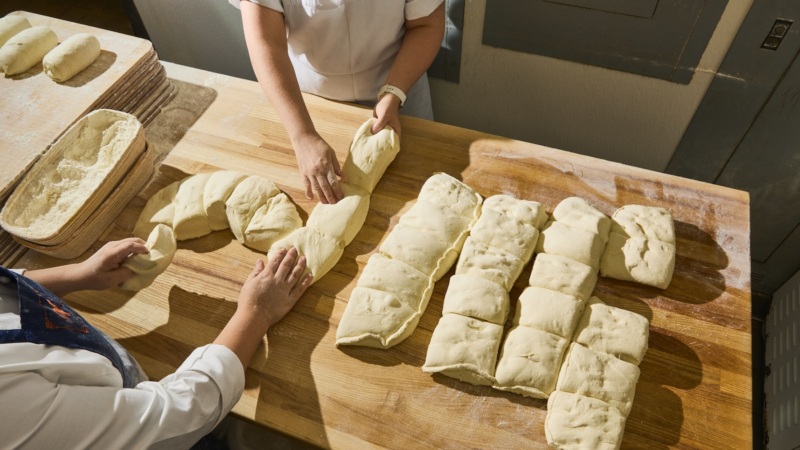
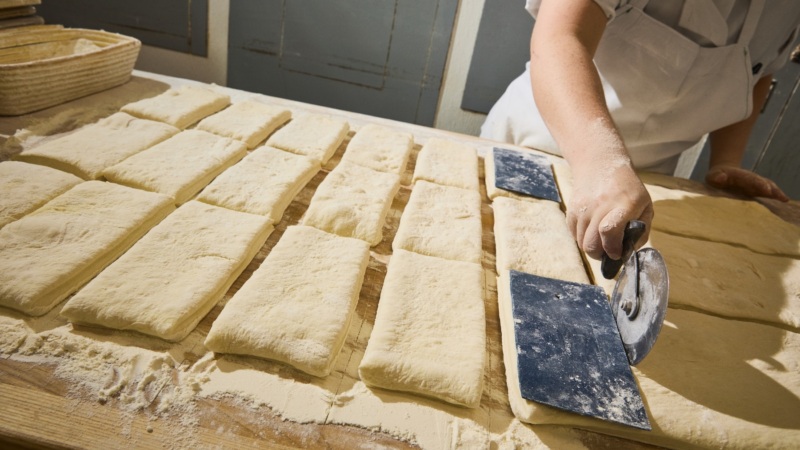
After rolling out her ciabatta dough, Einhorn waits a few minutes for its gluten to relax. Otherwise, when she cuts it, the dough will spring back on the blade. This resting process allows the pieces to keep their rectangle shape. A 13-pound tub yields 30 pieces, so precision and uniformity are key. As a guide, Einhorn uses a blank that she cut from the lid of a Cambro container.
Photo by Aaron Richter for Resy

Photo by Aaron Richter for Resy

6:16 a.m.

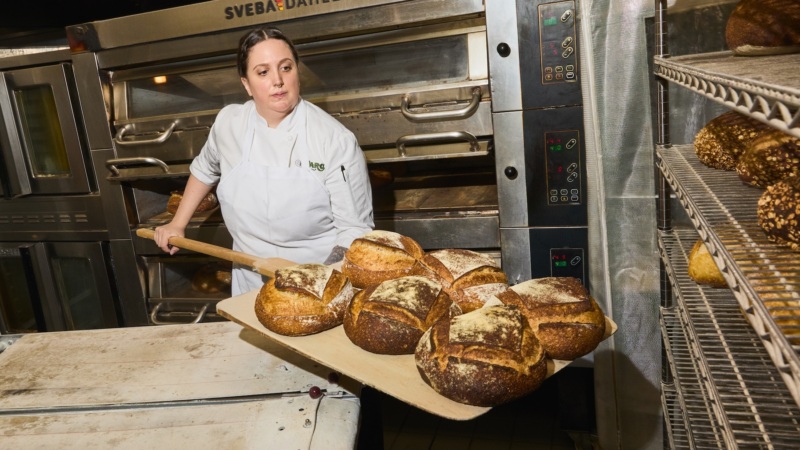
Her rack of finished loaves already beginning to fill up, Sands scoops out wheat rye boules from the oven with a large, long-handled peel. Making the most of the bakery’s cramped quarters, the team must always take into consideration how much space is available in the walk-in fridge, oven, and rolling racks. Says Einhorn, “We pace production and stagger projects depending on our space limitations for the day.”

Photo by Aaron Richter for Resy

Photo by Aaron Richter for Resy

6:25 a.m.

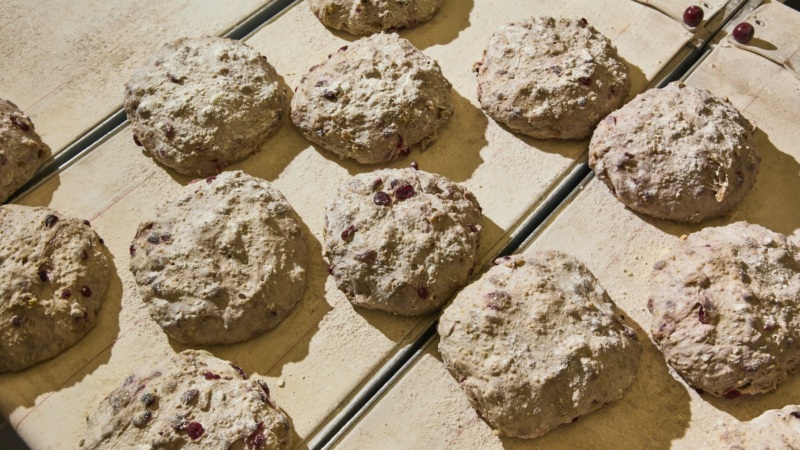
A round of cranberry walnut loaves is about to hit the oven. The bread itself is a bit of a celebrity, having been recently named “the best free restaurant bread in America” by The Atlantic after a yearlong, nationwide search conducted by writer Caity Weaver. The bread is one-third of Parc’s complimentary breadbasket, offered for lunch and dinner service. Parc general manager Lauren Shandelman notes the breadbasket’s burgeoning cult status. “The majority of our guests regularly ask for refills,” she says. “They even take leftover bread scraps home with them.”

Photo by Aaron Richter for Resy

Photo by Aaron Richter for Resy


6:32 a.m.


“If everything is going according to schedule, we’re dividing baguettes by 6:30,” says Einhorn. So now it’s all hands on deck as Noah Weatherby joins the crew and the bakers begin cutting and pre-shaping dough, the first of several processes before this bread can go into the oven. By the end of the day, the team will work through approximately 295 pounds of dough to pump out roughly 400 baguettes. After cranberry walnut, the baguettes are Parc’s most popular bread.

Photo by Aaron Richter for Resy

Photo by Aaron Richter for Resy

6:42 a.m.


Einhorn moves a board of pre-shaped baguette dough to a nearby rack as Weatherby dusts a new surface with flour. Einhorn started working at Parc 12 years ago and says she began baking at 15 years old. Even earlier as a kid, though, she remembers making challah alongside her grandmother. “I had to stand on a chair,” she says, noting that this year, for Rosh Hashanah, she was able to offer the traditional braided loaf as Parc’s bread of the day, sold through the restaurant’s retail window.

Photo by Aaron Richter for Resy

Photo by Aaron Richter for Resy

6:58 a.m.

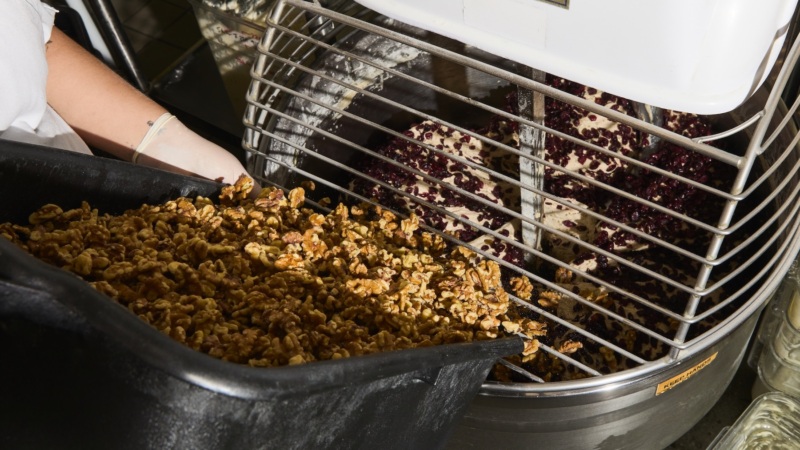
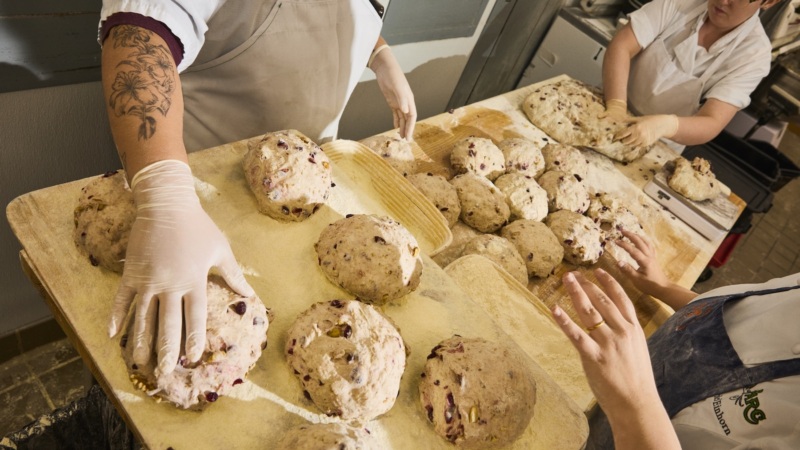
Lopez-Miguel adds 16 pounds of walnuts  — matching 16 pounds of cranberries — to the dough for the cranberry walnut loaves. Mixed a day ahead of baking, this roughly 132-pound batch of dough will be divided into six 22-pound tubs, proofed and then left to slowly ferment in the walk-in fridge overnight to ensure a complex flavor. This method allows the crew to arrive early and begin baking immediately in the morning, rather than baking all night long. “The process works for our schedule instead of us having to work around the dough’s schedule,” says Einhorn. This batch will eventually yield 65 loaves.

Photo by Aaron Richter for Resy

Photo by Aaron Richter for Resy

7:06 a.m.

It’s time for more baguette shaping, and Weatherby sets up a workstation to drop hand-formed rolls through a mechanical molder. With so many baguettes to shape each day, Einhorn says the machine — rolling the stout, pudgy dough into a longer form — helps with efficiency and staying on top of the baking schedule. The baguette dough itself is dry enough for this process to work (compared to a wetter Pugliese dough). One more shaping step remains before baking.

Photo by Aaron Richter for Resy

Photo by Aaron Richter for Resy

7:15 a.m.

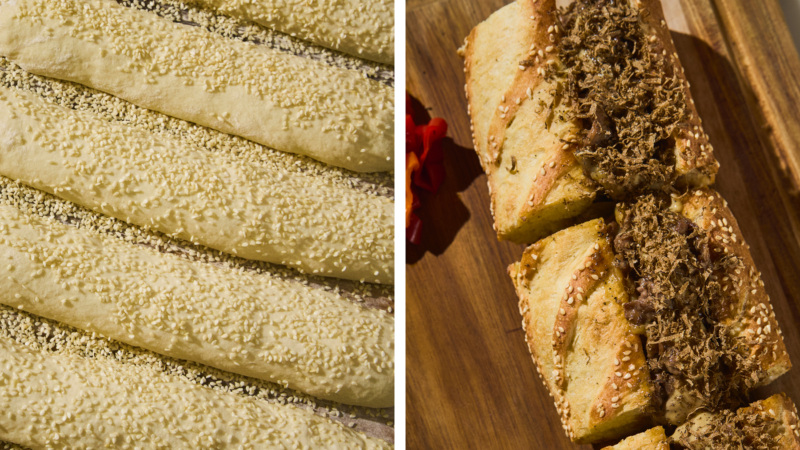
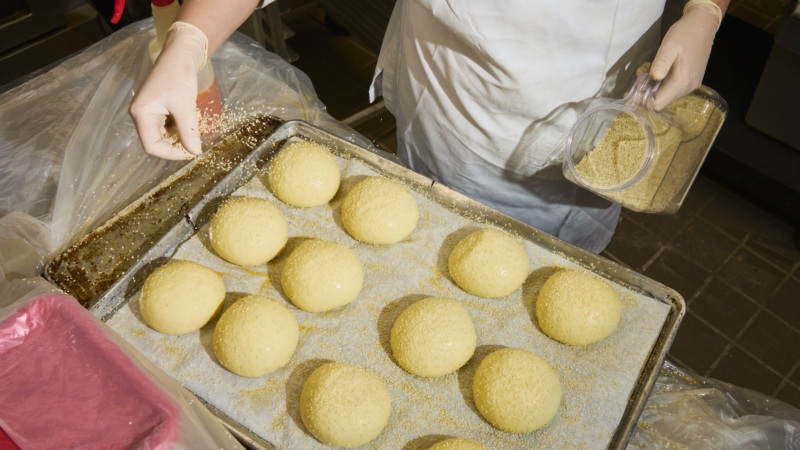
The baking team begins shaping semolina rolls and dusting them with sesame seeds. Later today, these toasty rolls will be sliced open and stuffed with wagyu beef, black truffle, foie gras, fried onions, and melty Cooper Sharp for the decadent cheesesteak offered just a few doors down from Parc over at Barclay Prime. This indulgent interpretation of a Philly classic costs $140 and is served with a half bottle of Champagne.

Photo by Aaron Richter for Resy

Photo by Aaron Richter for Resy

7:28 a.m.

Einhorn dusts a tall stack of boards with flour to shape sourdough loaves. Because the Parc bakery shares its space with the restaurant’s kitchen, temperature is always a concern. “It can get very hot and moist in here,” Einhorn says. So, the bakers rely on a cornmeal-and-rice-flour mix rather than fabric to keep dough from sticking. “It’s like little ball bearings,” she says. “The dough slides right off.”

Photo by Aaron Richter for Resy

Photo by Aaron Richter for Resy

7:44 a.m.

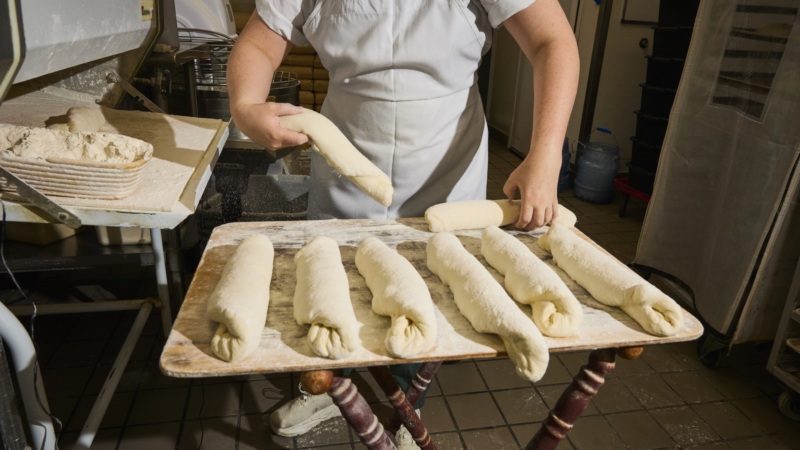
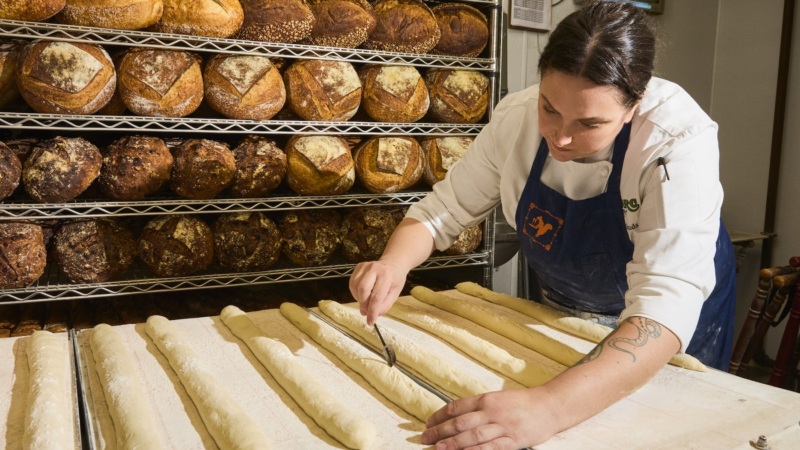
The crew begins its final shaping process for the baguettes, rolling and pulling out six per board. Noticing that some ends are pointier than others, we ask Einhorn if she can tell which baker has shaped each baton. “Oh, yes, she knows,” Sands interjects, with a smile, from across the table. Einhorn points out various minor differences like rounder ends or some with thin middle sections (she calls this “dog-boned”), but she’s confident any major issues will get smoothed out as the dough is scored before baking.

Photo by Aaron Richter for Resy

Photo by Aaron Richter for Resy

7:56 a.m.

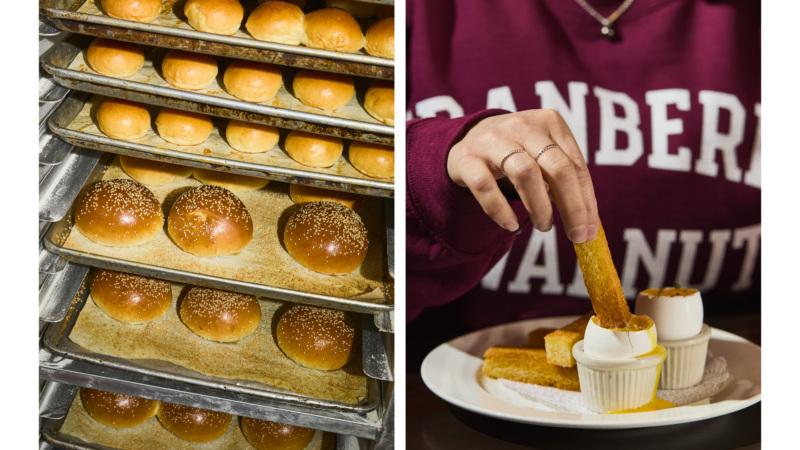
Needing to soon turn over an area of her workstation to the prep kitchen, Sands covers her countertop in plastic for easy and quick cleanup. Here, she sprays egg wash (mixed with salt and strained to a sprayable consistency) over brioche buns and finishes with a sprinkle of sesame seeds.

Photo by Aaron Richter for Resy

Photo by Aaron Richter for Resy

8:12 a.m.

Einhorn returns to her clipboard to make decisions about what to bake tomorrow. She matches her needs at Parc with orders from other Starr restaurants, including The Dandelion, The Love, Café Click, and Borromini, and marks down quantities. She checks unsold quantities from previous days and pulls up the weather app on her phone to check the forecast, which impacts whether restaurants will be offering outdoor seating.

Photo by Aaron Richter for Resy

Photo by Aaron Richter for Resy

8:16 a.m.

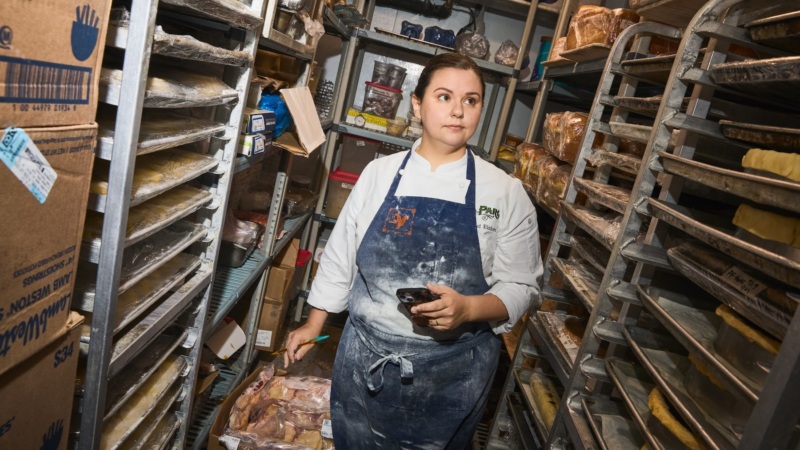
Einhorn takes a quick turn through a walk-in fridge to check how many loaves of wheat rye boule and cranberry walnut were left from the previous day. This helps her better determine quantities for tomorrow.

Photo by Aaron Richter for Resy

Photo by Aaron Richter for Resy

8:21 a.m.

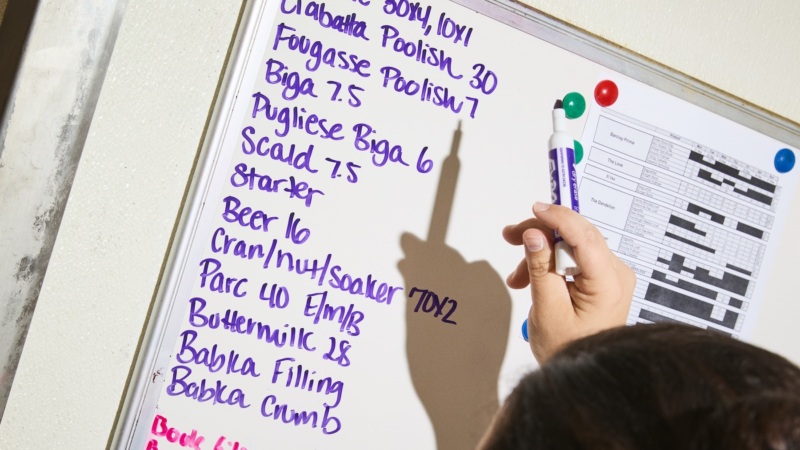
Satisfied with her plan for Wednesday’s baking, Einhorn writes a to-do list for her team on a whiteboard. Thinking ahead, she adds components for a babka that she hopes to get a head start on this afternoon. Later this week, the babka will be Parc’s bread of the day, available from the restaurant’s retail counter. “It’s fun to offer a sweet bread on Friday,” says Einhorn. “Our guests like to enjoy it on Saturday mornings or make French toast with it.”

Photo by Aaron Richter for Resy

Photo by Aaron Richter for Resy

9:03 a.m.

Her shelves nearly full of round loaves, Sands cranks the oven to 500 degrees Fahrenheit. At long last, the baguettes are going in. The high temperature ensures they bake as quickly as possible to yield a thin, crispy crust. Sands uses a lame to score the dough. Placed only on the top, each cut should overlap the previous by one-third, while ideally totaling an odd number of marks. “Odd numbers are supposed to look better,” says Einhorn. “But we’re not too strict about that.”

Photo by Aaron Richter for Resy

Photo by Aaron Richter for Resy

9:29 a.m.

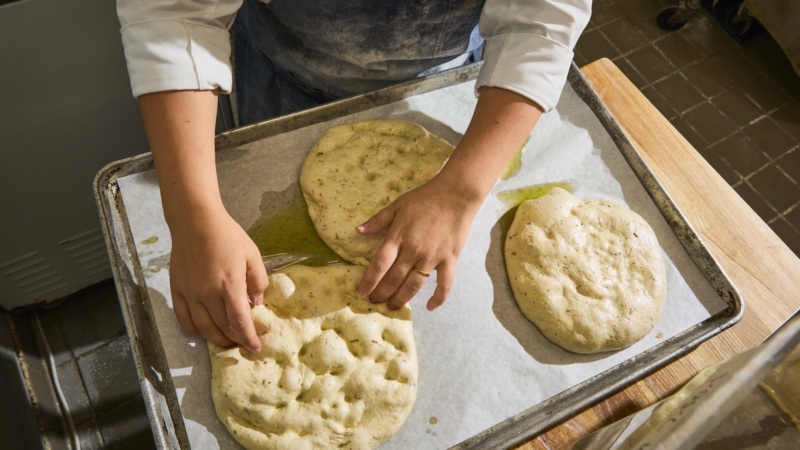
Einhorn dimples focaccia dough (a process called “docking”) to enhance its crumb structure. This allows oil to pool and breaks up uneven pockets of gas. This dough has been sitting for an hour, which helps the bread flatten into its intended shape. Without resting, the bread might end up rounder while baking. A best-seller, this focaccia is Tuesday’s bread of the day.

Photo by Aaron Richter for Resy

Photo by Aaron Richter for Resy

9:37 a.m.

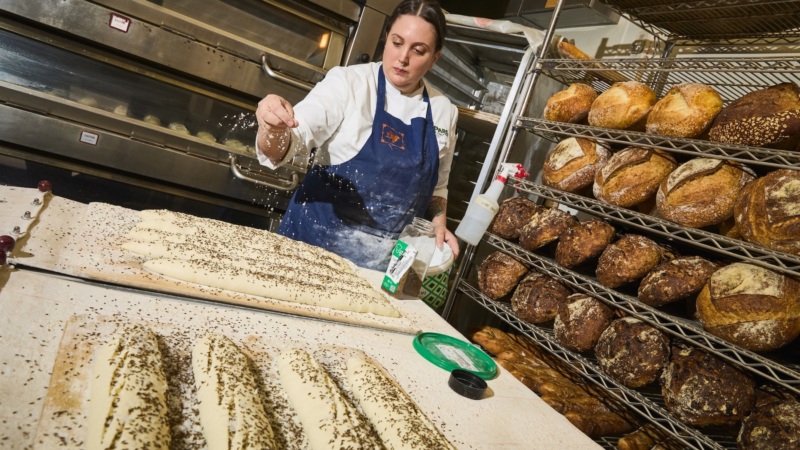
A benefit of baking within the Starr operation is chefs and management can make tweaks based on feedback in real time. Here Sands sprinkles caraway seeds and Maldon salt atop larger baguettes, which will be used for Parc’s roast beef sandwich, served with watercress and horseradish cream. Just two weeks ago, the kitchen requested a small adjustment to the seasoning to help balance the overall dish, and the baking staff was happy to oblige.

Photo by Aaron Richter for Resy

Photo by Aaron Richter for Resy

9:45 a.m.

Out in the dining room, breakfast service is in full swing, and we find a guest tucking into her order of eggs and soldiers, a dish made using the same brioche dough Einhorn and crew bake for Parc’s seeded burgers buns and the small sliders at Barclay Prime. Having multipurpose doughs in regular production allows the restaurants to build and create new dishes without disrupting the baking flow, and Parc produces such a variety that restaurants can be expected to work with the staple breads. “No new doughs,” Einhorn says with a laugh. This soft brioche is so versatile it’s also used for Parc’s French toast, which hits tables topped with blueberries, Chantilly cream, lime zest, and maple syrup. The exact toppings change with the seasons; soon, they’ll be paired with brandied apples for the fall.

Photo by Aaron Richter for Resy

Photo by Aaron Richter for Resy

10:24 a.m.

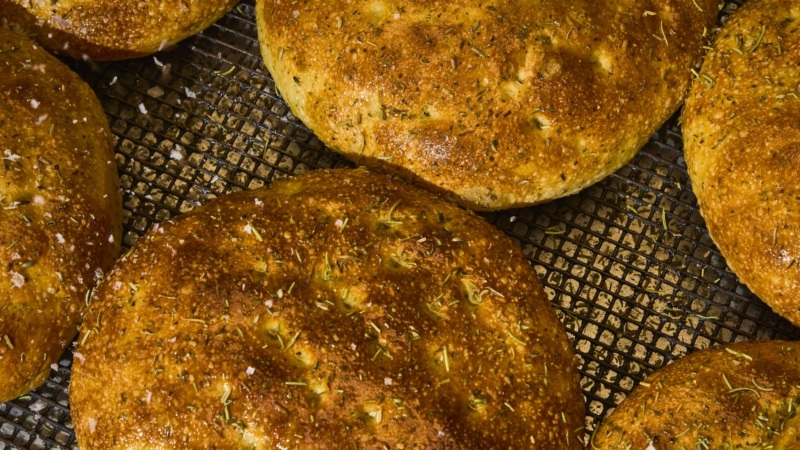
Back in the kitchen, focaccia is whisked from the oven. Golden and crispy, the bread is glistened with olive oil, dusted with herbes de Provence, and finished with Maldon salt, ready for its journey to the boulangerie.

Photo by Aaron Richter for Resy

Photo by Aaron Richter for Resy

10:37 a.m.

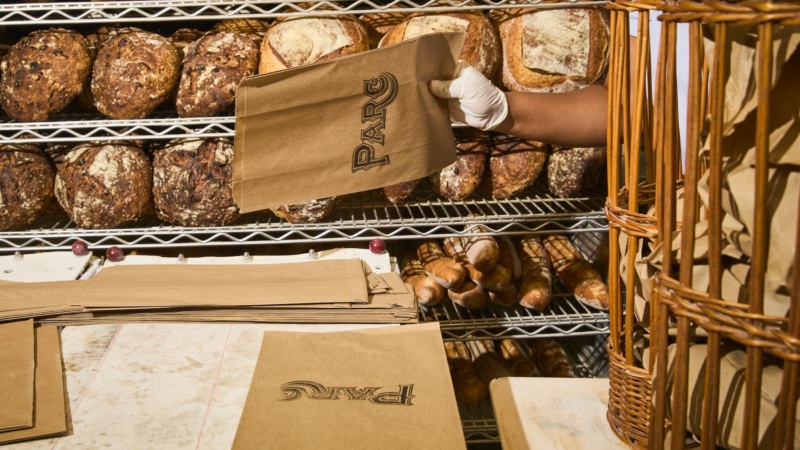
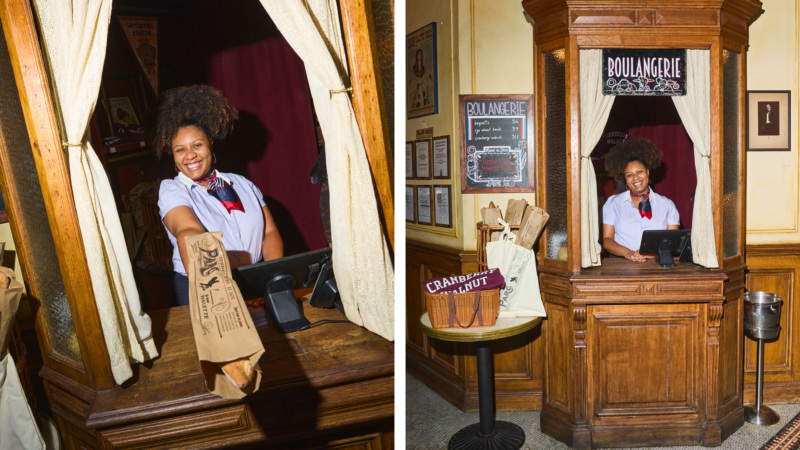
Prepping to open Parc’s boulangerie for the afternoon, hostess Maya Elie bags up loaves and baguettes to be sold from the restaurant’s retail window where customers can nab bread to go, along with other goodies. The indoor counter sells a staggering 3,500 to 4,000 loaves per month.

Photo by Aaron Richter for Resy

Photo by Aaron Richter for Resy

10:47 a.m.

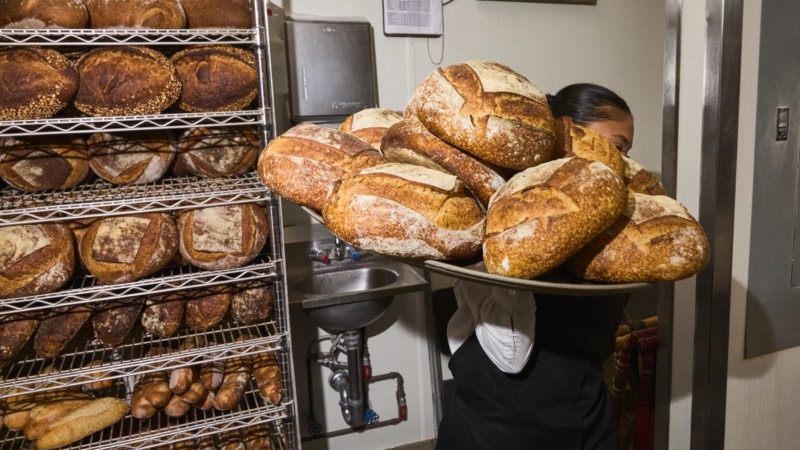
It’s only 13 minutes until lunch service begins, and servers swoop through the bakery racks to teeter wheat rye boules atop trays for transport into Parc’s dining room.

Photo by Aaron Richter for Resy

Photo by Aaron Richter for Resy

11:01 a.m.

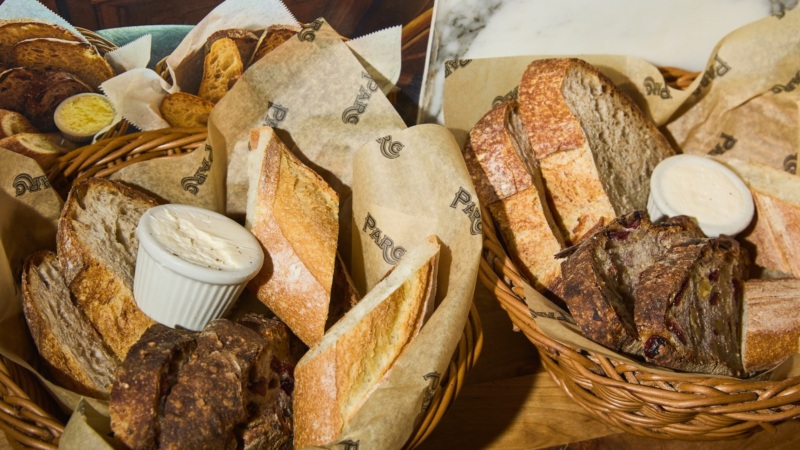
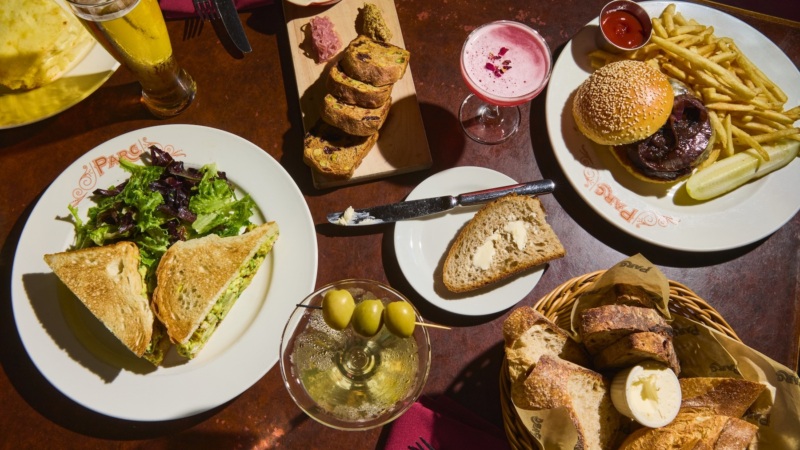
In the dining room, servers prepare bread baskets with slices of the cranberry walnut, the wheat rye sourdough, and the baguette. Tables get one slice of each per diner served alongside whipped, salted butter. Says Shandelman, “The breadbasket has become so ingrained in our guest experience at Parc. We consider it a labor of love.”

Photo by Aaron Richter for Resy

Photo by Aaron Richter for Resy

11:11a.m.

Hostess Elie holds down the Parc boulangerie, where all the table breads can be purchased to-go, along with the bakery’s bread of the day. Shandelman notes that the retail window used to be a coat closet before she recognized an increased interest in the bread program and worked to convert it into the guest-facing shopfront it is today. Look for T-shirts, caps, and custom baguette totes, as well as “Cranberry Walnut” sweatshirts and baguette key chains.

Photo by Aaron Richter for Resy

Photo by Aaron Richter for Resy

11:26 a.m.

Lunch starts to hit its stride as orders emerge from the kitchen. Here, the Parc burger is tucked with grilled onion and raclette cheese between a toasty seeded brioche; chicken liver parfait is served alongside spiced, cherry pistachio bread; a curry chicken salad is built atop country white bread; and a melty croque monsieur is constructed with a brioche Pullman. And what bread journey would be complete without the Parc breadbasket?

Photo by Aaron Richter for Resy

Photo by Aaron Richter for Resy

11:31 a.m.

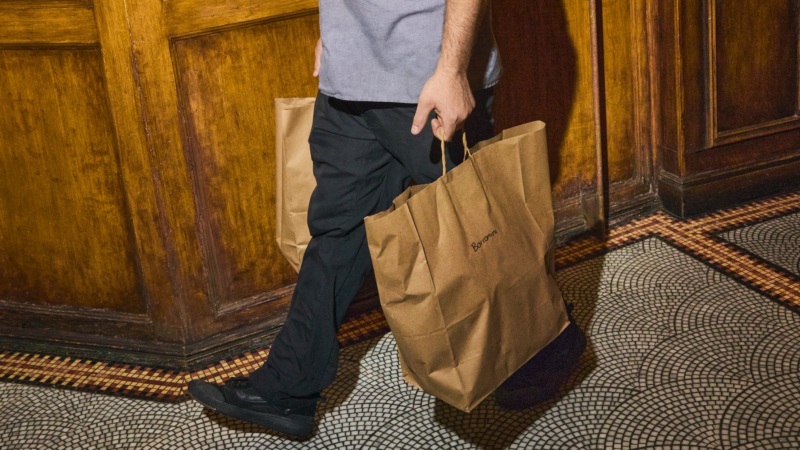
The bakery staff assembles bags brimming with bread orders for Borromini, Barclay Prime, and Café Click. Also in the works are bags that will head toward The Dandelion Pub, which will receive loaves of beer bread (a honey oat stout), Maldon sourdough, dandy brioche, and buttermilk bread.

Photo by Aaron Richter for Resy

Photo by Aaron Richter for Resy

11:33 a.m.

A receiver from Borromini drops by the Parc kitchen to pick up two bags of Pugliese rolls. We follow him out the front door and down the street to his restaurant, where lunch orders are also hitting tables.

Photo by Aaron Richter for Resy

Photo by Aaron Richter for Resy

12:21 p.m.

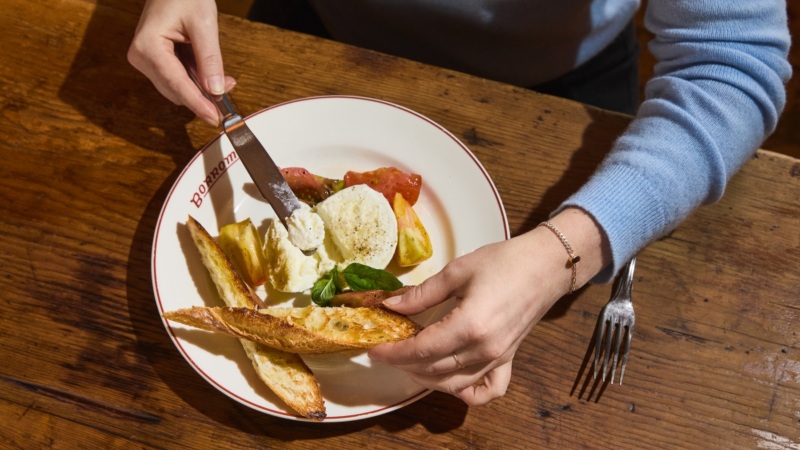
At Borromini, we spot diagonally cut baguettes shards across the dining room on a midday diner’s plate. The bread operates as a perfect surface for mozzarella di bufala and tomato.

Photo by Aaron Richter for Resy

Photo by Aaron Richter for Resy

12:35 p.m.

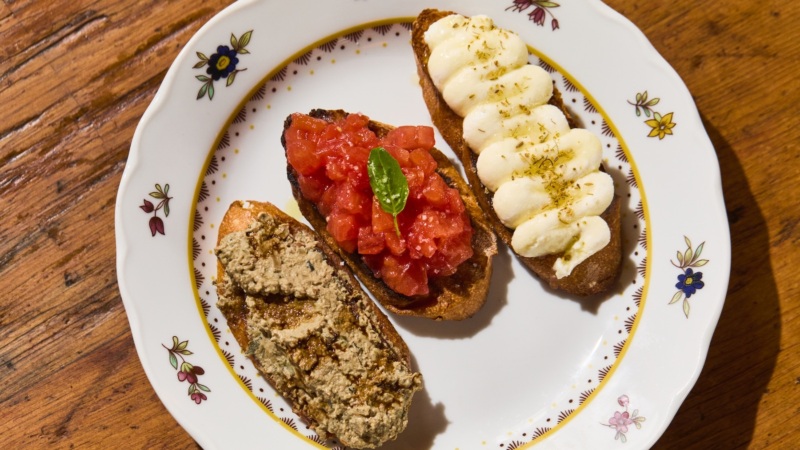
Lingering through lunch at Borromoni, we watch the chefs serve up a trio of crostini: chicken liver with vincotto, tomato with garlic and basil, and ricotta with honey and fennel pollen.

Photo by Aaron Richter for Resy

Photo by Aaron Richter for Resy

12:38 p.m.

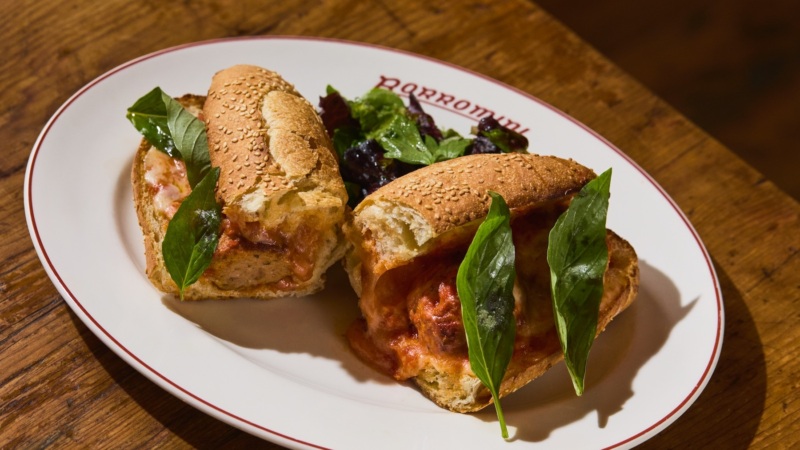
Also out of the kitchen is a meatball parmigiana panini with fior di latte mozzarella built atop one of the very Pugliese rolls we followed over.

Photo by Aaron Richter for Resy

Photo by Aaron Richter for Resy

12:47 p.m.

The baker’s life is a life of repetition, and there’s yet another round of ciabatta already in the works as we make our way back at Parc. This time, Weatherby takes over for Einhorn in carefully measuring out the high-gluten dough into equal-size rectangles. A single day’s work can yield up to 120 ciabatta rolls, depending on anticipated sales. Executive chef Starkman says the freshness of the ciabatta and its cook “makes or breaks” Parc’s grilled chicken sandwich. Later today, brioche buns and baguettes will be shaped again and baked fresh for dinner service.

Photo by Aaron Richter for Resy

Photo by Aaron Richter for Resy

1:05 p.m.

Another round of cranberry walnut goes into the works. Einhorn says this afternoon, the bakers will scale flour for tomorrow and mix pre-ferments. Someone is usually here baking until around 7 p.m. each night.

Photo by Aaron Richter for Resy

Photo by Aaron Richter for Resy

1:23 p.m.

“Everything I own is covered in flour — my car, my phone,” say Einhorn, her apron sufficiently powdered as she pulls more baguettes from the oven. She’ll wrap up today at around 5 p.m. by thinking about tonight and tomorrow: how many covers the kitchen anticipates, what’s proofing and what’s put away, the ever-popular pretzel baguettes she’ll be baking for tomorrow’s bread of the day, and Friday’s babka. But with any luck, she’ll be asleep by 9 p.m. Then it’s up bright and early, to start it all again.

Photo by Aaron Richter for Resy